
Mosteiro de São Bento

General Information
Denomination
Catholic
Address
Largo de São Bento
São Paulo, São Paulo, Brasil
C.P. 01029-010
Location
Find the approximate location of Mosteiro de São Bento
Location data: © OpenStreetMap contributors via LocationIQ | Visualization: Google Maps
How to Get There
Address: Largo de São Bento São Paulo, São Paulo, Brasil
About Mosteiro de São Bento
📜 History
The Mosteiro de São Bento was founded on July 14, 1598, by the first Benedictine monks who arrived in the city of São Paulo. Established on top of a hill in the historic center, the monastery experienced one of its most significant moments in 1641, when its facilities were the scene of the Aclamação de Amador Bueno, a central episode in the history of Portuguese succession in Brazil. Throughout the 17th century, the institution grew thanks to the patronage of the bandeirante Fernão Dias Pais, whose remains rest on the premises. The current building, the fourth constructed on the same property since its foundation, was erected between 1910 and 1922 to house an expanding Benedictine community. In 1808, a faculty of philosophy was established there, which later gave rise to the Pontifícia Universidade Católica de São Paulo (PUC-SP) in 1946. In May 2007, the monastery received a visit from Pope Benedict XVI during his trip to Brazil.
🏛️ Architecture
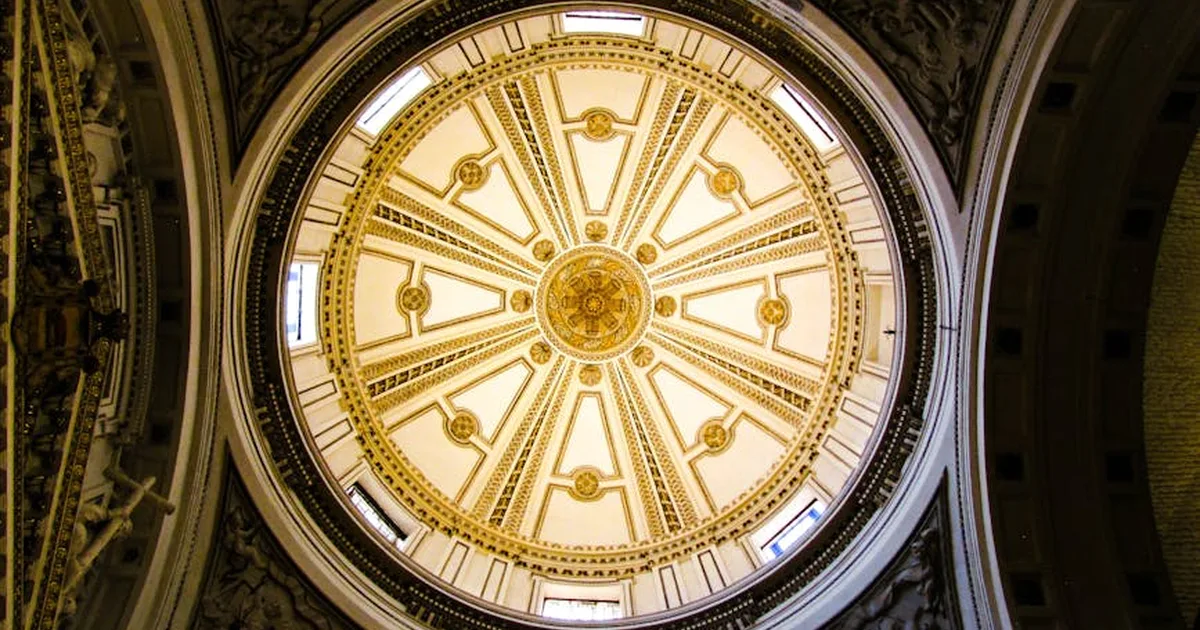
The building was designed by the German architect Richard Berndl, originally from Munich, in a Neo-Romanesque style with features of the German eclectic tradition. The complex integrates into a single ensemble the basilica, the monastery proper, a school, and a faculty. The interior was decorated with murals executed by the Dutch monk Dom Adelbert Gresnigt (1877-1956), assisted by the monks Clemente Frischauf and Lucas Reicht, following the aesthetic of the Beuron art school. The sculptures of the twelve apostles, created between 1919 and 1922 by the Belgian artist Adrien Henri Vital van Emelen, adorn the premises. Among the oldest pieces are the Baroque figures of Saint Benedict and Saint Scholastica in baked clay, attributed to Frei Agostinho de Jesus and dated to 1650. The altar is made of Italian marble from the Lake Maggiore region. The building houses a German-made clock installed in 1921, a carillon of six tuned bells, and a 1954 Walcker organ with over six thousand pipes.
⭐ Key Facts
The Mosteiro de São Bento occupies a central place in the religious and cultural life of São Paulo. Its Benedictine community has maintained for centuries the practice of the divine office in monastic rite with Gregorian chant, a tradition preserved to this day. The complex founded a school in 1903—initially called a ginásio—and housed a faculty of philosophy since 1808, which the institution recognizes as the first in Brazil, a direct predecessor of the PUC-SP, formally established in 1946. The monastery's library houses over 100,000 titles, including six incunabula predating 1500, the oldest being a New Testament from 1496. Since 2006, the complex has been the subject of restoration and conservation work, supervised since 2012 by specialist João Rossi. The monastic bakery, founded in 1998 on the occasion of the institution's four-hundredth anniversary, produces artisanal products with centuries-old recipes. The visit of Pope Benedict XVI in May 2007 underscored the site's relevance in the context of the Latin American Catholic Church.
Located in the historic center of São Paulo, the Benedictine monastery opens its doors to those wishing to participate in its liturgical celebrations or learn about its artistic and historical heritage. Visitors can attend the Sunday Mass with Gregorian chant, tour the basilica and its artworks, and purchase artisanal products made by the community in its bakery. With over four centuries of history, the complex represents one of the most complete testimonies of the religious and architectural heritage of colonial and modern Brazil.
✍️ Curated by María del Carmen Salazar
·
Last updated:
Information verified by the EncuentraIglesias editorial team
📚 Readings to strengthen your faith
Articles from the Faith & Life blog selected for this community
Did you notice something incorrect?😯
We apologize 🙏. Being the most complete church directory in the world requires a lot of time and effort... and only God is perfect 😄! We would greatly appreciate it if you help us with your suggestions to keep the information verified and reliable.
You can send us your observations, suggest corrections or even request that we remove this record if you consider it does not correspond to a church.
Suggest an edit