
Catedral de Lima

General Information
Denomination
Catholic
Address
Jirón Carabaya Col. Urbanización Cercado de Lima
Lima, Lima, Perú
C.P. 15001
Location
Find the approximate location of Catedral de Lima
Location data: © OpenStreetMap contributors via LocationIQ | Visualization: Google Maps
How to Get There
Address: Jirón Carabaya Lima, Lima, Perú
About Catedral de Lima
📜 History
The Cathedral of Lima has its origins in 1535, when Francisco Pizarro laid the first stone in the newly founded city of Lima. A first construction was inaugurated on March 11, 1540. In 1542, a second building was begun, inaugurated in 1552. The third work began in 1585 under the direction of architect Francisco Becerra; its first section was consecrated in 1604 and the whole was completed in 1649. On May 14, 1541, a papal bull from Pope Paul III elevated the temple to the rank of metropolitan cathedral. The 1746 earthquake caused severe damage, which necessitated a substantial reconstruction finished in 1778; between 1794 and 1798, Matías Maestro completed the towers. On May 28, 1921, it was elevated to the rank of minor basilica. Between 2000 and 2004, Cardinal Juan Luis Cipriani directed a comprehensive restoration of the building. In 1977, archaeological investigations in the crypt confirmed the authenticity of the remains of Francisco Pizarro, preserved there since the 16th century.
🏛️ Architecture
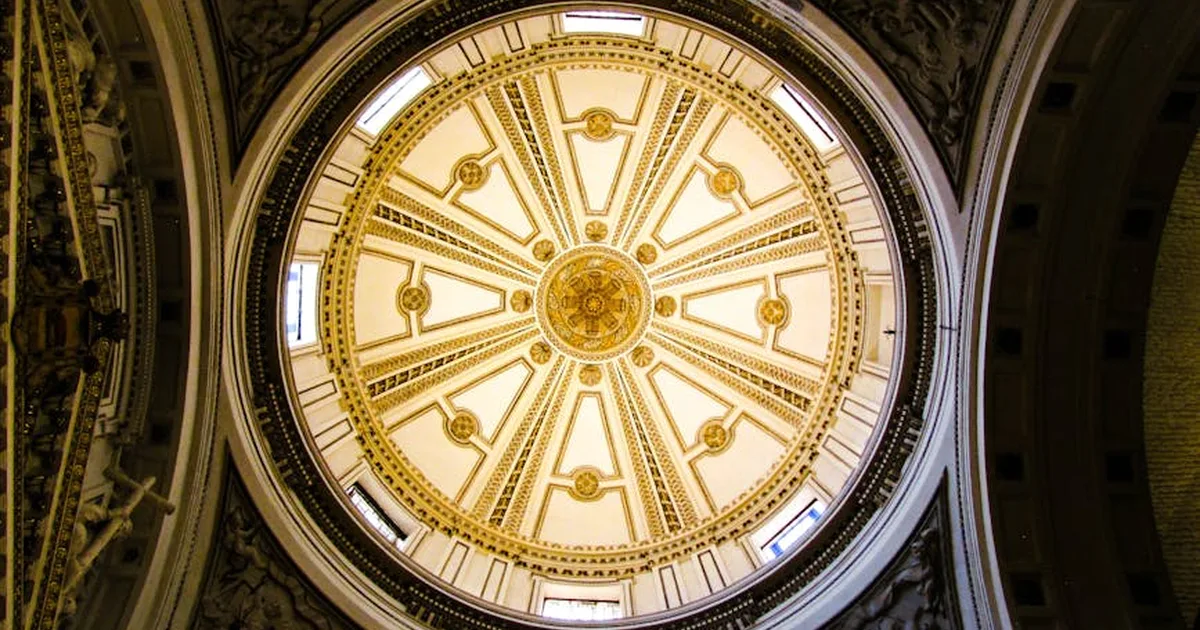
The current building is the result of successive reconstructions and corresponds to a mixture of Renaissance and Neoclassical styles, with Gothic, Baroque, and Plateresque elements. The floor plan is organized into three main naves with two additional corridors of side chapels. The ribbed vaults, constructed of wood and stucco, constitute an architectural solution aimed at resisting the frequent earthquakes in the region. The three main portals are the Puerta del Perdón in the center, the Puerta de la Epístola on the right, and the Puerta del Evangelio on the left, in addition to six additional exterior accesses. The Neoclassical towers topped with slate spires were completed between 1794 and 1798 by Matías Maestro. Among the interior artistic assets, the altarpiece carved by the Sevillian sculptor Juan Martínez Montañés stands out, as well as the choir stalls designed by Martín Alonso de Mesa and executed in the 17th century by Pedro de Noguera. The complex has fifteen chapels, including those dedicated to the Peruvian Saints, the Immaculate Conception, and Santo Toribio de Mogrovejo. Francisco Becerra drew up the plans in 1585; Juan Martínez de Arrona and Juan Rher intervened in later stages.
⭐ Key Facts
The cathedral is the seat of the Metropolitan Archdiocese of Lima and the main Catholic temple of Peru. It is consecrated to Saint John the Apostle and Evangelist, whose feast day marks the liturgical calendar of the site. The building is part of the Historic Center of Lima, declared a World Heritage Site by UNESCO in 1991, and was recognized as a National Cultural Heritage by the Peruvian State in 1972. In its crypt rest the remains of Francisco Pizarro, founder of the city; the authenticity of these remains was confirmed by archaeological studies in 1977. The temple houses papal ornaments that John Paul II left during his visits to Peru, as well as a collection of sacred vessels. Located facing the Plaza Mayor of Lima, the building occupies a central place in the civic and religious life of the country. The rank of minor basilica, granted on May 28, 1921, confers upon the temple a title recognized by the Holy See that underscores its importance within the Catholic Church. The site receives visitors from all over the world who come both for its religious value and for its status as a heritage asset.
Located facing the Plaza Mayor of Lima, the cathedral is open to the public as a place of worship and as a heritage asset, with access to its chapels, the choir stalls, and the crypt where the remains of Francisco Pizarro rest. Those who walk through its naves traverse almost five centuries of history embodied in stone, wood, and stucco, in the heart of a city declared a World Heritage Site.
✍️ Curated by Benjamín Restrepo
·
Last updated:
Information verified by the EncuentraIglesias editorial team
📚 Readings to strengthen your faith
Articles from the Faith & Life blog selected for this community
Did you notice something incorrect?😯
We apologize 🙏. Being the most complete church directory in the world requires a lot of time and effort... and only God is perfect 😄! We would greatly appreciate it if you help us with your suggestions to keep the information verified and reliable.
You can send us your observations, suggest corrections or even request that we remove this record if you consider it does not correspond to a church.
Suggest an edit