
Catedral da Sé

Contacto y horarios
Teléfono
Correo electrónico
Horarios de atención
- Lunes: 08:00–19:00
- Martes: 08:00–19:00
- Miércoles: 08:00–19:00
- Jueves: 08:00–19:00
- Viernes: 08:00–19:00
- Sábado: 08:00–17:00
- Domingo: 08:00–18:00
General Information
Denomination
Catholic
Address
Praça da Sé
São Paulo, São Paulo, Brasil
C.P. 01001-000
Location
Find the approximate location of Catedral da Sé
Location data: © OpenStreetMap contributors via LocationIQ | Visualization: Google Maps
How to Get There
Address: Praça da Sé São Paulo, São Paulo, Brasil
About Catedral da Sé
📜 History
The Metropolitan Cathedral of São Paulo has its roots in the early years of Iberian colonization in Brazil. The original parish was established on August 10, 1591, and the first temple was completed around 1616. In 1745, the site became a diocesan seat and a new Baroque-style construction was erected, completed around 1764 and demolished in 1911 to make way for the current building. The project for the contemporary cathedral was commissioned to the German architect Maximilian Emil Hehl, and construction began on July 6, 1913. Decades of continuous work culminated in the official inauguration on January 25, 1954, a date of special significance as it is the day of Saint Paul the Apostle. The two main towers reached their definitive height of 92 meters on November 15, 1969. Between 2000 and 2002, a comprehensive restoration was carried out at a cost of 19.5 million reais, during which the 14 small towers planned in the original 1912 blueprints but never executed were also incorporated.
🏛️ Architecture
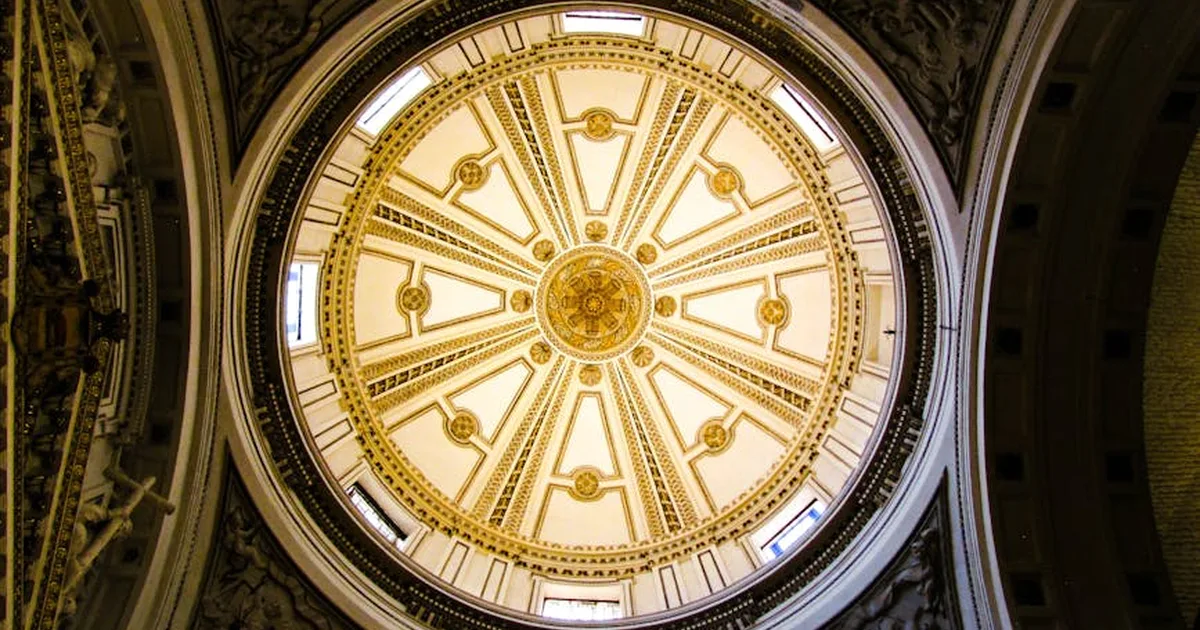
The building was designed by the German architect Maximilian Emil Hehl in an eclectic style that combines Neo-Gothic with Neo-Renaissance elements. It measures 111 meters in length and 46 in width; its towers reach a height of 92 meters and the interior has a capacity for 8,000 people. The interior finishes used more than 800 tons of marble. The capitals are decorated with motifs of Brazilian flora and fauna: coffee branches, pineapples, and armadillos carved in stone, a feature that distinguishes this temple from the European models that inspired it. The Renaissance-influenced dome and the Gothic-tradition pointed arches coexist in a synthesis of notable structural coherence. The organ was built in 1954 by the Italian firm Balbiani Vegezzi-Bossi and is considered one of the largest in Latin America; it has five keyboards, 329 stops, 120 ranks, and 12,000 pipes with hand-carved Gothic-style reliefs. The 14 small towers that crown the facade were added during the 2000-2002 restoration following the original plans.
⭐ Key Facts
The cathedral is the seat of the Archdiocese of São Paulo and the liturgical reference center of one of the world's most populous metropolises. It is listed as the fourth largest Neo-Gothic temple on the planet and was recognized as one of the seven wonders of Brazil. On December 19, 2017, the Council for the Defense of Historical, Archaeological, Artistic, and Tourist Heritage (CONDEPHAAT) declared it a heritage asset of the state of São Paulo. In the crypt, enabled as an underground church beneath the main altar, rest the remains of central figures in Brazilian colonial history: the cacique Tibiriçá, an ally of the Jesuits; the priests Manuel da Nóbrega and José de Anchieta, evangelizers of the territory; and Bartolomeu de Gusmão, a Jesuit priest and precursor of aeronautics, whose remains were transferred there in 2004. The crypt also houses the tombs of all the bishops and archbishops of São Paulo and that of the priest and politician Diogo Feijó. The patronal feast on January 25, the day of the conversion of Saint Paul, coincides with the anniversary of the city's foundation.
Located in Praça da Sé, in the heart of the historic center of São Paulo, the cathedral is a meeting point for those wishing to understand the spiritual and urban origins of the city. Its crypt offers a journey through centuries of colonial and religious history, while the central nave invites contemplation of the craftsmanship of the organ and the capitals with native fauna. Religious services are held regularly throughout the week, and the temple remains open to the public every day.
✍️ Curated by Thomas Anderson
·
Last updated:
Information verified by the EncuentraIglesias editorial team
📚 Readings to strengthen your faith
Articles from the Faith & Life blog selected for this community
Did you notice something incorrect?😯
We apologize 🙏. Being the most complete church directory in the world requires a lot of time and effort... and only God is perfect 😄! We would greatly appreciate it if you help us with your suggestions to keep the information verified and reliable.
You can send us your observations, suggest corrections or even request that we remove this record if you consider it does not correspond to a church.
Suggest an edit