
When we talk about the origins of our faith, one moment shines brightly: the day of Pentecost. In Acts 2, we find the account of how the Holy Spirit descended on the disciples, transforming a group of fearful men and women into a bold, empowered community. That day not only fulfilled a promise but also launched the Church as we know it. Pentecost in Acts 2 is, without a doubt, the day the Church was born.
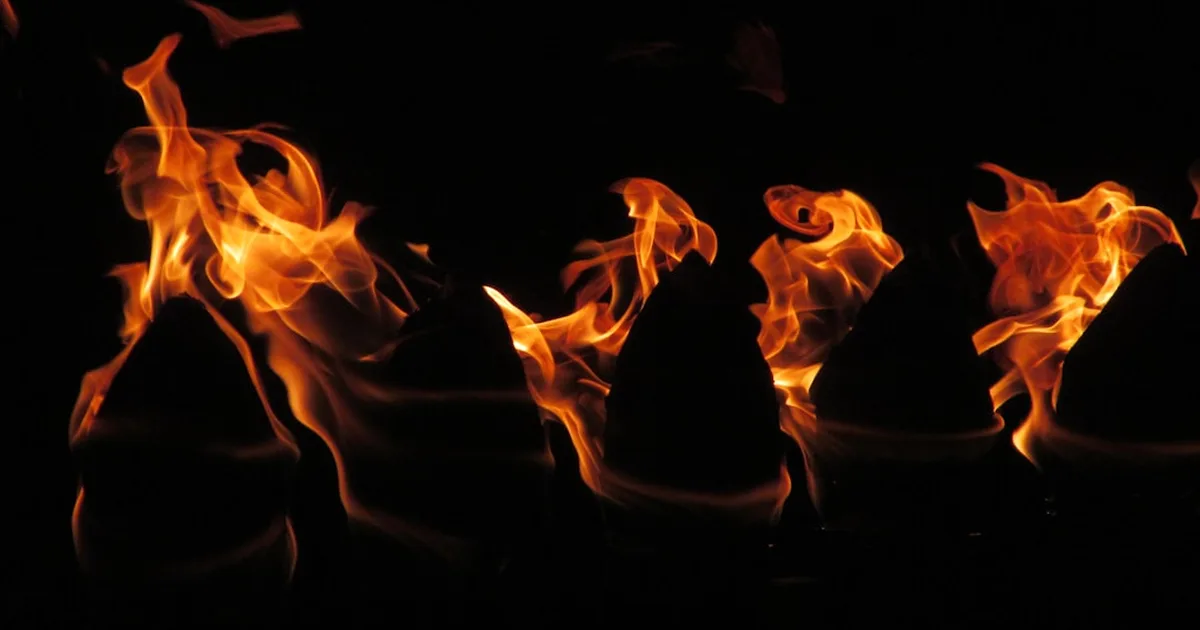
To understand the magnitude of this event, we need to place ourselves in the context. The disciples were gathered in Jerusalem, obeying Jesus' instruction to wait for the promise of the Father (Acts 1:4). They didn't know exactly what would happen, but they trusted their Master's words. Suddenly, a sound like a violent wind filled the house, and tongues of fire rested on each of them. They were all filled with the Holy Spirit and began to speak in other languages, as the Spirit enabled them.
This event was not merely a supernatural phenomenon; it was the birth of a new community of faith. From that moment, the Church ceased to be just a group of Jesus' followers and became a living body, guided by the Holy Spirit, destined to carry the message of salvation to the whole world.
What Actually Happened at Pentecost?
The book of Acts describes in detail what occurred that day. The Feast of Pentecost was one of the three major Jewish festivals, also known as the Feast of Weeks. Jews from every nation gathered in Jerusalem to celebrate the harvest. It was in this context that the Holy Spirit manifested powerfully.
The text says:
"Suddenly a sound like the blowing of a violent wind came from heaven and filled the whole house where they were sitting. They saw what seemed to be tongues of fire that separated and came to rest on each of them. All of them were filled with the Holy Spirit and began to speak in other tongues as the Spirit enabled them." (Acts 2:2-4, NIV)
This phenomenon attracted the crowd's attention. People were perplexed to hear the disciples speaking in their own languages about the wonders of God. Some mocked, saying they were drunk. But Peter, filled with the Spirit, stood up and delivered the first sermon in Church history. Quoting the prophet Joel, he explained that what they were seeing was the fulfillment of God's promise: to pour out his Spirit on all people.
The result was astounding: three thousand people repented, were baptized, and joined the community of believers. That day, the Church grew from a group of 120 people to a community of over three thousand souls.
The Role of the Holy Spirit in the Birth of the Church
The Holy Spirit not only empowered the disciples to speak in tongues but also equipped them to be Jesus' witnesses to the ends of the earth. Jesus himself had said:
"But you will receive power when the Holy Spirit comes on you; and you will be my witnesses in Jerusalem, and in all Judea and Samaria, and to the ends of the earth." (Acts 1:8, NIV)
The Holy Spirit unifies the Church, guides it into all truth, and gives it the gifts needed to fulfill its mission. Without the Spirit, the Church would be just a human organization; with him, it is the body of Christ in the world.
Why Is Pentecost the Church's Birthday?
The birthday analogy is very fitting. Just as a baby is born when it leaves the womb and begins to breathe on its own, the Church was born when the disciples received the Holy Spirit and began to live a new reality. Before Pentecost, Jesus' followers were a scattered group; after Pentecost, they became a unified community empowered to change the world. The Spirit gave them boldness, unity, and a mission. That is why Pentecost is celebrated as the birthday of the Church—a day when God's power was poured out, and a new era of faith began.
Today, the same Spirit is available to every believer. The Church continues to be born again whenever we surrender to the Spirit's leading and step out in faith. Pentecost is not just a historical event; it is a living reality that shapes our faith and mission every day.





Comments