
Have you ever wondered what it might be like to look down on our planet from space? While most of us will never experience that breathtaking view firsthand, we can imagine the awe it must inspire. The vastness of the cosmos, the delicate beauty of our blue planet—these sights have moved astronauts throughout history to reflect deeply on our place in creation.
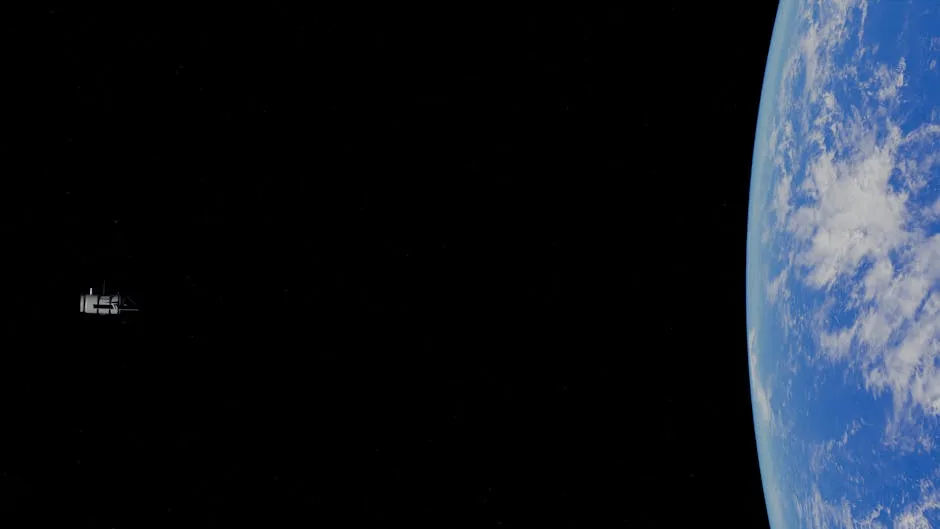
In recent years, we've heard from astronauts who have shared their spiritual insights from orbit. Their unique perspective reminds us of truths we sometimes forget in our daily routines. Looking at Earth from such a distance, they see not separate nations or competing ideologies, but one interconnected home—a precious gift in the vast emptiness of space.
Biblical Echoes from the Cosmos
This experience of seeing Earth from space echoes what Scripture has declared for millennia. The psalmist writes in Psalm 19:1-4:
"The heavens declare the glory of God; the skies proclaim the work of his hands. Day after day they pour forth speech; night after night they reveal knowledge. They have no speech, they use no words; no sound is heard from them. Yet their voice goes out into all the earth, their words to the ends of the world." (NIV)
These ancient words take on new meaning when we consider them alongside modern space exploration. The "heavens" that declare God's glory aren't just the sky above us—they're the entire cosmos, including the vantage point from which astronauts behold our planet.
Similarly, Isaiah 40:22 reminds us:
"He sits enthroned above the circle of the earth, and its people are like grasshoppers. He stretches out the heavens like a canopy, and spreads them out like a tent to live in." (NIV)
From God's perspective—infinitely higher than any spacecraft—all humanity appears small, yet deeply cherished. This divine viewpoint helps us understand both our humility and our significance in God's eyes.
Unity in Our Common Home
Astronauts often speak of the "overview effect"—the profound shift in awareness that occurs when seeing Earth from space. National boundaries disappear. Political divisions fade. What remains is a beautiful, fragile sphere that we all share.
This perspective aligns with Christian teaching about our common humanity. The apostle Paul writes in Acts 17:26:
"From one man he made all the nations, that they should inhabit the whole earth; and he marked out their appointed times in history and the boundaries of their lands." (NIV)
We are all children of one Creator, inhabitants of one home. The divisions we create—whether national, racial, or ideological—are human constructs that pale before the fundamental unity of our created existence.
Lessons from Recent Space Missions
In recent years, astronauts from various backgrounds have continued this tradition of spiritual reflection from space. Their spontaneous comments during interviews often reveal deep truths about our shared existence. One astronaut recently reflected on how seeing Earth from orbit made him appreciate the biblical concept of stewardship—that we've been entrusted with care for this "spaceship Earth" we all call home.
Another noted how the experience brought to mind Jesus' prayer for unity in John 17:20-21:
"My prayer is not for them alone. I pray also for those who will believe in me through their message, that all of them may be one, Father, just as you are in me and I am in you. May they also be in us so that the world may believe that you have sent me." (NIV)
From the vantage point of space, the oneness Jesus prayed for becomes not just a spiritual ideal but a visible reality.
Easter Reflections from a Cosmic Perspective
As we approach Easter each year, this cosmic perspective takes on special significance. The resurrection of Jesus isn't just a historical event that happened in one small corner of our planet—it's God's declaration of hope for all creation. Romans 8:19-21 tells us:
"For the creation waits in eager expectation for the children of God to be revealed. For the creation was subjected to frustration, not by its own choice, but by the will of the one who subjected it, in hope that the creation itself will be liberated from its bondage to decay and brought into the freedom and glory of the children of God." (NIV)
When we see Earth from space, we're reminded that Christ's resurrection promises renewal not just for human souls, but for the entire cosmos. The beautiful planet we see from orbit is part of God's good creation that will one day be fully restored.
Practical Applications for Daily Life
While most of us will never travel to space, we can cultivate this "overview" perspective in our daily lives. Here are three practical ways to do so:
- Practice gratitude for our common home: Take time to appreciate the natural beauty around you—a sunrise, a garden, a starry night. Recognize these as gifts from the Creator we all share.
- Seek unity across differences: When conflicts arise, try to step back and see the bigger picture. Remember that we're all passengers on "spaceship Earth," created by the same God.
- Care for creation as an act of worship: Simple actions like recycling, conserving resources, or enjoying nature responsibly become spiritual practices when we see them as stewarding God's gift.
A Closing Reflection
As we go about our daily lives, it's easy to become absorbed in our immediate concerns and divisions. But the view from space—and more importantly, the view from Scripture—reminds us of deeper truths. We are part of something magnificent: a created order that declares God's glory, a human family loved by its Creator, and a story of redemption that encompasses all of creation.
May we learn to see with the eyes of faith what astronauts see with their physical eyes: that we share one beautiful home, created by a loving God who became part of our story at Christmas and conquered death for us at Easter. In this truth, we find both humility and hope—and a calling to live as grateful stewards of the precious gift we've been given.





Comments