
There is a deep longing in the human heart for a world without pain, without sorrow, without sin. This longing often finds expression in art that depicts idyllic scenes—peaceful cottages, glowing lighthouses, gentle streams. The late Thomas Kinkade, known as the 'Painter of Light,' built a vast audience by offering exactly this vision. He famously said he wanted to 'portray a world without the Fall.'
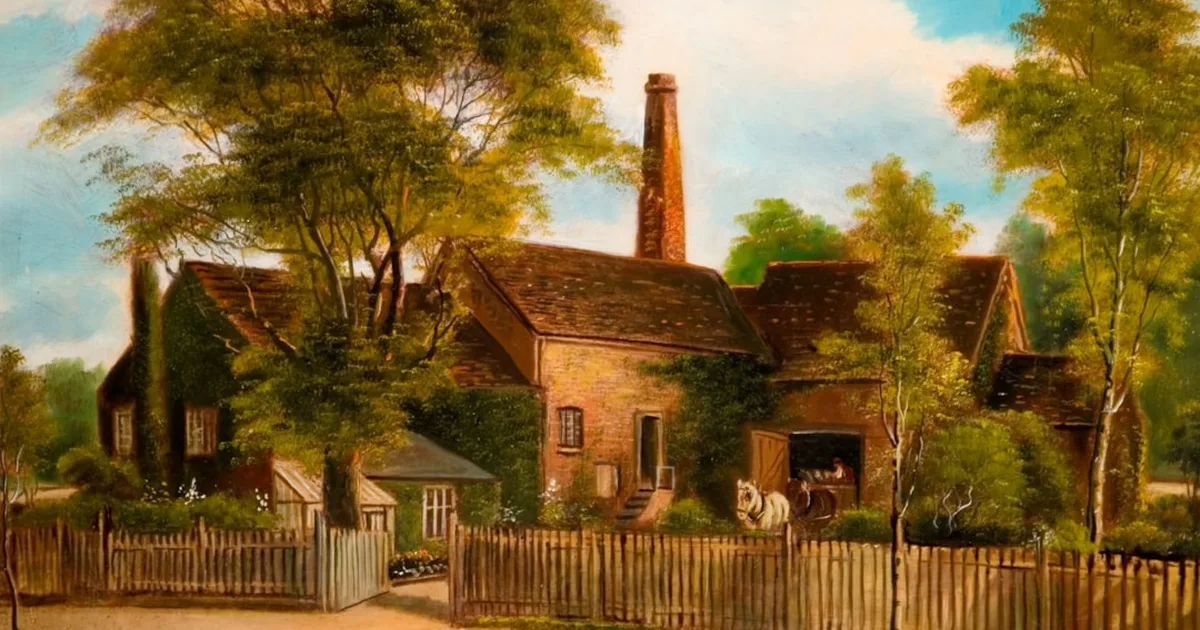
But the reality of life—even for the most successful artist—is far more complex. Kinkade's own story, marked by personal struggles and a tragic early death, reveals the tension between the world we long for and the world we actually inhabit. His art, while comforting, raises an important question for Christians: Is it faithful to create art that ignores the brokenness of our world?
The Bible does not shy away from the reality of sin and its consequences. From the moment Adam and Eve disobeyed God in the Garden of Eden, the world has been marked by suffering, decay, and separation from God. Yet the biblical narrative does not end there. It points to a redemption that comes through the cross of Christ—a redemption that is all the more glorious because it addresses real brokenness.
The Problem with Sentimental Art
Sentimental art, like Kinkade's, offers comfort by presenting a world untouched by evil. It appeals to our desire for peace and beauty. But there is a danger: if our art never acknowledges the fall, it can become a form of escapism. It may even suggest that redemption is possible without the cost of the cross.
The gospel is not a story of easy comfort. It is a story of God entering a broken world, suffering with us, and overcoming death itself. The apostle Paul writes in Romans 8:22, 'For we know that the whole creation has been groaning together in the pains of childbirth until now' (ESV). Creation itself is waiting for redemption. To ignore this groaning is to miss the depth of God's work in history.
Christians are called to be people of truth. That means we must tell the whole story—the beauty of creation, the tragedy of the fall, and the hope of redemption. Art that only shows the first chapter is incomplete. It may be pleasant, but it lacks the power of the full gospel.
The Other Extreme: Glorifying the Fall
On the opposite end of the spectrum is art that revels in the fall. Transgressive art, which deliberately shocks and offends, often seems to celebrate sin and brokenness. Works like Tracey Emin's My Bed (1998) present the mess of human life without any hint of redemption.
For Christians, this approach is equally problematic. While it is honest about the reality of sin, it offers no hope. It leaves us in the dirt, without the cleansing power of Christ. The Bible does not deny the ugliness of sin, but it always points beyond it to God's grace. As Paul says in 2 Corinthians 5:17, 'Therefore, if anyone is in Christ, he is a new creation. The old has passed away; behold, the new has come' (ESV).
Art that glorifies the fall without redemption is like a diagnosis without a cure. It may be accurate, but it offers no healing. The Christian artist is called to something more: to show both the depth of our brokenness and the greatness of God's love.
A Biblical Vision of Beauty
The Bible presents a different vision of beauty—one that is not afraid of the fall but overcomes it. In the book of Revelation, John sees a new heaven and a new earth, where God dwells with his people and wipes away every tear. This is not a return to Eden; it is a redeemed creation, one that has passed through suffering and come out the other side.
Beauty in the biblical sense is not about ignoring pain but about transforming it. The cross itself is an instrument of torture, yet it becomes the symbol of ultimate love and victory. Christian art can reflect this paradox: it can acknowledge the reality of sin while pointing to the hope of redemption.
Consider the psalms, which are filled with laments. The psalmist does not pretend that everything is fine. He cries out in anguish, 'My God, my God, why have you forsaken me?' (Psalm 22:1, ESV). But he also declares, 'The Lord is my shepherd; I shall not want' (Psalm 23:1, ESV). Both are true. Both are part of the life of faith.
Practical Application: Creating and Consuming Art with Discernment
As Christians, we are not only consumers of art but also creators. Whether we paint, write, make music, or simply decorate our homes, we have the opportunity to reflect God's truth. Here are a few questions to guide us:
- Does this art acknowledge the reality of sin and suffering, or does it pretend they don't exist?
- Does it offer hope that is rooted in the gospel, or does it leave us in despair?
- Does it point to the beauty of God's redemption, even in the midst of brokenness?
We can appreciate art that brings comfort, but we must also value art that challenges us to see the world as it is and as it will be. The full Christian story includes the fall, the cross, and the resurrection. Our art should reflect that whole story.
As you encounter art—whether in a gallery, on a book cover, or in your own creative work—ask yourself: Does this help me love God and my neighbor more? Does it draw me closer to the truth of the gospel? If so, it is a gift. If not, it may be time to look for something that speaks more fully of the God who redeems.
For now we see in a mirror dimly, but then face to face. Now I know in part; then I shall know fully, even as I have been fully known. (1 Corinthians 13:12, ESV)
May our art, like our faith, be honest about the present and hopeful for the future.



Comentarios