
Have you ever felt like your Christian walk resembles wandering through a wilderness? Those seasons when everything seems dry, when answers don't come, and direction gets lost in the shifting sands. Many believers experience times like these, where God's presence feels distant and the path becomes confusing. But I want you to know something important: those wilderness seasons aren't accidents in your spiritual journey.
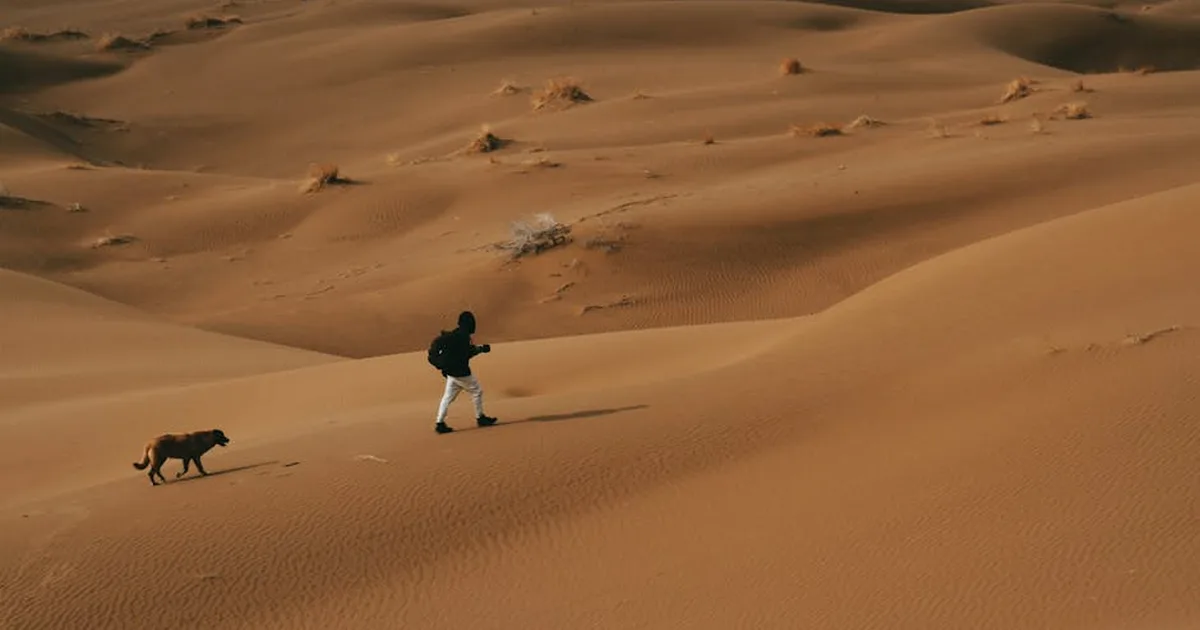
The Bible shows us that God has a special purpose when He allows His people to pass through desolate places. Consider the Israelites after leaving Egypt. They could have gone directly to the Promised Land, but God led them through the wilderness for forty years. Why? Because in that seemingly empty place, God was doing a deep work in their hearts.
When you're walking through your own spiritual wilderness, you might feel like God has forgotten you. Emotions of loneliness, confusion, and even despair can surface. But precisely in those moments, God is working in ways you might not yet see. Your faith isn't weakening—it's being strengthened through total dependence on the One who sustains you.
What God Accomplishes in the Wilderness
In the wilderness, God teaches us to depend completely on Him. When the Israelites walked through that arid place, they learned that manna fell each day, that water flowed from the rock, that their sandals didn't wear out. All this showed them that their provision came directly from God's hands, not from their own strength.
The same happens in our lives. When we go through financial difficulties, health problems, family crises, or spiritual droughts, God is teaching us to trust in His daily provision. As the apostle Paul says: "My grace is sufficient for you, for my power is made perfect in weakness" (2 Corinthians 12:9, NIV). In our fragility, God's power manifests with greater clarity.
The wilderness also purifies us. In those moments of solitude and testing, God reveals what's in our hearts that needs transformation. The Israelites discovered their tendency to complain, their unbelief, their nostalgia for Egyptian slavery. We too discover our areas of weakness when circumstances press upon us.
"Remember how the Lord your God led you all the way in the wilderness these forty years, to humble and test you in order to know what was in your heart, whether or not you would keep his commands." (Deuteronomy 8:2, NIV)
Biblical Examples of Transformation in the Wilderness
Moses spent forty years in the wilderness of Midian before God called him to liberate His people. During that time of apparent inactivity, God was preparing the leader Israel needed. The impetuousness of young Moses who killed an Egyptian transformed into the humility of the man who would say: "Who am I that I should go to Pharaoh?" (Exodus 3:11, NIV).
The prophet Elijah also experienced a wilderness after his great victory on Mount Carmel. Pursued by Jezebel, he fled to the wilderness wishing to die. But there, at his lowest point, God revealed Himself not in the powerful wind, nor in the earthquake, nor in the fire, but in "a gentle whisper" (1 Kings 19:12, NIV). Sometimes God leads us to the wilderness so we learn to hear His voice in new ways.
Jesus Himself was led by the Spirit into the wilderness before beginning His public ministry. Forty days of fasting, temptation, and solitude prepared the Son of God for the work ahead. If our Lord needed to pass through the wilderness, why do we think we're exempt from such experiences?
Temptations in the Wilderness
In the wilderness, Satan tempted Jesus in three fundamental areas: physical needs (turning stones into bread), identity and significance (throwing Himself from the temple), and power and authority (worshiping Satan for worldly kingdoms). Each temptation attacked Jesus' relationship with the Father and His mission. Our wilderness experiences often include similar testing—God allows them not to make us fall, but to strengthen our dependence on Him.
When you feel tempted to doubt God's goodness in difficult times, remember that Jesus understands your struggle. He faced the wilderness and emerged victorious, showing us that dependence on the Father is our greatest strength.
How to Navigate Your Wilderness Season
First, recognize that God is with you even when you don't feel His presence. The Israelites had the pillar of cloud by day and fire by night—visible reminders of God's constant presence. We have the Holy Spirit dwelling within us, God's written Word, and the community of believers. Even in the driest seasons, God hasn't abandoned you.
Second, embrace the process rather than rushing through it. The wilderness isn't meant to be a quick detour but a transformative journey. Like the Israelites who needed to unlearn slave mentality, we often need time to let God reshape our thinking and priorities.
Third, cultivate gratitude for daily provision. The manna couldn't be stored—it had to be gathered fresh each morning. In our wilderness, we learn to appreciate God's "daily bread," trusting that He will provide what we need for today without worrying about tomorrow.
Finally, remember that the wilderness always leads somewhere. For Israel, it led to the Promised Land. For Moses, it led to his calling. For Elijah, it led to renewed purpose. For Jesus, it led to empowered ministry. Your wilderness season is preparing you for what God has next.
The Beauty That Emerges From Barrenness
Desert flowers are some of the most beautiful and resilient in creation. They bloom in conditions that would kill most plants, their roots reaching deep for hidden water sources. Similarly, the most beautiful aspects of our character often emerge from wilderness seasons—patience from waiting, faith from uncertainty, perseverance from difficulty, humility from weakness.
As Pope León XIV recently reminded us in his first pastoral letter: "God's purposes often unfold in seasons we would not choose, but which He uses to shape us into vessels fit for His service." Even in our spiritual deserts, God is cultivating something beautiful.
If you're in a wilderness season right now, take heart. This isn't punishment or abandonment—it's preparation. God is doing a work in you that couldn't happen in greener pastures. He's teaching you to depend on Him alone, purifying your motives, and preparing you for the purpose He has for your life.
The wilderness doesn't last forever. Spring always follows winter, rivers eventually flow through deserts, and God's faithful guidance leads His children to places of fruitfulness. Trust the One who walks with you through the dry places—He knows the way to living water.





Comments