
You've probably heard phrases like "enjoy your freedom while you can" or "kids are a form of slavery." In a culture that values comfort, independence, and personal success, having children—especially many—can be seen as a questionable decision. Even among Christians, it's sometimes thought that having few children is sensible, while having many is a kind of eccentricity. But what does the Bible really say about children?
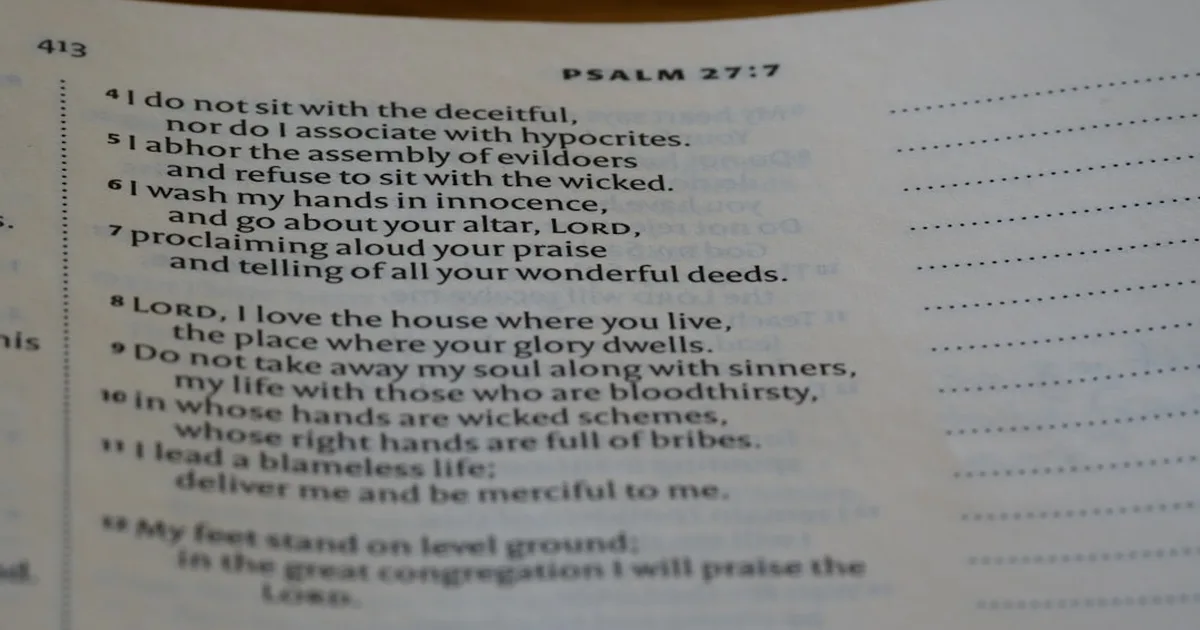
Psalm 127:3 declares clearly: "Children are a heritage from the Lord, offspring a reward from him." It does not say they are a burden, an accident, or an optional project. It presents them as a divine gift, something God gives with love and purpose. Yet we live in tension between this biblical truth and the pressures of a society that often sees children as an obstacle to personal fulfillment.
How can we, as believers, balance the desire to have children with the responsibility of raising them? Is it a sin not to want children? How far does the "blessing" of children extend? In this article, we will explore these questions from a pastoral, biblical, and practical perspective, without falling into extremes or judgment.
Children in the Bible: Blessing, Not Burden
From Genesis, God blesses humanity with the command to "be fruitful and multiply" (Genesis 1:28). In the Old Testament, fertility was seen as a sign of divine favor, and barrenness as an affliction. Figures like Sarah, Rachel, Hannah, and Elizabeth cried out to God for children, and when He granted them, it was a cause of great joy and gratitude.
Psalm 127 continues by saying that children are like "arrows in the hands of a warrior" (v. 4). This metaphor suggests that children are not only a gift but also a responsibility: they must be "shot" with direction and purpose. It's not about accumulating children aimlessly, but about raising them in the fear of the Lord so that they may be a blessing to society.
Jesus himself, in the New Testament, blessed the children and said, "Let the little children come to me, and do not hinder them, for the kingdom of heaven belongs to such as these" (Matthew 19:14). Far from seeing children as a nuisance, Jesus set them as an example of faith and humility.
Does This Mean Everyone Must Have Children?
Not necessarily. The Bible does not impose parenthood as a universal command for every believer. Paul, for example, speaks of the gift of celibacy and encourages those who can live without marrying to do so, in order to devote themselves more fully to the Lord (1 Corinthians 7:7-8). Moreover, there are couples who face infertility, and that is not a sign of lack of God's blessing. God's blessing manifests in many ways, not only through children.
The important thing is that if God gives you children, you receive them with gratitude and raise them according to His principles. And if He does not give you children, you trust that His plan for you is equally good and meaningful.
Social Pressure and Parenting in the 21st Century
We live in an era where parenting has become more complex than ever. The costs of education, housing, and healthcare are high, and many families feel they cannot afford more than one or two children. Add to this the pressure of a culture that promotes individualism: "first finish your studies, then travel, then build your career, and then—if at all—think about children." But the Bible calls us to trust in God's provision, not in our bank accounts.
On the other hand, there is also pressure within certain Christian circles to have many children, as if quantity were a measure of spirituality. This can create guilt in those who, for various reasons, cannot or do not wish to have a large family. The key is to seek God's will for your life, not to compare yourself with others.
The apostle Paul wrote: "Each one should examine their own actions" (Galatians 6:4). We are not called to live by the expectations of others, but to walk in the freedom that Christ gives us. Whether you have one child or ten, whether you are a parent or not, your identity is in Christ, not in your family size.





Comments