
In the rich tradition of the Church, icons represent much more than simple works of art. They are spiritual windows that allow us to contemplate the divine through beauty. As the apostle Paul writes: "So we fix our eyes not on what is seen, but on what is unseen, since what is seen is temporary, but what is unseen is eternal" (2 Corinthians 4:18, NIV). Icons, with their theological depth and ability to communicate without words, help us precisely in this gaze of faith that goes beyond immediate appearance.
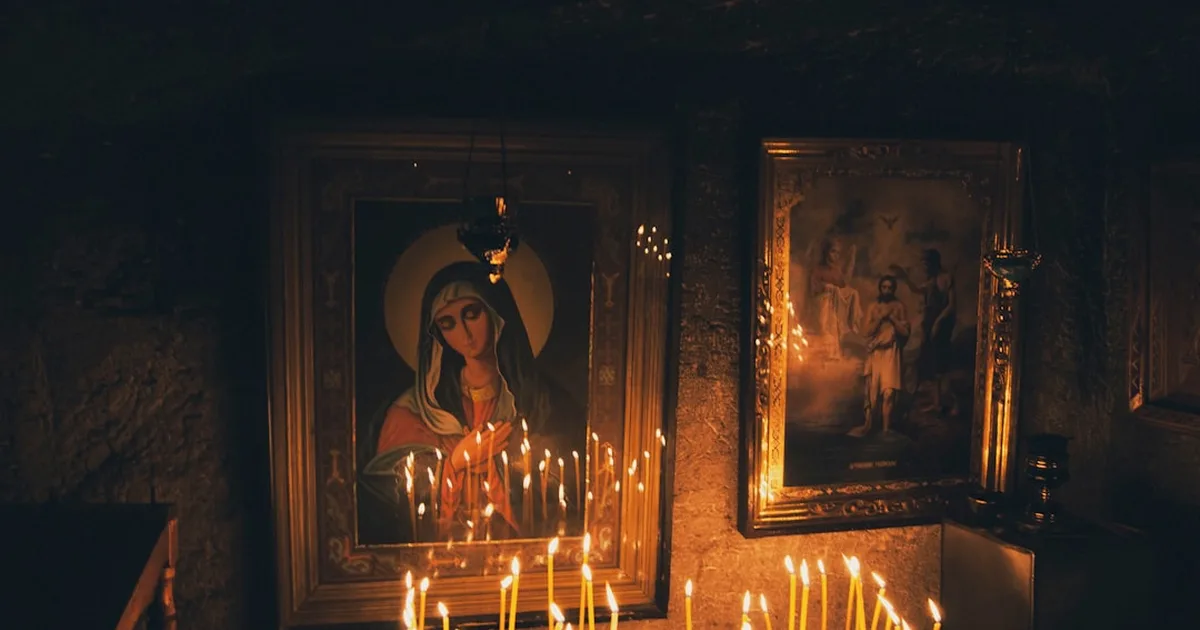
The veneration of icons has ancient roots in the Church, dating back to the first centuries of Christianity. This is not idolatry, as clarified by the Second Council of Nicaea in 787, but relative veneration that points to the represented prototype. The icon is like a visual letter that speaks to us of God, the Virgin Mary, and the saints, inviting us to a deeper relationship with the divine.
In this context, Marian icons hold a special place. The Mother of God, through her different representations, shows us the maternal face of God who cares for his people. As the Gospel reminds us: "Blessed is she who has believed that the Lord would fulfill his promises to her!" (Luke 1:45, NIV). Mary thus becomes a model of faith for every Christian.
Marian Icons: Mirrors of Divine Tenderness
Among the many representations of the Virgin, some icons particularly dear to popular piety show us specific aspects of the relationship between God and humanity. The icon of the Mother of God of Tenderness, known in different Christian traditions, represents the tender embrace between Mary and the Child Jesus. This image speaks to us of the incarnation as an act of God's love for humanity.
The prophet Isaiah had already foretold this dimension of the divine relationship: "As a mother comforts her child, so will I comfort you" (Isaiah 66:13, NIV). In the icon of Tenderness we see this promise visually realized: God becoming a child to draw near to us with gentleness and mercy.
Pope Francis, who passed away in April 2025, often recalled the need for a Church "going forth," capable of showing the maternal face of God to the world. The current Pontiff, Leo XIV, continues on this path, inviting Christians to be witnesses of divine mercy in every cultural and social context.
The Theological Meaning of Marian Iconography
Every detail in Marian icons has precise theological meaning. The colors, gestures, even the position of hands and gaze communicate truths of faith. The gold background represents the divine light that envelops the sacred figures, while the red of Mary's garments often symbolizes both royalty and passion.
The position of the Child Jesus, clinging to his Mother's face or blessing with his hand, speaks to us of Christ's dual nature: true God and true man. As John's prologue states: "The Word became flesh and made his dwelling among us" (John 1:14, NIV). The icon makes this mystery of incarnation visible.
Sacred Art as a Bridge Between Christian Traditions
EncuentraIglesias.com, as an ecumenical platform, recognizes the value of different artistic expressions in various Christian traditions. Icons, born in the Eastern context, have become the heritage of the entire Church, demonstrating how beauty can unite beyond cultural and historical differences.
The apostle Paul exhorts us: "And over all these virtues put on love, which binds them all together in perfect unity" (Colossians 3:14, NIV). Sacred art, in its different forms, can be precisely this "bond" that helps us recognize our common faith in Christ, beyond denominational differences.
Throughout Church history, many saints have found in icons a source of inspiration for their spiritual life and service to others. These sacred images remind us that our faith is not just doctrine, but a living relationship with God that expresses itself in concrete love for our brothers and sisters.


Comments