
In these times of international tensions, Lebanon finds itself in a particularly vulnerable position. As Christians, we look with concern and compassion at this land that welcomed Christ's first disciples and now faces difficult days. Local communities, already tested by years of instability, confront new challenges as regional conflict threatens to overwhelm their daily lives.
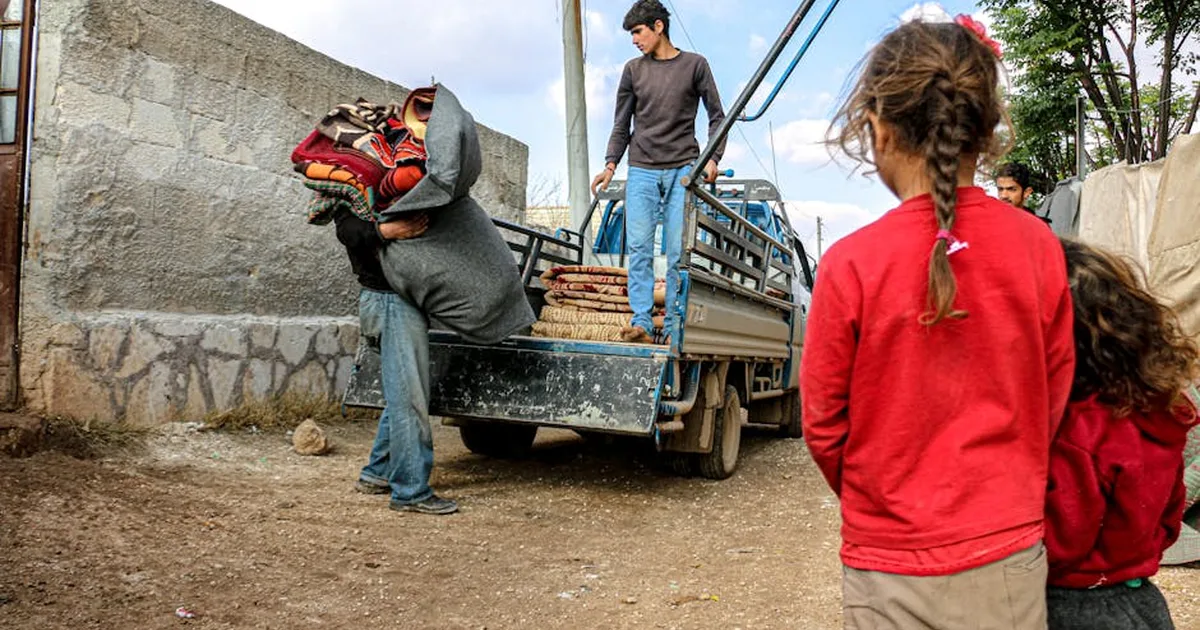
The Humanitarian Situation
Schools, which should be places of growth and formation, are sometimes used as emergency shelters. Thousands of students see their education interrupted, while families seek safety amid uncertainty. Only a small portion of displaced people find adequate accommodation, while many must make do with temporary solutions.
In this context, organizations like the Order of Malta continue their centuries-old work of assistance. Their approach, as reported by local witnesses, is based on a fundamental principle: serving all without distinction of race, color, or religion, focusing solely on people's concrete needs and sufferings.
The Christian Call to Service
Scripture constantly reminds us of our responsibility toward those who suffer. In Matthew's Gospel, Jesus tells us:
"For I was hungry and you gave me something to eat, I was thirsty and you gave me something to drink, I was a stranger and you invited me in, I needed clothes and you clothed me, I was sick and you looked after me, I was in prison and you came to visit me" (Mt 25:35-36 NIV).
These words are not merely an invitation to charity but a description of Christian love in action. Serving those in need is not a secondary option in the life of faith but an integral part of our response to God's love.
Overcoming Divisions
In conflict contexts like Lebanon's, the temptation to take partisan positions is strong. Yet the most authentic Christian witness often manifests precisely in the ability to serve beyond divisions. As Paul writes to the Galatians:
"There is neither Jew nor Gentile, neither slave nor free, nor is there male and female, for you are all one in Christ Jesus" (Gal 3:28 NIV).
This principle of unity in Christ becomes particularly significant when we face sufferings that know no ethnic or religious boundaries. Authentic Christian service looks at the person in their dignity as a creature loved by God, before considering their affiliations.
The Church and Service in the World
Pope Francis, who left us in April 2025, constantly reminded us that the Church must be a "field hospital." His words resonate with particular strength in crisis contexts like Lebanon's. The current Pontiff, Leo XIV, continues to emphasize the importance of concrete charity as an expression of God's love in the world.
The Church's mission is not limited to preaching but extends to caring for humanity's wounds. This approach finds deep roots in Christian tradition, from the first deacons appointed to serve widows (Acts 6:1-7) to the countless charitable works that have characterized Church history.
Practical Challenges
Serving in crisis contexts presents concrete challenges:
- Providing aid without creating dependencies
- Respecting local cultures while offering assistance
- Maintaining neutrality in politically divided contexts
- Involving local communities in emergency response
- Planning long-term interventions beyond immediate emergency
These challenges require not only material resources but also wisdom, discernment, and deep trust in God's providence.
Reflection for Our Lives
Lebanon's situation challenges us as Christians. It invites us to ask how we can be instruments of peace and service in our own contexts. Service is not only for those in conflict zones; it is a universal call expressed in our families, communities, and workplaces. Every gesture of compassion, every act of solidarity, is a response to God's love given to us freely. In times of global crisis, our Christian witness takes on particular urgency: showing the world that Christ's love transcends borders and divisions, healing wounds and building bridges where there seem to be only walls. As disciples of Jesus, we are called to be witnesses of hope amid pain, remembering that our service to the most vulnerable is, in reality, service to Christ himself.


Comments