
In a time marked by tensions and divisions, the message of hope that comes from the Christian faith invites us to look beyond appearances. The city of Jerusalem, a symbol of peace for many, is today the stage for conflicts that seem endless. Yet, even amid the rubble, God's dream for this land has never died. As the book of Revelation reminds us, there is a new Jerusalem coming down from heaven, ready to welcome all peoples in a communion of peace and love.
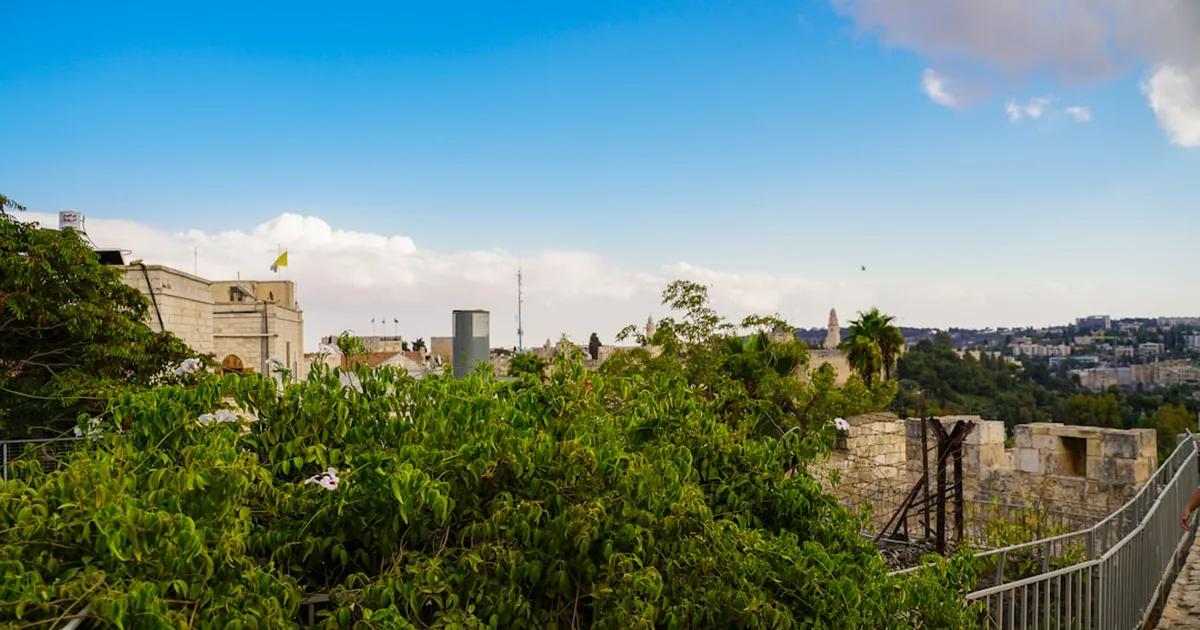
This prophetic vision is not just a distant utopia, but a concrete call for us Christians. In a context of war and suffering, we are invited to become bridge-builders, witnesses to a reconciliation that goes beyond ethnic and religious barriers. Faith urges us not to give in to hatred, but to sow seeds of hope even in the most arid soils.
The Latin Patriarch of Jerusalem, in a recent pastoral letter, spoke of a "new paradigm" for living out faith after the events of October 7, 2023, and the war in Gaza. This paradigm is not an escape from reality, but a different way of being together, inspired by the heavenly Jerusalem of Revelation, where divisions are overcome and wounds healed.
God's Dream for a Wounded City
Jerusalem is a unique city, loved by Jews, Christians, and Muslims. But this very uniqueness has become a source of conflict. God's dream, however, is greater than our divisions. In the Bible, Jerusalem is often described as the city of peace, but also as an unfaithful bride whom God continues to love. The prophet Isaiah speaks of a future where "no more shall be heard in it the sound of weeping and the cry of distress" (Isaiah 65:19, ESV).
For Christians, Jerusalem is the place of the cross and resurrection, where evil was overcome by love. This central event of our faith teaches us that peace is not the absence of conflict, but the presence of a love that reconciles. God's dream for Jerusalem is that it become an open city, where all can live in harmony, respecting diversity and sharing the same hope.
In this sense, the patriarch's pastoral letter invites us not to retreat into an exclusivist vision, but to look to the "new Jerusalem" as a model of coexistence. This is not a political project, but a conversion of the heart, beginning with each one of us.
The Role of Families in Purifying Memory
One of the greatest challenges in conflicts is the transmission of hatred from generation to generation. Christian families are called to break this cycle, becoming places of healing and reconciliation. The patriarch emphasized the importance of educating children in truth, without fueling resentment toward others.
Purifying memory is a difficult but necessary process. It means recognizing the injustices suffered and those committed, without falling into the temptation of revenge. Jesus taught us to forgive "seventy-seven times" (Matthew 18:22, NIV), and this applies even to the most painful conflicts. Families can be a concrete example of this forgiveness, telling the story with honesty and hope.
It is not about forgetting, but about transforming memory into a source of peace. Parents can teach their children to pray for enemies, to see the face of Christ in every person, even in those who are different. In this way, the family becomes a small domestic church, where love that overcomes every barrier is learned.
Living the Gospel in Times of War
The war in Gaza and the tensions in the Holy Land confront us with difficult questions: How can we continue to hope? How can we love our enemies when the pain is so great? The answer is in the cross of Christ, which turned the greatest injustice into victory over hatred.


Comments