
In these times when the world's attention turns to other conflicts, there exists a reality that continues to suffer in the shadows. The Gaza Strip endures a humanitarian situation that deeply challenges the conscience of every believer. While our Holy Father Pope Francis left us in April 2025, and today we are guided by the new Pontiff Leo XIV, the universal Church maintains its concern for every suffering human being.
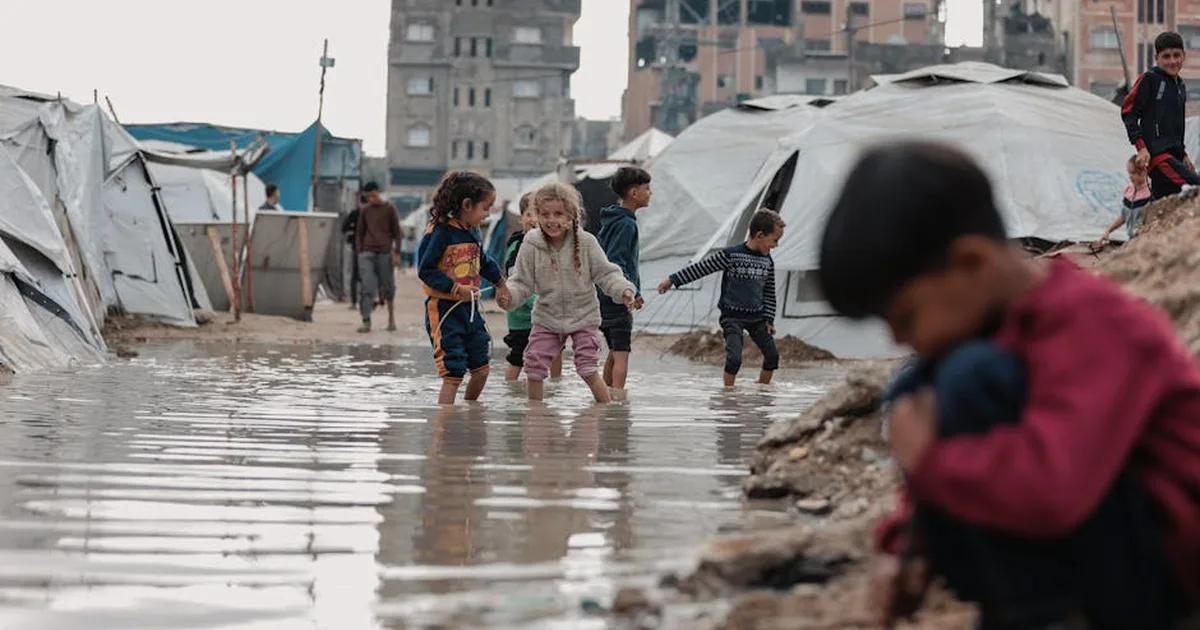
The Face of Suffering
Behind the statistics speaking of thousands of affected children, broken families, shortages of drinking water and medicines, concrete faces are hidden: children who have lost their smiles, mothers struggling to feed their children, fathers powerless before the illness of their loved ones. This reality reminds us of the words of the prophet Jeremiah:
"A voice is heard in Ramah, mourning and great weeping, Rachel weeping for her children and refusing to be comforted, because they are no more" (Jeremiah 31:15).
The Response of Faith
As an ecumenical Christian community, we are called to look at this situation through the eyes of faith. The Gospel teaches us that every person is created in God's image and likeness, and that Christ identifies with those who suffer:
"For I was hungry and you gave me something to eat, I was thirsty and you gave me something to drink, I was a stranger and you invited me in, I needed clothes and you clothed me, I was sick and you looked after me, I was in prison and you came to visit me" (Matthew 25:35-36).
The Challenges of Humanitarian Aid
The international aid system encounters significant difficulties, while restrictions and complex political dynamics make every relief attempt fragile. In this context, the spread of infectious diseases represents an additional threat to an already burdened population.
Our Calling as Christians
As followers of Christ, we are invited to:
- Educate ourselves properly about the situation, overcoming prejudices and simplifications
- Pray consistently for peace and justice in the Holy Land
- Support humanitarian organizations operating transparently and effectively
- Promote dialogue and reconciliation in our communities
- Remember that our faith calls us to love without borders
A Hope That Does Not Disappoint
Even in the darkest situations, God's Word offers us light:
"Blessed are the peacemakers, for they will be called children of God" (Matthew 5:9).Peace is not merely the absence of conflict, but the presence of justice, dignity, and the possibility of full life for every person.
For a Concrete Response
How can we translate this reflection into concrete action? First, by cultivating a heart sensitive to the sufferings of others, even when geographically distant. Second, by educating ourselves and our communities in a vision of faith that does not close in on its own horizon, but opens to the needs of the whole world.
Let us remember the words of Saint Paul:
"Carry each other's burdens, and in this way you will fulfill the law of Christ" (Galatians 6:2).This invitation applies even when burdens are carried by people we don't know personally, but who share with us our common humanity.
Final Reflection
Faced with the complexity of Gaza's situation, we might feel powerless. But faith teaches us that every gesture of compassion, every sincere prayer, every effort to understand has eternal value. As the book of Proverbs reminds us:
"Whoever is kind to the poor lends to the Lord, and he will reward them for what they have done" (Proverbs 19:17).
In this historical moment, while the Church is guided by Pope Leo XIV, we feel renewed the invitation to be builders of peace and agents of hope amid human suffering.


Comments