
In a crowded neighborhood of Karachi, where poverty and child labor steal the childhood of hundreds of children, the local Church has decided to act. Through Caritas, five non-formal education centers have been opened within St. Michael's Parish. The goal is to reach children aged 6 to 14 who have dropped out of school or never had access to it.
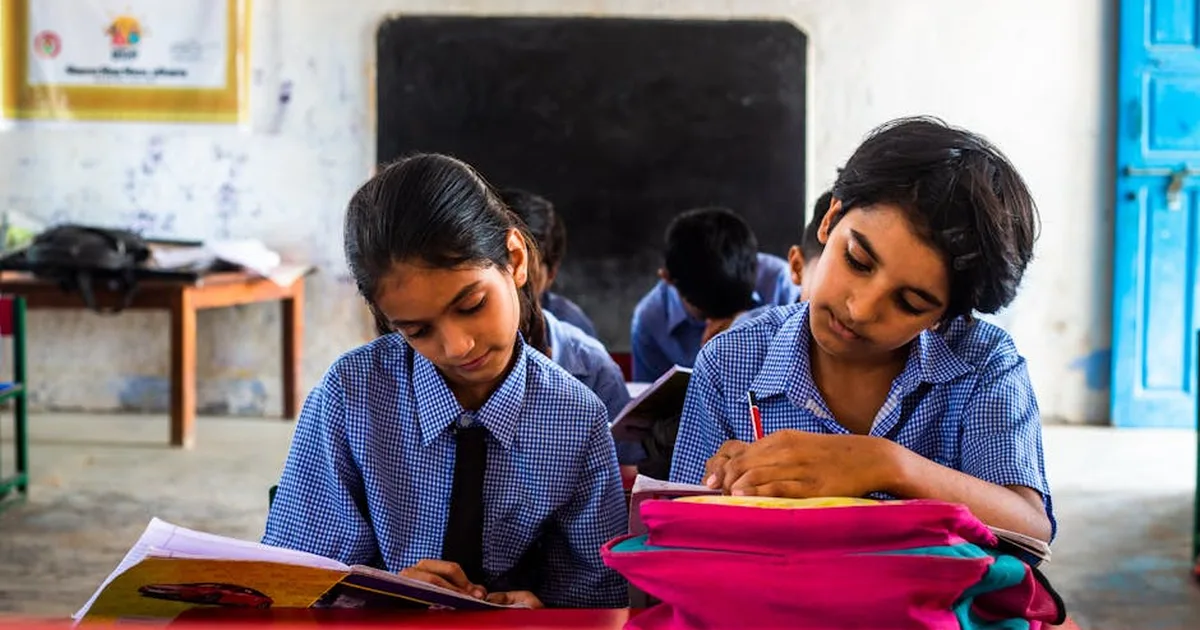
According to estimates, there are between 400 and 500 children in the area who are out of the school system. The causes are many: extreme poverty, the need to work to support their families, and the effects of climate change that hit vulnerable communities hard. In this context, Caritas' initiative is a ray of hope.
Father Nobert Nazir, pastor of St. Michael's, emphasized the importance of this project: "Education is not a privilege, but a fundamental right. Every child deserves to learn and build a better future. These centers are a tangible sign of God's love for the little ones."
"Let the little children come to me, and do not hinder them, for the kingdom of heaven belongs to such as these." (Matthew 19:14, NIV)
The Face of Educational Poverty in Pakistan
Pakistan is one of the countries with the highest rate of out-of-school children. According to UNESCO, about 22 million school-age children do not attend any institution. The reasons are complex: poor families often cannot afford school expenses, even when the school is public. Additionally, many children are forced to work to contribute to family income, especially in agriculture and crafts.
Climate change further worsens the situation. Floods and droughts destroy crops and force families to move, disrupting school continuity. In this scenario, the Church's intervention becomes crucial to offer an alternative to the youngest.
How the Non-Formal Education Centers Work
The centers opened by Caritas offer a flexible educational program adapted to the needs of working children. Classes are held at times compatible with work and include basic subjects like reading, writing, and math, as well as civic education and Christian values. The goal is to prepare children for possible reintegration into the formal school system.
Each center is run by trained volunteers, often young people from the parish. In addition to teaching, the centers provide a hot meal and psychological support. "We want children to feel loved and welcomed," explains Father Nazir. "School is not just a place of learning, but also of community and human growth."
The Church's Response to Social Challenges
Caritas' initiative in Karachi is part of a broader commitment by the Pakistani Church to children's rights. In a country where Christians are a minority, often discriminated against, the Church seeks to be a sign of unity and service for all, regardless of religious affiliation.
The choice to open the centers in parish premises is not accidental: the parish becomes a reference point for the entire community, a place where material and spiritual needs find a response. "Our faith calls us to care for the least of these," says Father Nazir. "Jesus taught us that whenever we do good to a little one, we do it to Him."
"Truly I tell you, whatever you did for one of the least of these brothers and sisters of mine, you did for me." (Matthew 25:40, NIV)
The Role of Volunteers and the Community
The centers could not function without the contribution of volunteers. Many of them are young people from the parish who dedicate their free time to teaching and accompanying the children. Their work is essential to create an environment of trust and joy.
The community has also mobilized: some families donate food and school supplies, while others offer their time to repair facilities. This network of solidarity is a living testimony of the Gospel.
A Future of Hope
Caritas' project in Karachi is not a definitive solution, but it is an important step. Every child who learns to read and write has more opportunities to break the cycle of poverty. The Church, faithful to its mission, continues to invest in education as a path to liberation and dignity.
As Father Nazir says: "We cannot change the world overnight, but we can change a child's world. And that is already a great victory."


Comments