
Today's world is marked by a new form of division, no longer made of bricks and barbed wire, but of cables, servers, and algorithms. We live in an era where information travels at the speed of light, yet the barriers between people seem higher than ever. Russian writer and philosopher Mikhail Epstein has spoken of an 'electronic curtain' separating the West from the East, a virtual wall that fragments global communication. This reality challenges us as Christians: we are called to be bridge-builders, not wall-builders.

Technology itself is neither good nor bad. It is a tool that can be used to bring people together or drive them apart. In a context where even the founders of platforms like Telegram become figures of resistance, we ask ourselves: where does the Church stand in this network of connections and divisions? How can we proclaim the Gospel in a fragmented digital world?
The answer is not to reject technology, but to use it with wisdom and love. As the apostle Paul writes: 'Do not conform to the pattern of this world, but be transformed by the renewing of your mind' (Romans 12:2, NIV). This renewal pushes us to see beyond barriers and seek unity in the Spirit.
The Challenge of Communication in the Digital Age
Digital platforms have created spaces for encounter, but also for isolation. We often find ourselves in 'bubbles' where we only meet those who think like us. This dynamic risks reinforcing prejudices and divisions. For the Christian, communication is not just an exchange of information, but an encounter between people. Jesus himself taught that truth is found in relationship: 'I am the way and the truth and the life' (John 14:6, NIV).
The challenge is twofold: on one hand, we must learn to use new media to proclaim the Gospel; on the other, we must resist the temptation to retreat into an 'electronic curtain' that separates us from our neighbor. Pope Leo XIV, in his first message, reminded us that the Church is called to be a 'field hospital,' even in the digital world. We must bring comfort and hope to those wounded by loneliness and misinformation.
In this context, missionary service takes on new forms. It is not just about going to distant lands, but about being present in the virtual spaces where people seek meaning and community. As Christians, we can create 'digital oases' of dialogue and prayer, breaking down the barriers of distrust and hatred.
The Role of Prayer and the Word
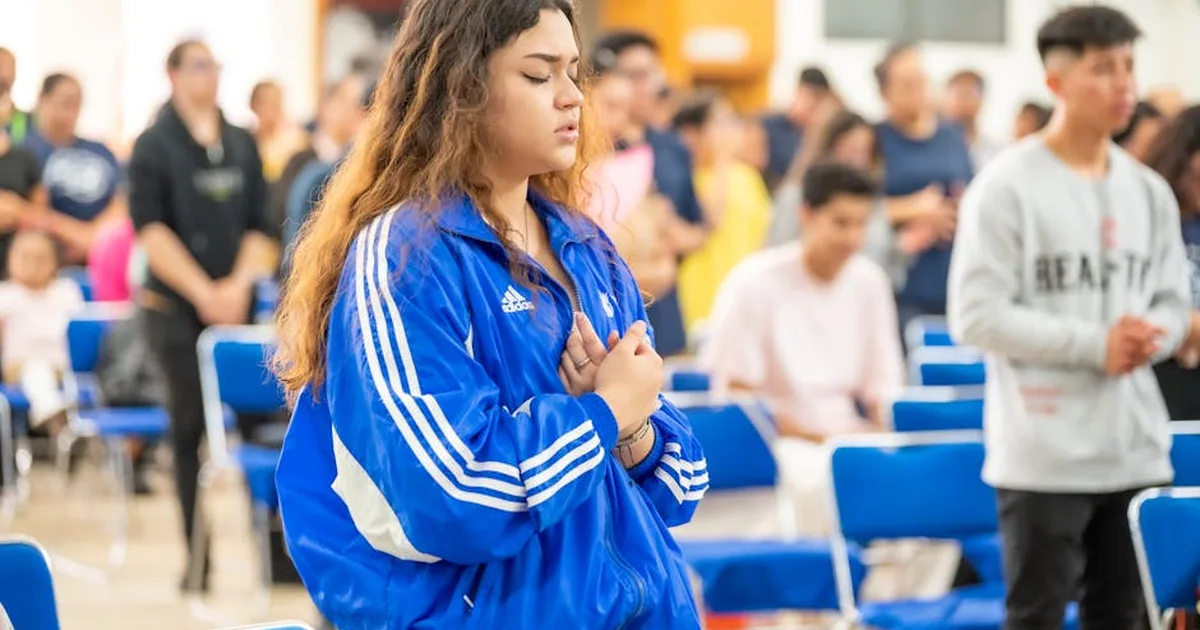
Prayer is our most powerful weapon for tearing down digital walls. When we pray, we connect with God and with brothers and sisters around the world. Scripture encourages us: 'Pray continually' (1 Thessalonians 5:17, NIV). Even in a world of screens, prayer unites us as one family.
Moreover, God's Word offers us a compass to navigate the sea of information. Psalm 119:105 says: 'Your word is a lamp for my feet, a light on my path' (NIV). In an age of fake news and division, the Bible helps us discern truth and live in love.
Unity in Diversity: The Model of the Early Church
The early Church faced similar challenges: how to maintain unity among different cultures and languages. Pentecost is the perfect model: the Holy Spirit enabled each person to hear the message in their own language (Acts 2:1-13). Today, technology could be a new 'mighty wind' that helps us speak different languages and understand each other.
Paul reminds us that 'there is neither Jew nor Gentile, neither slave nor free, nor is there male and female, for you are all one in Christ Jesus' (Galatians 3:28, NIV). This unity does not erase differences but enriches them. In the digital context, we can celebrate the diversity of our traditions and find common ground in Christ's love.


Comments