
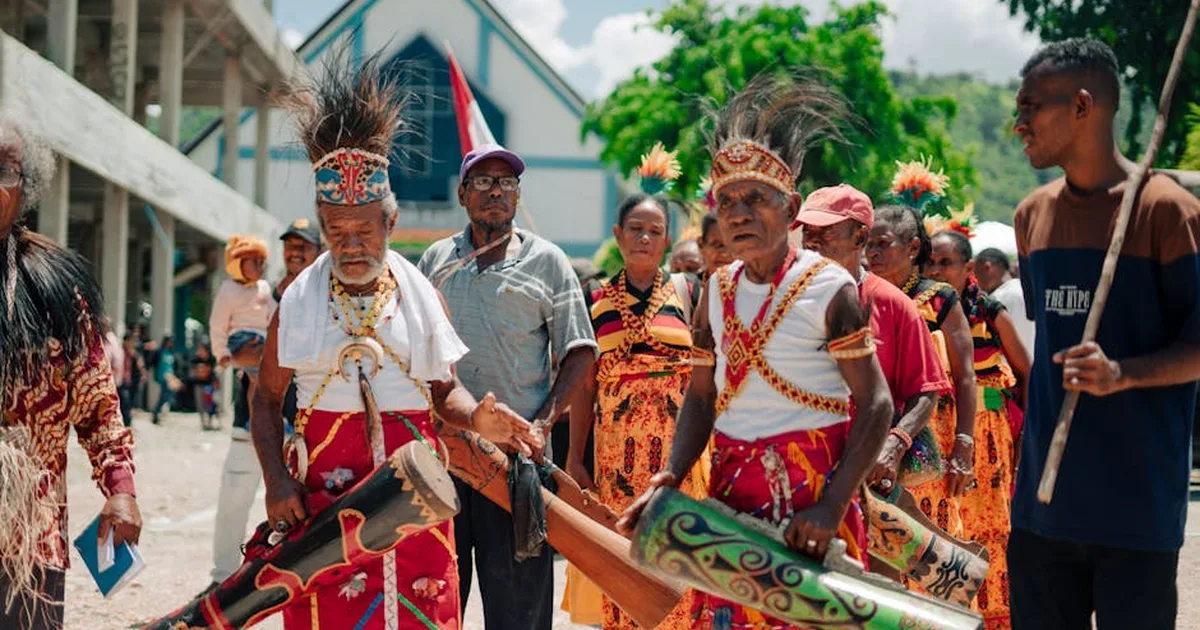
In the green, mountainous lands of Indonesian Papua, where the sky seems to touch the treetops, a significant page of Christian witness was written. Father Nico Dister, a Dutch Franciscan missionary, spent over fifty years of his life serving the Church in that region, passing away in the Netherlands at the age of 87. His story is not simply that of a religious worker in a foreign land, but of a man who made his life a gift for others, embodying that missionary mandate that belongs to every baptized person.
Mission as Encounter
Missionary service, in the Christian vision, is never an act of conquest, but of encounter. Father Dister understood this deeply, dedicating himself not only to proclaiming the Gospel, but to forming local religious and lay leaders, so that faith could take root in Papuan culture. As the Second Vatican Council reminds us, the Church "while on pilgrimage in this world amid persecutions and the consolations of God, announces the cross and death of the Lord until he comes" (Lumen Gentium, 8). This proclamation becomes concrete in accompanying communities toward autonomy and maturity in faith.
A Legacy That Endures
Among the most significant works left by Father Dister is a foundation caring for orphans in Jayapura. This aspect of his mission reminds us of Jesus' words: "Whoever welcomes one such child in my name welcomes me" (Matthew 18:5 NRSV). Care for the little ones, for those without family, for the least among us, is not an optional addition to evangelizing mission, but its beating heart. The foundation continues its work today, showing how seeds sown in love bear fruit over time.
Formation as Service
Father Dister was known as a great scholar of philosophy and a formator. This aspect of his ministry speaks to us about the importance of formation in Christian life. Saint Paul exhorted Timothy: "What you have heard from me through many witnesses entrust to faithful people who will be able to teach others as well" (2 Timothy 2:2 NRSV). Forming local leaders ensures that faith does not remain foreign to culture, but can express itself with authentically Papuan languages and ways.
Mission Today
In the current ecclesial context, with Pope León XIV leading the Catholic Church, the theme of mission remains central. The Pontiff, in his first homily, recalled that "the Church exists to evangelize," calling all the baptized to rediscover the missionary dimension of their faith. This doesn't necessarily mean departing for distant lands, but living the Gospel with consistency and witness in one's own life environments.
Dimensions of Missionary Service
From Father Dister's experience we can identify some essential dimensions of missionary service:
- Listening: Before speaking, the missionary learns to listen to the culture, needs, and questions of the people encountered.
- Incarnation: As Christ became human, the missionary becomes neighbor, sharing people's lives.
- Formation: Investing in people's growth, so they become protagonists of their own faith story.
- Diakonia: Concrete service to those most in need, mirroring God's love for every creature.
"Go therefore and make disciples of all nations, baptizing them in the name of the Father and of the Son and of the Holy Spirit, and teaching them to obey everything that I have commanded you" (Matthew 28:19-20 NRSV)
For a Missionary Spirituality
Missionary spirituality is not reserved for a few specialists, but is the vocation of every Christian. Each baptized person is called to be a witness of God's love in their surroundings, whether in family, work, or community. Father Dister's example inspires us to live our faith with hearts open to others, ready to serve wherever God calls us. In a world often searching for meaning, our mission is to show the merciful face of Christ, especially to those who feel forgotten or marginalized.


Comments