
The prayer to Our Lady of Pompeii, also known as the Supplication to the Queen of the Holy Rosary, is one of the most beloved Marian devotions worldwide. Every May 8 and the first Sunday of October, thousands of faithful gather in Pompeii and around the globe to recite this prayer composed by Blessed Bartolo Longo. Its strength lies in the simplicity and trust it expresses: entrusting oneself to Mary as Mother and Queen. In times of uncertainty like the present, with the recent passing of Pope Francis (April 2025) and the election of Pope Leo XIV (May 2025), the prayer to Our Lady of Pompeii reminds us that the Church is always under Mary's protection.
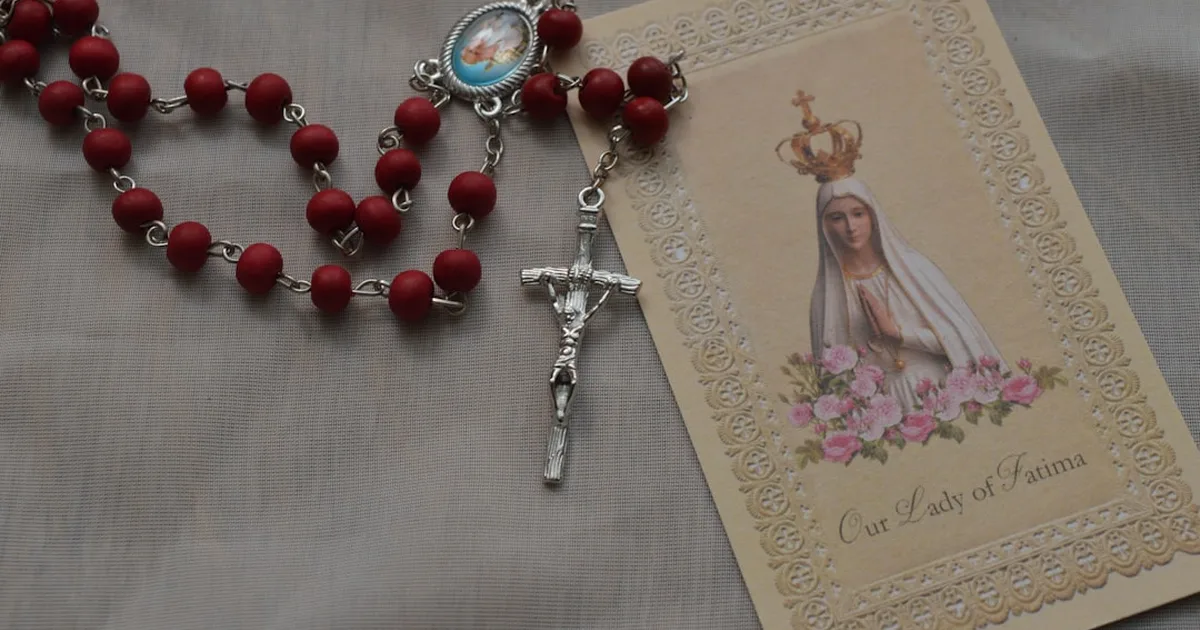
History and Meaning of the Our Lady of Pompeii Prayer
The prayer to Our Lady of Pompeii was written in 1883 by Bartolo Longo, a converted lawyer who dedicated his life to spreading the Rosary. While praying before the image of the Virgin of the Rosary, he felt inspired to compose a supplication to ask for special graces. Today, this prayer is recited worldwide as an act of filial abandonment to Mary. Its popularity has grown over time, especially in English-speaking countries, where the Sanctuary of Pompeii is a destination for ongoing pilgrimages. Reciting the prayer to Our Lady of Pompeii means joining a tradition of faith that spans generations, trusting in Mary's powerful intercession.
The Context of the Supplication
The Supplication to Our Lady of Pompeii is publicly recited twice a year, but many faithful pray it daily. The prayer begins with the words:
“O Virgin of the Rosary of Pompeii, Queen of Victories, Mother of Mercy, to you our hearts turn...”Each phrase is an act of faith and a request for protection. In an era marked by personal and communal challenges, this prayer offers comfort and hope.
How to Pray the Our Lady of Pompeii Prayer
To pray the Our Lady of Pompeii prayer fruitfully, it is not enough to say the words: you need a heart open to grace. Here are some practical steps:
- Choose a quiet place: Create a small prayer corner at home, perhaps with an image of Our Lady of Pompeii.
- Prepare the Rosary: The Supplication is linked to the recitation of the Rosary. Begin with the Sign of the Cross and the first decades.
- Read the Supplication slowly: Pause at each invocation, letting the words sink into your heart.
- Conclude with a personal request: After the prayer, entrust your intentions to Mary, as tradition recommends.
The prayer to Our Lady of Pompeii is a powerful means of obtaining graces, but above all for growing in love for God. As St. Paul says: “Pray without ceasing” (1 Thessalonians 5:17).
Testimonies of Graces Received
Around the world, there are numerous testimonies of graces received through the prayer to Our Lady of Pompeii. Many tell of unexpected healings, family reconciliations, or profound conversions. A woman from Chicago, interviewed by a local radio station, said: “After reciting the Supplication for a whole month, my son rediscovered his faith.” These stories remind us that Mary always listens to her children.
The Our Lady of Pompeii Prayer in Daily Life
Integrating the prayer to Our Lady of Pompeii into daily routine is easier than you think. You can pray it in the morning, before starting the day, or in the evening, thanking for the graces received. Many families pray it together after dinner, creating a moment of unity. The Church, under the guidance of Pope Leo XIV, encourages these devotions as ways to strengthen faith. As Psalm 95 says: “Come, let us sing for joy to the Lord; let us shout aloud to the Rock of our salvation” (Psalm 95:1). The prayer to Our Lady of Pompeii is a song of trust that unites us to Mary and sustains us in hope.



Comments