
In times of uncertainty, fear, or danger, many Christians seek a psalm for protection that reminds them of God's constant care. The Bible is filled with divine promises that assure us we are not alone, that our heavenly Father watches over us. Today, in a world that sometimes feels unstable, these ancient words resonate with renewed strength, inviting us to trust in the only one who can completely guard us.
Let's remember that, although the Church goes through changes—like the passing of Pope Francis in April 2025 and the election of Pope Leo XIV in May of the same year—the essence of our faith remains unshaken. God's protection doesn't depend on human circumstances, but on his eternal faithfulness. This devotional will guide you through some key psalms, showing you how to make them a spiritual shield in your daily life.
Why Seek a Psalm for Protection?
The psalms are more than religious poetry; they are honest prayers that capture the full range of human emotions. When we feel vulnerable, these texts allow us to express our fear while affirming our trust in God. A psalm for protection isn't a magical charm, but a tool to align our hearts with the truth: God is our refuge and strength.
In Christian tradition, psalms have been used by believers of all denominations as a common spiritual resource. EncuentraIglesias.com, as an ecumenical platform, values this shared heritage that unites us beyond secondary differences. When we turn to these texts, we participate in a millennia-old practice that has sustained generations of the faithful.
Protection in Biblical Context
In the Bible, divine protection doesn't always mean absence of danger, but God's presence in the midst of the storm. The psalms teach us that ultimate security isn't found in external circumstances, but in relationship with our Creator. This perspective is crucial to avoid misunderstandings about what "protection" means in Christian faith.
Psalm 91: The Classic Psalm of Protection
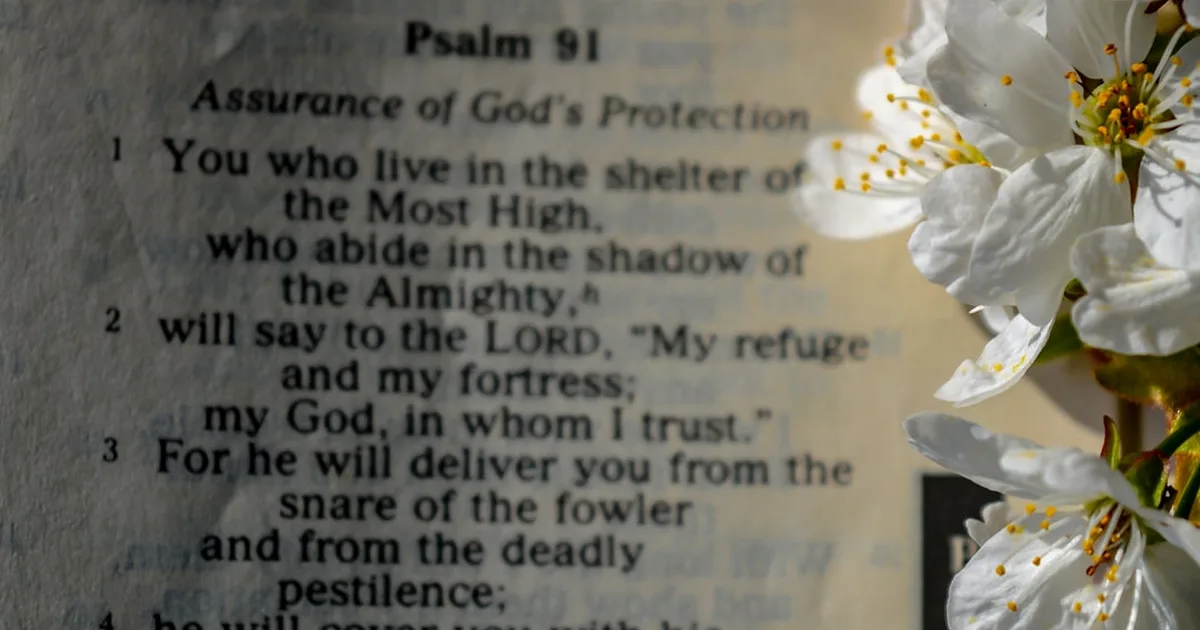
Perhaps the best-known text on this theme is Psalm 91. Its words have comforted countless believers throughout the centuries:
Whoever dwells in the shelter of the Most High will rest in the shadow of the Almighty. I will say of the Lord, "He is my refuge and my fortress, my God, in whom I trust." (Psalm 91:1-2, NIV)
This psalm of protection presents a powerful image: dwelling, remaining, settling in God's presence. It's not about an occasional visit, but a continuous residence. The promised protection flows from an intimate and constant relationship with the Father.
The psalm continues describing various forms of danger—"the fowler's snare," "deadly pestilence," "war"—affirming that God guards those who trust in him. It's worth noting that the text doesn't promise absolute immunity from suffering, but God's faithful companionship through any circumstance.
Applying Psalm 91 Today
How do we make this psalm come alive in the 21st century? Begin by memorizing some key verses. When you feel anxious, repeat them aloud, remembering that the same words that sustained David can sustain you today. You can also write specific verses and place them where you'll see them regularly, transforming your environment with reminders of divine protection.
Other Psalms That Offer Spiritual Protection
While Psalm 91 is the most famous, other psalms also offer comfort and security. Psalm 23, for example, though known as the shepherd's psalm, contains deep elements of protection:
Even though I walk through the darkest valley, I will fear no evil, for you are with me; your rod and your staff, they comfort me. (Psalm 23:4, NIV)


Comments