
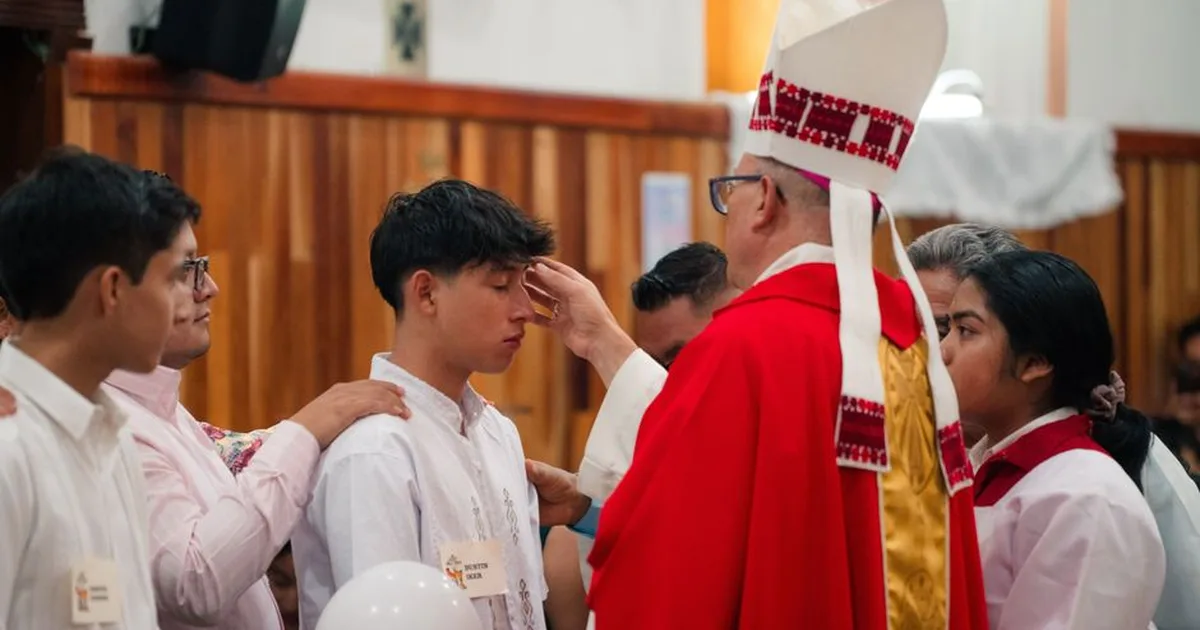
Confirmation is one of the seven sacraments of the Catholic Church. It is the sacrament that completes the grace we receive in Baptism. Through the laying on of hands and the anointing with sacred chrism (oil), the Holy Spirit is poured out upon the candidate, strengthening them with special gifts to live as a witness for Christ. The Catechism of the Catholic Church (CCC 1285) teaches that Confirmation "roots us more deeply in the divine filiation, unites us more firmly to Christ, increases the gifts of the Holy Spirit, renders our bond with the Church more perfect, and gives us a special strength to spread and defend the faith."
Who Can Receive Confirmation?
Any baptized Catholic who has reached the age of reason (usually around age 7) and has not yet been confirmed is eligible. In many dioceses, the typical age for Confirmation is early adolescence (around 12–14), but adults who were never confirmed can and do receive the sacrament—often through the Rite of Christian Initiation of Adults (RCIA) or a dedicated adult Confirmation program.
Why Does Confirmation Matter?
Confirmation is not an optional extra; it is a necessary step in fully entering the life of the Church. It seals the gift of the Holy Spirit given at Baptism, making you a full member of the Church and empowering you to participate in her mission. Confirmation also strengthens you for the spiritual journey, especially during the challenges of adolescence and adulthood. For parents, having your child confirmed is a beautiful way to help them own their faith personally.
The Gifts of the Holy Spirit
At Confirmation, the Holy Spirit bestows seven special gifts that help us live as disciples of Christ:
- Wisdom – to see things from God’s perspective
- Understanding – to grasp the truths of faith
- Counsel – to make good decisions
- Fortitude – courage to stand up for the faith
- Knowledge – to know God’s will
- Piety – to love and worship God
- Fear of the Lord – awe and reverence for God
These gifts are not just for the moment of Confirmation; they are meant to grow throughout your life.
Preparation for Confirmation
Preparation varies by parish and diocese, but typically includes:
- Catechetical classes (often weekly for several months) covering the basics of Catholic faith, the sacraments, and the meaning of Confirmation.
- Participation in parish life – Mass attendance, service projects, and retreats.
- Choosing a sponsor (see below).
- Completing Baptism and First Communion (if not already done).
- Adult candidates usually go through RCIA or a dedicated adult Confirmation program, which may be shorter or longer depending on prior formation.
Important: Exact requirements, documents, timelines, and any offerings vary by parish, diocese, and country. Always confirm the specifics with your local parish.
The Role of the Confirmation Sponsor
The sponsor (padrino or madrina) is a person who accompanies the candidate through preparation and presents them to the bishop at Confirmation. The sponsor should be:
- A practicing Catholic, at least 16 years old, who has received the sacraments of Baptism, Confirmation, and Eucharist.
- Not the parent of the candidate (though a parent may be a witness in some cases, the Church strongly recommends a different person).
- Someone who leads a life of faith and can serve as a mentor.
If you were baptized as an infant, you may choose a different sponsor from your godparent, but many people choose their godparent. For adults, the sponsor can be a friend or relative who is a faithful Catholic.
Practical Requirements
Most parishes will ask for:
- A copy of the candidate’s Baptism certificate (if not baptized at the same parish).
- Proof of First Communion (often on the same certificate).
- A completed registration form with contact information.
- Name and information of the sponsor (including a letter of recommendation from the sponsor’s pastor, in some dioceses).
- A fee (usually modest, to cover materials and retreat costs; some parishes waive it).
- Attendance at scheduled sessions and a retreat.
Check with your parish for their specific checklist.
What Happens at the Confirmation Mass?
The Confirmation Mass is a beautiful and solemn celebration, usually presided over by the bishop (or a priest delegated by him). Key moments:
- Renewal of Baptismal Promises – The candidates publicly affirm their faith.
- Laying on of Hands – The bishop and priests extend their hands over the candidates, invoking the Holy Spirit.
- Anointing with Chrism – The bishop anoints each candidate’s forehead with sacred chrism, saying, "Be sealed with the Gift of the Holy Spirit."
- Sign of Peace – The bishop offers the sign of peace to the newly confirmed.
The Mass continues with the Liturgy of the Eucharist. It is a deeply moving experience for both the candidate and the entire parish community.
For Adults Seeking Confirmation
If you are an adult (18 or older) who has not been confirmed, you are absolutely welcome! Many adults come to this sacrament later in life. The process is typically through the Rite of Christian Initiation of Adults (RCIA) or a separate adult Confirmation program. Here’s what to expect:
- You will meet with a catechist or priest to discuss your faith journey.
- You may attend a series of sessions (often weekly or bi-weekly) that cover Catholic teachings.
- You will choose a sponsor (a practicing Catholic who can support you).
- If you are already baptized and have made First Communion, the preparation may be shorter.
- If you are unbaptized or have not received First Communion, you will go through the full RCIA process and receive all sacraments at the Easter Vigil.
Do not hesitate to contact your parish office. They are there to help you take this step with joy and confidence.
Frequently Asked Questions
Here are some common questions people have about Confirmation.
What is the usual age for Confirmation?
It varies widely. In many U.S. dioceses, it is around 7th or 8th grade (ages 12–14). Some dioceses confirm earlier (age 7–8) or later (high school). Check with your parish.
Can an adult be confirmed without going through RCIA?
Yes, many parishes offer a separate adult Confirmation program for baptized Catholics who have made First Communion but were never confirmed. The program is usually shorter than full RCIA.
Do I need a sponsor? Can I use my baptismal godparent?
Yes, you need a sponsor. You may choose your baptismal godparent if they meet the requirements (practicing Catholic, confirmed, at least 16). You can also choose someone else.
What if I was baptized in another Christian denomination?
If your baptism is considered valid by the Catholic Church (Trinitarian formula, water, intention), you can be received into the Church and confirmed. You will typically go through RCIA.
Is there a cost for Confirmation?
Some parishes ask for a small fee (e.g., $20–$50) to cover materials and the retreat. Many parishes offer assistance or waive the fee if needed. Never let cost be a barrier—talk to your parish.
What documents do I need to provide?
Commonly: a copy of your Baptism certificate (if not at the same parish), proof of First Communion, and a completed registration form. Your parish will give you a list.
Find a church near you
The practical first step is to contact your local parish. EncuentraIglesias is a directory of 516,000+ churches across 14 countries — use it to find the nearest one and get in touch.



Comments