
As we walk together as a Christian community, we sometimes face situations that deeply wound us. Recently, in a region where faith has ancient roots, an image of Jesus crucified was subjected to an act that has moved believers around the world. As brothers and sisters in Christ, we know that these moments invite us not only to express our pain, but also to reflect on how we respond from our faith.
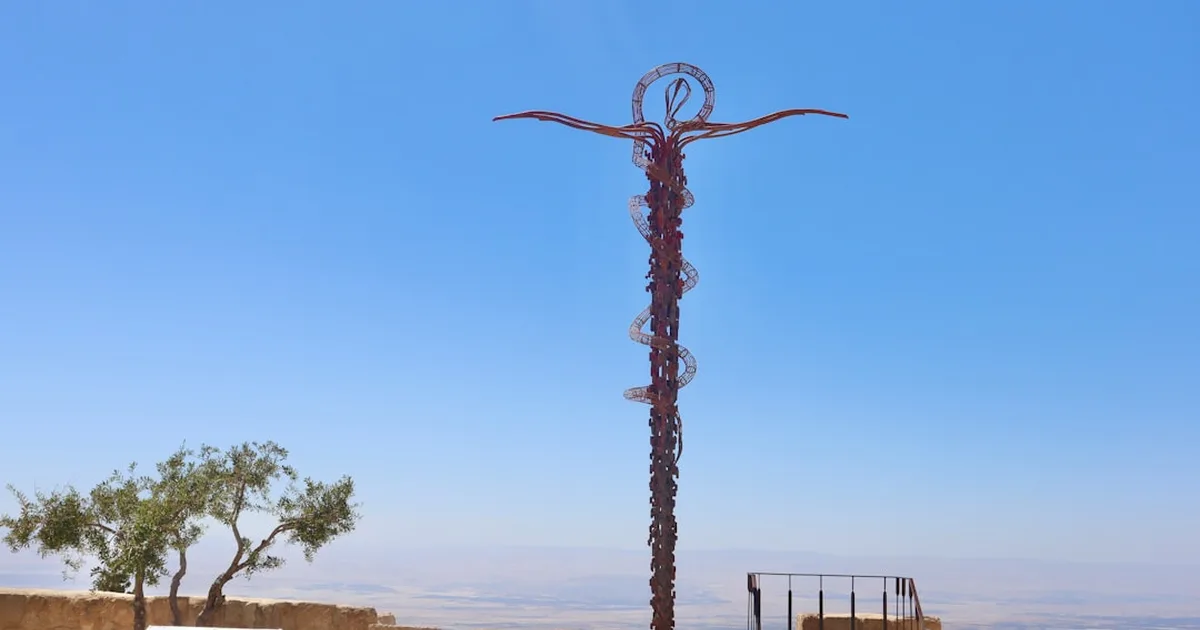
The Assembly of Catholic Ordinaries of the Holy Land has expressed deep concern over this incident, noting that it is not an isolated event. In their statement, they pointed out that such actions reveal a lack of formation in fundamental human values, especially respect for the sacred. As Christians, we understand that religious images are not mere objects, but symbols that connect us to the divine and to our communal identity.
In moments like these, we remember Paul's words: "If it is possible, as far as it depends on you, live at peace with everyone" (Romans 12:18, NIV). This verse does not call us to indifference in the face of offenses, but to seek paths of peace even when the pain is deep. Our response as believers must balance the defense of our faith with the witness of Christian love.
The Value of the Sacred in Our Christian Tradition
Since the early centuries of Christianity, religious images have held a special place in our spirituality. We do not worship these representations, but we value them as windows that help us contemplate deeper spiritual realities. When an image of Jesus is desecrated, it is not just a material object that is damaged, but the symbol it represents for millions of believers.
The Bible teaches us about the importance of respecting what is sacred. In the Old Testament, God gives specific instructions on how to treat spaces and objects consecrated to Him. Although we live under the new covenant established by Christ, the principle of respect for the sacred remains. As the apostle Peter reminds us: "But you are a chosen people, a royal priesthood, a holy nation, God's special possession" (1 Peter 2:9, NIV). Our identity as a holy people calls us to value and protect what connects us to God.
In the Latin American Christian tradition, religious images have special significance. They are part of our collective memory, witnesses to our history of faith, and companions on our spiritual journey. When these images are offended, we feel that something deep in our communal identity has been wounded.
The Meaning of the Crucifix for Christians
The crucifix is not simply an artistic representation of a historical event. For us, it is the visible reminder of the greatest love that exists: "For God so loved the world that he gave his one and only Son, that whoever believes in him shall not perish but have eternal life" (John 3:16, NIV). Every time we contemplate a crucifix, we remember Jesus' sacrifice for our salvation.
This representation speaks to us of a God who becomes vulnerable out of love, who enters into our suffering, and who transforms the instrument of torture into a symbol of hope. That is why, when an image of Jesus crucified is desecrated, we feel that not only a religious symbol is offended, but the deepest meaning of divine love is disregarded.
Christian Responses to Offense and Pain
As followers of Christ, how do we respond when our faith is offended? The first natural reaction may be indignation, and it is legitimate to express our pain at actions that wound our religious sensitivity. However, our faith calls us to go beyond the initial reaction and seek responses that reflect the love and justice of Christ. Instead of responding with anger or retaliation, we are invited to follow the example of Jesus, who on the cross prayed, "Father, forgive them, for they do not know what they are doing" (Luke 23:34). This does not mean we ignore injustice, but that we confront it with a spirit of reconciliation.
The apostle Paul encourages us: "Do not be overcome by evil, but overcome evil with good" (Romans 12:21). This principle guides our response: we are called to transform moments of offense into opportunities for witness and dialogue. In a world often divided by religious tensions, our response can be a powerful testimony to the transformative power of the gospel.
As Christians, we also recognize the importance of education and interfaith dialogue. The incident highlights a need for greater understanding and respect for religious symbols. We can engage in conversations that promote mutual respect, while firmly standing for our beliefs. Ultimately, our goal is not to win arguments, but to win hearts for Christ, demonstrating the love that He first showed us.




Comments