
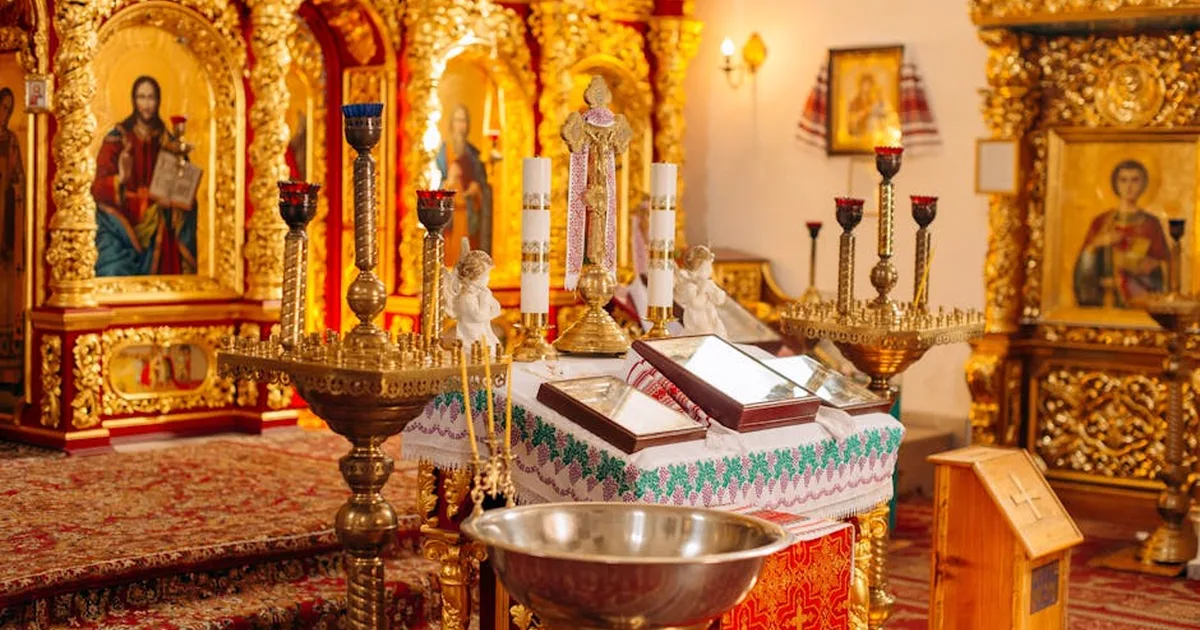
For Christians around the world, church buildings represent more than just physical structures. They are sacred spaces where believers gather to worship, pray, and experience God's presence together. These places hold memories of baptisms, weddings, funerals, and countless Sunday services where communities have drawn closer to God. When these spaces become points of conflict rather than unity, it touches something deep in the Christian heart. The Bible reminds us in 1 Corinthians 3:16 (NIV): "Don't you know that you yourselves are God's temple and that God's Spirit dwells in your midst?" This truth helps us remember that while physical buildings matter, the true church exists wherever believers gather in Christ's name.
Historical Tensions and Modern Realities
Throughout Christian history, divisions have sometimes led to painful separations between communities that share the same fundamental faith. Different traditions have developed over centuries, each with their own practices and understandings of church governance. In recent years, we've seen how geopolitical conflicts can spill over into religious communities, creating additional layers of complexity. As followers of Christ, we're called to navigate these tensions with wisdom and grace, remembering Jesus' prayer for unity in John 17:20-21 (ESV): "I do not ask for these only, but also for those who will believe in me through their word, that they may all be one, just as you, Father, are in me, and I in you, that they also may be in us, so that the world may believe that you have sent me."
Responding to Conflict with Christian Character
When disagreements arise between Christian communities, how should we respond? The New Testament provides clear guidance for handling conflicts within the body of Christ. Ephesians 4:2-3 (NIV) encourages us: "Be completely humble and gentle; be patient, bearing with one another in love. Make every effort to keep the unity of the Spirit through the bond of peace." This doesn't mean ignoring real differences or injustices, but rather approaching them with Christ-like character. Practical steps might include:
- Praying for wisdom and reconciliation
- Seeking to understand different perspectives
- Focusing on shared beliefs rather than differences
- Practicing forgiveness as Christ forgave us
- Supporting those affected by conflict with practical help
The Role of Church Leadership in Difficult Times
Church leaders carry particular responsibility during times of tension and conflict. They're called to shepherd their flocks with care while modeling Christ's love and wisdom. Recent transitions in global church leadership remind us that God continues to guide His church through changing circumstances. With Pope Francis' passing in April 2025 and the election of Pope León XIV in May 2025, Catholic communities worldwide are adjusting to new leadership while maintaining their core mission. All Christian leaders, regardless of tradition, face the challenge of maintaining unity while addressing complex situations. Hebrews 13:17 (ESV) offers guidance: "Obey your leaders and submit to them, for they are keeping watch over your souls, as those who will have to give an account. Let them do this with joy and not with groaning, for that would be of no advantage to you."
Finding Hope in Our Shared Faith
Despite differences and conflicts, Christians around the world share a common hope in Jesus Christ. This shared faith can become a bridge between divided communities when we focus on what unites us rather than what separates us. The apostle Paul addressed diverse early Christian communities with this reminder in Galatians 3:28 (NIV): "There is neither Jew nor Gentile, neither slave nor free, nor is there male and female, for you are all one in Christ Jesus." While acknowledging real differences in tradition and practice, we can celebrate our shared identity as children of God. This doesn't require abandoning distinctive beliefs or practices, but rather recognizing that our primary allegiance is to Christ above all earthly divisions.
Practical Steps Toward Healing and Unity
What can ordinary Christians do to promote healing when divisions occur? Here are some practical suggestions that any believer can implement:
- Pray regularly for Christian unity, both locally and globally
- Learn about different Christian traditions with an open heart
- Build relationships with believers from other backgrounds
- Support ministries that work toward reconciliation
- Model Christ's love in your own community interactions
These actions might seem small, but they contribute to a culture of unity that honors Christ. As Romans 12:18 (ESV) encourages us: "If possible, so far as it depends on you, live peaceably with all."
Reflection and Application
As we consider how Christian communities navigate conflicts and divisions, it's worth reflecting on our own attitudes and actions. Are there relationships in your own life that need healing or reconciliation? How might you contribute to greater unity within your local church community? Take a moment to consider one practical step you could take this week to build bridges rather than walls. Remember that our ultimate hope isn't in human efforts at unity, but in Christ who has already made us one through His sacrifice. As we look to Him, we find both the motivation and the power to pursue the unity He desires for His church.




Comments