
The story of Saint Victor of Mauritania is a powerful testimony of faithfulness to Christ in the midst of adversity. This Roman soldier, originally from North Africa, lived in an era when professing the Christian faith could cost you your life. His example has inspired generations of believers, and his veneration spread from the early centuries to become one of the patron saints of the city of Milan.
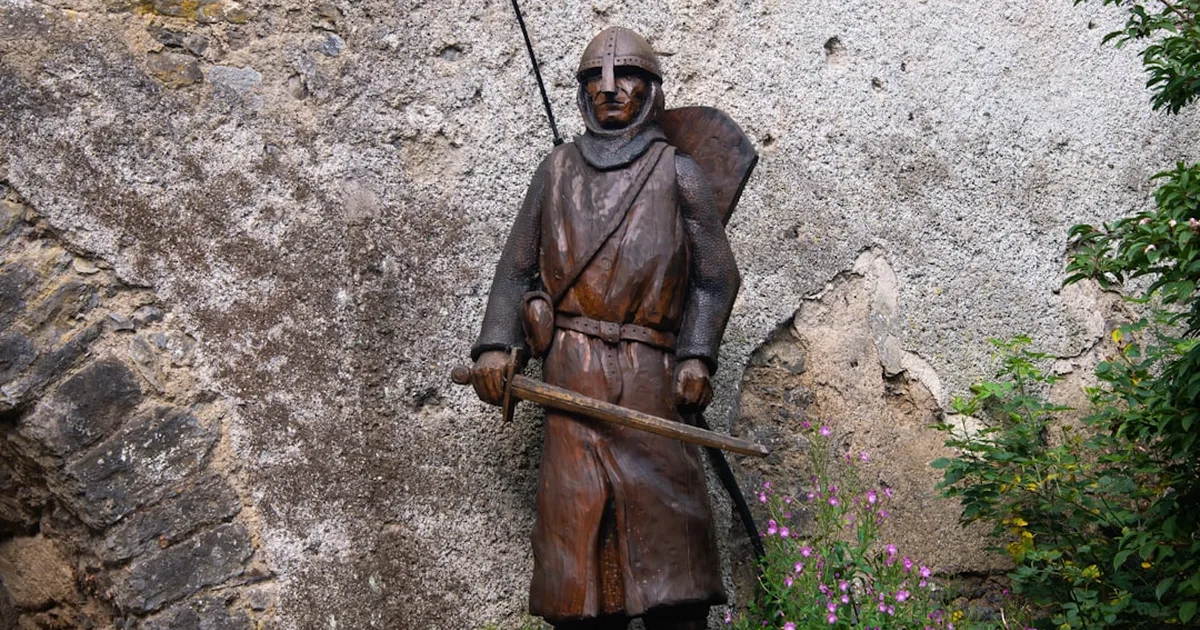
Victor was born in the Kingdom of Mauritania, which today corresponds to Morocco and parts of Algeria. From a young age, he embraced Christianity, a decision that would shape his destiny. When he joined the Roman army, he became part of the Praetorian Guard in Rome, an elite unit tasked with protecting the emperor. Yet his loyalty to God stood above any earthly allegiance.
The Conflict with the Empire
During the reign of Emperor Diocletian, one of the most severe persecutions of Christians erupted. In the year 303, an edict was issued requiring all soldiers to offer sacrifices to the pagan gods of the Empire. For Victor, this was unacceptable. His conscience, formed by the Scriptures, reminded him of Jesus' words: “Worship the Lord your God, and serve him only” (Matthew 4:10, NIV).
Victor not only refused to participate in the pagan rituals but, according to tradition, also destroyed some altars dedicated to idols. This act of protest led directly to his arrest. The authorities subjected him to interrogations and torture, trying to break his faith. But Victor remained steadfast, trusting that the Holy Spirit would give him the words and strength he needed.
The Martyrdom in Lodi
After several days without food or water, Victor was brought before the emperor, where he was again demanded to renounce Christ. He responded with courage, declaring that his true King was Jesus. He was imprisoned near the Porta Romana in Milan, where the tortures continued. At one point, he managed to escape and hide near the Porta Vercellina, but he was eventually recaptured.
His execution took place in the city of Lodi, southeast of Milan, where he was beheaded in the year 303. His death was not in vain; it became a seed of faith for many. Bishop Saint Ambrose of Milan, in the fourth century, already mentioned him alongside Saints Nabor and Felix, also African soldiers who were martyred. Together, these three martyrs are considered pillars of the Christian tradition in Milan.
Lessons for Our Christian Life
The story of Saint Victor challenges us to ask: Are we willing to hold on to our faith even when facing social or workplace pressure? In a world that often asks us to compromise our values, Victor's example reminds us that our loyalty to God must be unwavering. As Scripture says: “Do not conform to the pattern of this world, but be transformed by the renewing of your mind” (Romans 12:2, NIV).
Moreover, his testimony encourages us to persevere in prayer and trust in God, even when circumstances seem adverse. Victor did not rely on his own strength, but on the power of Christ. We too can rest in the promise that “I can do all this through him who gives me strength” (Philippians 4:13, NIV).
Final Reflection
As we remember Saint Victor of Mauritania, I invite you to meditate on your own walk of faith. Are there areas of your life where you need to be more courageous in living according to the Gospel? Perhaps you are not facing physical persecution, but you may face pressures to act against your principles. Ask God to give you the same determination that Victor had to stand firm.
May his example inspire us to be faithful witnesses of Jesus Christ, wherever we are. As it is written: “Blessed is the one who perseveres under trial because, having stood the test, that person will receive the crown of life” (James 1:12, NIV).




Comments