
Today's liturgy offers us a unique opportunity to tune in to God's Word and the prayer of the Church. Each day, through the Bible readings and prayers, we are invited to pause, listen, and be transformed. It's not a mere ritual, but a living dialogue between the Lord and his people. In a hectic world, daily liturgy becomes an anchor of peace and a light that guides our choices.
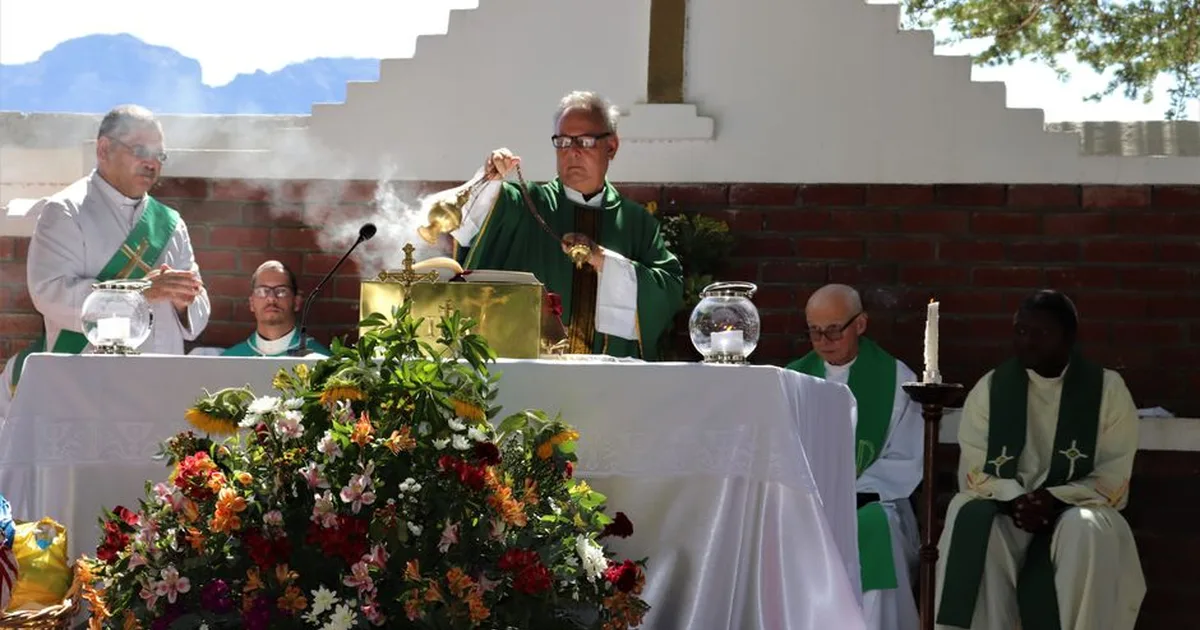
Whether you are at home, traveling, or at church, following today's liturgy helps you experience the Gospel not as an ancient text, but as a fresh and relevant word. Pope Leo XIV, in his first message after his election, reminded us that “the liturgy is the school of prayer” and that every Christian is called to make their life a pleasing offering to God.
What Does It Mean to Follow Today's Liturgy?
Following today's liturgy means joining millions of Christians around the world who, in different languages and cultures, proclaim the same readings and pray with the same words. It is a powerful sign of unity in faith. The Church, through the liturgical year, guides us step by step: from Advent to Christmas, from Lent to Easter, through Ordinary Time. Each day has a color, a theme, a specific grace.
Liturgy is not just a collection of texts, but an experience that involves mind, heart, and body. Listening to the Word, responding with the psalms, offering our intentions—all of this conforms us to Christ. As St. Paul writes to the Romans: “Do not be conformed to this world, but be transformed by the renewing of your mind” (Romans 12:2). Today's liturgy is the privileged instrument for this transformation.
The Readings of the Day: A Treasure to Discover
Each Eucharistic celebration or Liturgy of the Hours presents three readings: one from the Old Testament, a responsorial psalm, and a Gospel passage. Sometimes, on weekdays, the first reading is from the New Testament. Today's liturgy offers us a continuous journey: we do not read the Bible at random, but follow a cycle that progressively meditates on the mystery of Christ.
For example, during Advent, the readings prepare us for the Lord's coming; during Lent, they call us to conversion. Knowing today's liturgy helps us live the liturgical season with greater awareness. You don't need to be a theologian: just an open heart and a little time to read and reflect.
How to Integrate Today's Liturgy into Daily Life
We can't always attend daily Mass, but we can still make today's liturgy our own. Here are some practical tips:
- Read the daily readings in the morning, before starting your activities. You can find them on websites, apps, or parish bulletins.
- Take a verse that struck you and carry it with you throughout the day, repeating it like a prayer.
- If you have a family, share a brief comment on the day's Gospel at dinner.
- Use an icon or a candle to create a small prayer corner at home.
Today's liturgy is not a burden, but a gift. As the psalmist says: “Your word is a lamp for my feet, a light on my path” (Psalm 119:105). Let yourself be enlightened!
Today's Liturgy in the Tradition of the Church
The Church has always cherished liturgical prayer as its breath. Already in the early centuries, Christians gathered to “break bread” and listen to the teachings of the apostles. Today, today's liturgy continues this tradition, enriched by centuries of faith. The Second Vatican Council emphasized that the liturgy is “the summit toward which

Comments