
These days, an unusual event is touching many people: a young whale, named Timmy by the media, is fighting for survival in the Baltic Sea. His images circulate through news broadcasts and social media, sparking empathy and concern. What does this collective emotion say about us as human beings? Why does the fate of an animal we've never personally met touch us so deeply? As Christians, we can adopt a special perspective in such moments that goes beyond mere natural sympathy.
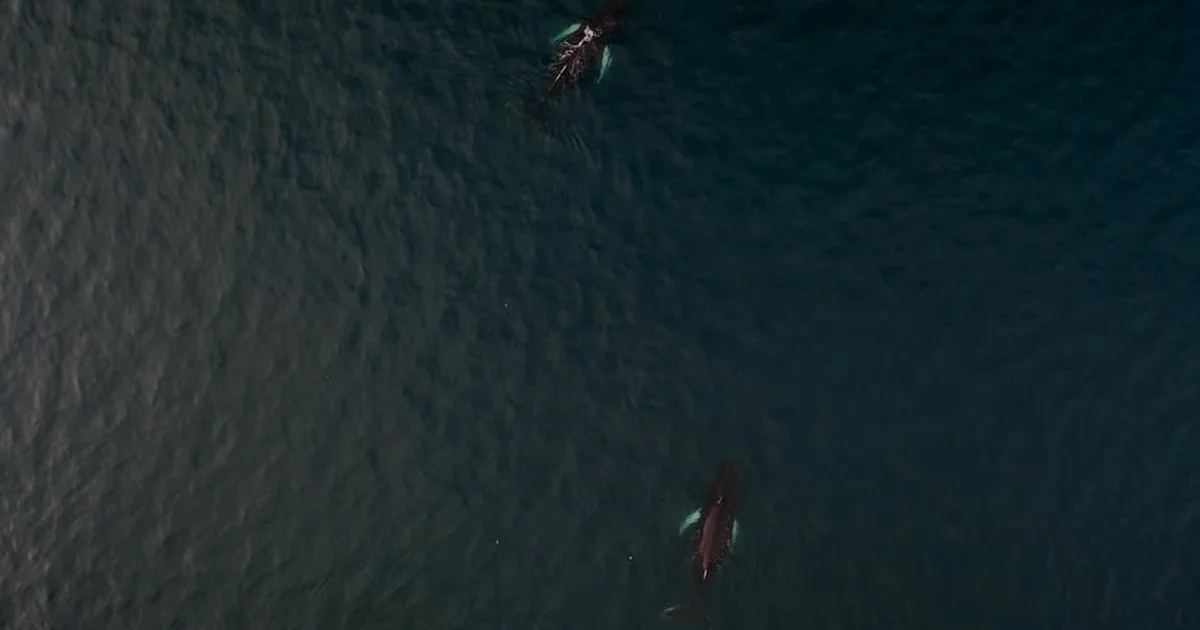
Reactions to Timmy are varied: some feel sorrow about his possible fate, others admire his will to live, while others wonder how they could help. This range of emotions shows that within us all lies a fundamental sensitivity to suffering and vulnerability. Even in a media society often criticized as superficial, such events reveal deeper layers of human empathy.
The Biblical View of God's Creation
Holy Scripture offers us a broad view of the relationship between humans and animals. In the creation account we read: "And God said, 'Let the waters swarm with swarms of living creatures, and let birds fly above the earth across the expanse of the heavens.' So God created the great sea creatures and every living creature that moves, with which the waters swarm, according to their kinds, and every winged bird according to its kind. And God saw that it was good." (Genesis 1:20-21, ESV). These verses remind us that every creature is God's work and has its value.
In the book of Psalms we find an even deeper theological understanding: "O Lord, how manifold are your works! In wisdom have you made them all; the earth is full of your creatures. Here is the sea, great and wide, which teems with creatures innumerable, living things both small and great." (Psalm 104:24-25, ESV). These words invite us to consider all creation as an expression of divine wisdom and care. When we empathize with Timmy today, we may be unconsciously touching this biblical truth: that God's goodness extends to all his creatures.
"Whoever is righteous has regard for the life of his beast, but the mercy of the wicked is cruel." (Proverbs 12:10, ESV)
This verse from Proverbs makes clear that compassion toward animals is not sentimental weakness but a Christian virtue. The "righteous" person—one who lives according to God's standards—shows mercy even to animals under their care. This attitude contrasts with the "cruelty" of the wicked. Our compassion for Timmy can thus be an expression of this biblically grounded sensitivity.
Emotions as Windows to the Human Soul
Why do certain events like Timmy's fate trigger stronger emotions than others? Psychologically, stories of isolated, struggling beings activate our innate caregiving instincts. Theologically, we might add: they touch something in us that goes beyond the purely biological level. Perhaps we recognize in Timmy's situation archetypal human experiences: the feeling of being lost, the struggle against overwhelming circumstances, the longing for rescue.
The apostle Paul writes in Romans: "For the creation waits with eager longing for the revealing of the sons of God. [...] the creation itself will be set free from its bondage to corruption and obtain the freedom of the glory of the children of God." (Romans 8:19-21, ESV). This text speaks of a deep connection between humans and creation, waiting together for final redemption. Our compassion for suffering animals could be a faint reflection of this biblical hope—the intuition that God's plan of salvation encompasses all his creation.





Comments