
In the life of the Church, the figure of the Pope represents a fundamental point of reference for Christians worldwide. Following the passing of Pope Francis in April 2025, the Catholic community welcomed with hope the election of Pope Leo XIV, who assumed the Petrine ministry with clear pastoral commitment. His service stands within the Church's long tradition, which sees in the Successor of Peter not merely an administrator, but above all a shepherd guiding the flock toward Gospel truths.

When the Holy Father addresses the faithful, he speaks not simply as a scholar or theologian, but exercises that ministry of unity proper to his office. His voice resonates as a call to communion and listening to God's Word, in continuity with what Vatican Council II affirmed regarding the role of the Bishop of Rome. In this sense, every papal intervention becomes an opportunity to reflect on faith and its application in daily life.
Pope Leo XIV's recent focus on crucial themes like peace and reconciliation demonstrates how papal teaching consistently aims at building a more just and fraternal world. His instruction follows the path marked by centuries of ecclesial tradition, where defending human dignity and promoting the common good occupy central places.
The Pursuit of Peace in Christian Tradition
From the earliest centuries, the Christian community has deeply reflected on peace and war. The Church Fathers, inspired by the Gospel, developed thought considering peace not as mere absence of conflict, but as fruit of justice and charity. As the prophet Isaiah reminds us: "They will beat their swords into plowshares and their spears into pruning hooks. Nation will not take up sword against nation, nor will they train for war anymore" (Is 2:4).
The just war doctrine, developed over centuries, represents an attempt to apply Gospel principles to complex historical realities. It does not justify violence, but establishes rigorous criteria to limit its effects when every other path proves impracticable. The Catechism of the Catholic Church reaffirms that "the use of military force is morally justified" only under specific conditions, including legitimate defense and exhaustion of all peaceful attempts.
"Blessed are the peacemakers, for they will be called children of God" (Mt 5:9)
Today, facing conflicts that seem to multiply in various world regions, the Church's teaching on peace gains particular relevance. Pope Leo XIV, following his predecessors' footsteps, insists on the need to pray unceasingly for peace and work actively to build it. Peace is not a passive gift, but a commitment requiring every believer's contribution.
Prayer as an Instrument of Peace
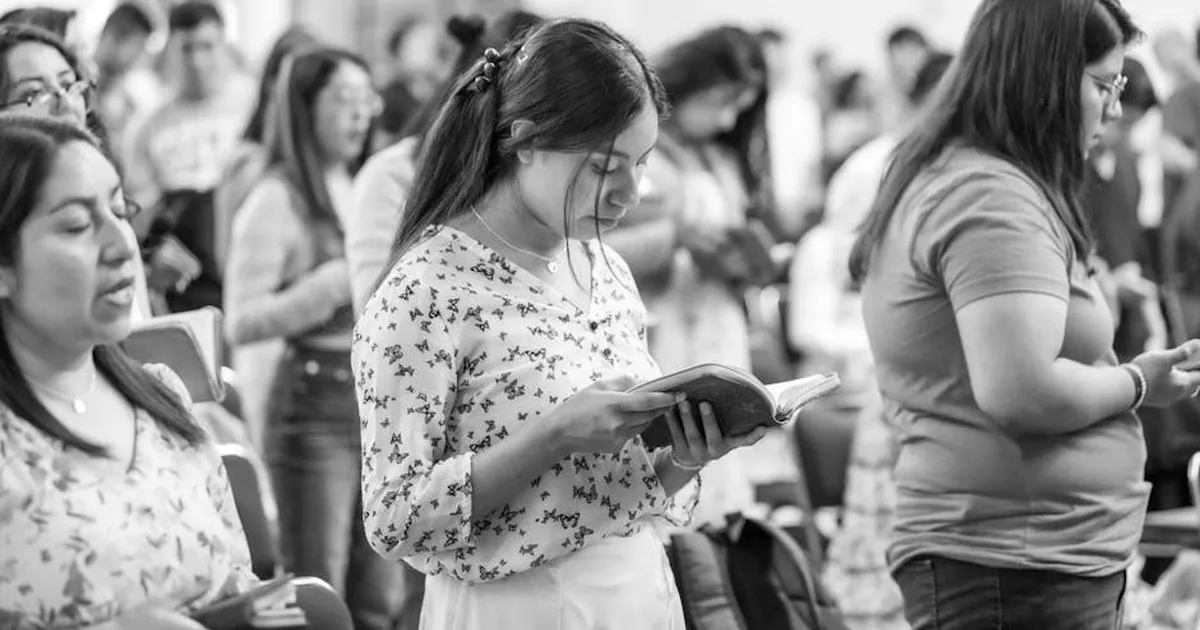
In Christian tradition, prayer represents the first and most powerful weapon for building peace. Saint Paul exhorts the Thessalonians: "Pray without ceasing" (1 Thes 5:17), reminding us that communion with God transforms the human heart and makes it capable of reconciliation. Prayer is not escape from reality, but force that changes reality itself, opening spaces for dialogue where only walls of misunderstanding seemed to exist.
Many saints and witnesses of faith have demonstrated how persevering prayer can work peace miracles. Consider figures like Saint Teresa of Calcutta, who in contexts of great poverty and tension brought Gospel serenity, or Saint John Paul II, whose tireless call for dialogue helped change history's course. Their experience reminds us that peace springs first from a heart open to God and neighbor.



Comments