
Communion, also known as the Lord's Supper or the Eucharist, is one of the most sacred and meaningful moments in the life of the church. In this study, we will explore its origin, its deep significance, and how we can approach it with greater reverence and joy. Jesus himself instituted this sacrament on the night before his death, and ever since, it has been a central practice for Christians of all traditions. As we delve into Scripture, we discover that Communion is not merely a ritual but a transformative encounter with God's love.
The Biblical Origin of Communion
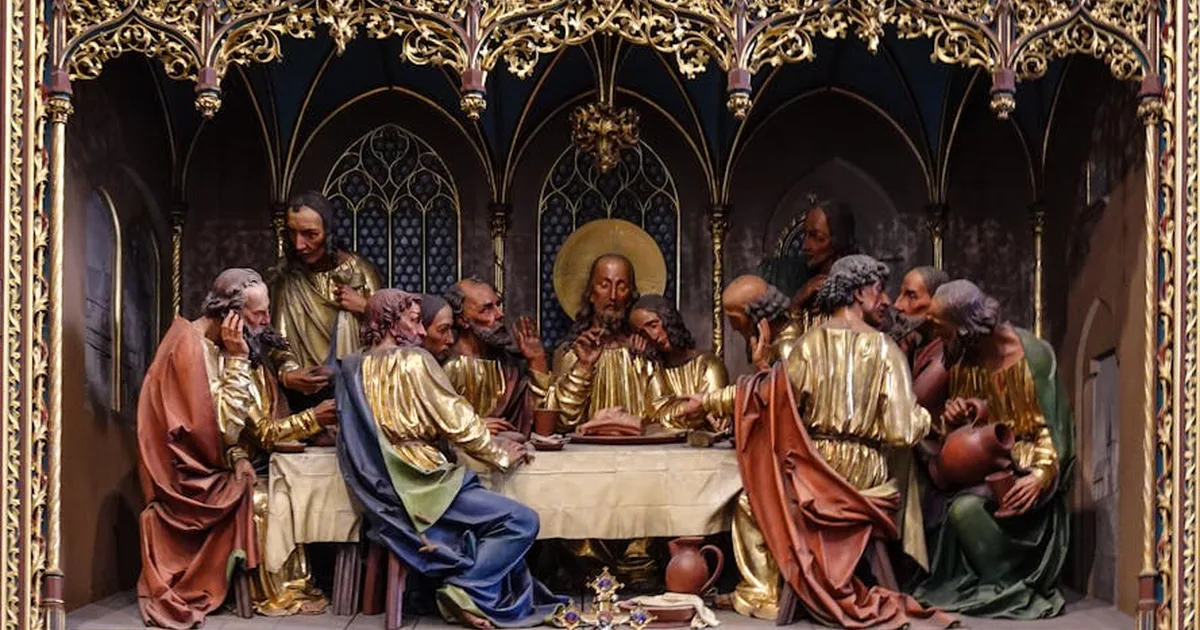
Communion has its roots in the Jewish Passover, a celebration that commemorates Israel's liberation from slavery in Egypt. During the Last Supper with his disciples, Jesus took elements of that meal and gave them new meaning. In the Gospel of Luke, we find a detailed account:
"He took bread, gave thanks and broke it, and gave it to them, saying, 'This is my body given for you; do this in remembrance of me.' In the same way, after the supper he took the cup, saying, 'This cup is the new covenant in my blood, which is poured out for you'" (Luke 22:19-20, NIV).
This passage shows us that Communion is a reminder of Christ's sacrifice. The bread represents his body, broken for our sins, and the wine (or grape juice) symbolizes his blood, which seals the new covenant between God and humanity. By participating, we proclaim our faith in Jesus' redemptive work.
The Context of the Last Supper
To better understand Communion, it is important to consider the historical context. Jesus celebrated this meal during Passover, a festival that recalled the liberation from Egypt. By transforming the Passover symbols, Jesus was pointing to himself as the Lamb of God who takes away the sin of the world (John 1:29). Communion, then, connects us not only to Christ's death but also to the entire story of salvation for God's people.
The Theological Meaning of Communion
Communion is rich in theological significance. It is not merely a memorial but a real participation in the benefits of Christ's death. The apostle Paul offers profound teaching in 1 Corinthians 11:23-26, where he repeats Jesus' words and adds an important warning:
"For whenever you eat this bread and drink this cup, you proclaim the Lord's death until he comes" (1 Corinthians 11:26, NIV).
When we celebrate Communion, we are proclaiming our faith in Jesus' death and anticipating his return. It is an act of communion not only with Christ but also with all believers. As Paul says, "Because there is one loaf, we, who are many, are one body, for we all share the one loaf" (1 Corinthians 10:17, NIV). Communion unites us as God's family, transcending denominational differences.
Communion with Christ and with One Another
In this study, we cannot overlook the aspect of fellowship. The word "communion" (koinonia in Greek) implies sharing, participating together. When we take Communion, we are expressing our unity in Christ. It is a time to examine our hearts, reconcile with others, and draw near to God with humility. Paul warns that participating in an unworthy manner, without discerning the body of the Lord, brings judgment (1 Corinthians 11:27-29). Therefore, it is vital to prepare spiritually before approaching the table.
Practical Application: How to Live Communion in Your Church
Communion should not be mere formality. Here are some practical ways to make this moment a meaningful experience in your congregation:
- Preparation




Comments