
When we hear the word "sacrament," we often think of baptism, communion, or confirmation. But the Second Vatican Council taught us something beautiful: the Church itself is a sacrament—a visible sign of God's invisible grace. In his catechesis on the constitution Lumen Gentium, Pope Leo XIV invites us to deepen this truth that transforms how we live our faith.

The Church is not just an institution or a building. It is the people of God on a journey, a community walking toward our heavenly home. As the apostle Peter says: "You are a chosen race, a royal priesthood, a holy nation, a people for his own possession, that you may proclaim the excellencies of him who called you out of darkness into his marvelous light" (1 Peter 2:9, ESV). This is our identity: to be a people who reflect Christ's light to the world.
Pope Leo XIV reminded us that the Church has an eschatological dimension—it is oriented toward the final goal: the Kingdom of God. This doesn't mean we should ignore present needs, but that everything we do as a community has an eternal horizon. Salvation is not just personal; it is communal and cosmic. Christ came to reconcile all things to himself (Colossians 1:20).
The Church as a Sign and Instrument of Union with God
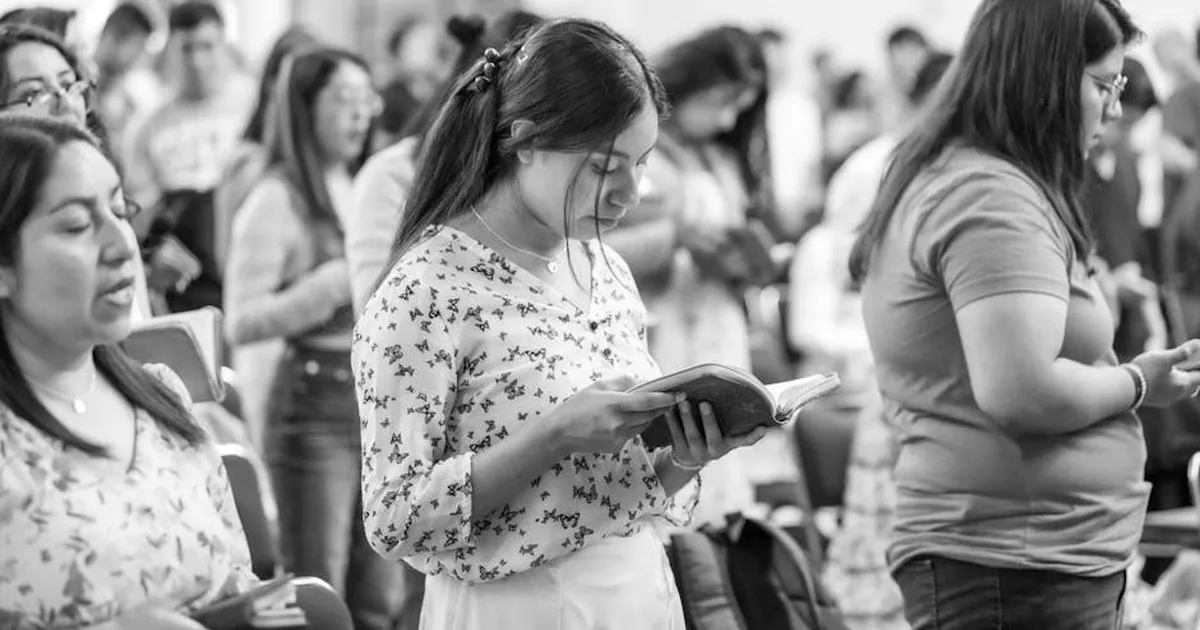
In Lumen Gentium, the Church is described as "a sacrament—a sign and instrument of communion with God and of unity among all people." This is profound: the Church not only announces salvation but, in a way, makes it present. When we gather to worship, when we break bread, when we serve our neighbor, we are channels of God's grace.
Think about this: every time the Church prays, preaches, or helps the needy, it acts as a sacrament. It's as if God uses our hands and feet to touch the world. As Saint Paul wrote: "We are ambassadors for Christ, God making his appeal through us" (2 Corinthians 5:20, ESV). What a responsibility and privilege!
The Pope reminds us that this sacramental dimension calls us to live in hope. We are not alone on the journey; the Church is the community that sustains, corrects, and encourages us. And though we sometimes see its human failings, we must not lose sight that it is God's work.
The Role of the Sacraments in the Life of the Church
The sacraments are the ordinary means by which the Church transmits grace to us. But they are not magic rites; they are encounters with Christ. Baptism incorporates us into the Church, confirmation strengthens us with the Holy Spirit, the Eucharist feeds us with Christ's body. Each sacrament reminds us that salvation is a gift we receive in community.
Jesus himself instituted the sacraments as effective signs of his love. In the Gospel of John, Jesus says: "I am the bread of life; whoever comes to me shall not hunger, and whoever believes in me shall never thirst" (John 6:35, ESV). The Church, as a sacrament, leads us to Christ, who is the only Savior.
The Eschatological Dimension of the Church
One of the most beautiful teachings of the Second Vatican Council is that the Church is on pilgrimage on earth but already anticipates the future Kingdom. Pope Leo XIV explained that we should "direct our gaze to that final horizon, to measure and evaluate everything from that perspective." This is not escapism; it is a source of hope and action.
When we face difficulties, persecutions, or divisions, we remember that our citizenship is in heaven (Philippians 3:20). But that hope impels us to work for justice and peace here and now. The Church is not a community that passively waits; it is a people building the Kingdom through its deeds.
Pope Francis, of blessed memory, used to say



Comments