
Throughout the Church's journey, God has raised up men and women whose lives become beacons for generations. One such witness was Dominic de Guzmán, a priest born in Spain around 1170, whose passion for proclaiming the Gospel gave birth to the Order of Preachers, known as the Dominicans. His story is not merely a tale from the past; it is an invitation to discover how a life surrendered to God can transform the world through truth and love.
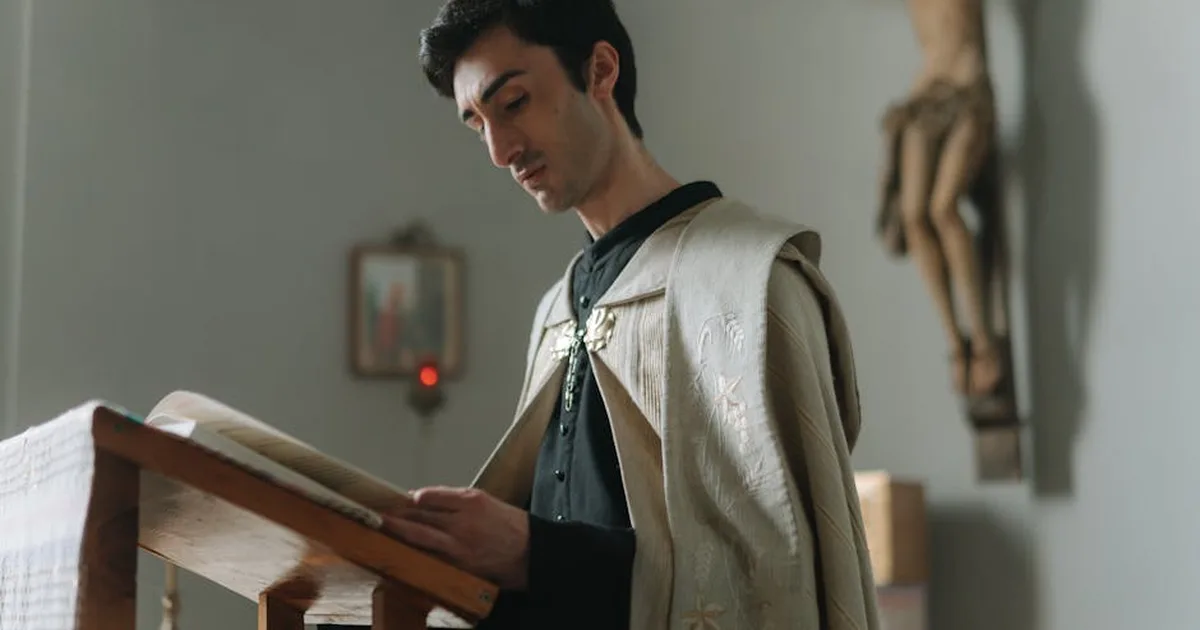
From a young age, Dominic showed a deep love for study and prayer. He came from a family where faith was the center of life, and that example marked his path. His mother, Juana de Aza, and other family members are remembered for their holiness, showing how the seed of faith, planted in the home, can yield extraordinary fruit. As Scripture says in
Proverbs 22:6 (NIV): "Start children off on the way they should go, and even when they are old they will not turn from it."
The Dream That Birthed a Mission
Tradition recounts that Dominic's mother, before his birth, dreamed of a dog carrying a burning torch in its mouth, illuminating the world. This dream was interpreted as a foreshadowing of her son's mission: to be a preacher who would carry the light of Christ into the darkness. Years later, this symbol would become reality when Dominic, moved by the Holy Spirit, began to see the urgent need for preaching grounded in deep study of the Scriptures and a life of prayer.
In an era when teachings arose that led many away from authentic faith, Dominic understood that the response was not merely condemnation, but the clear and loving proclamation of the Gospel. His method was based on dialogue, humility, and a solid knowledge of God's Word. Thus, together with a group of companions, he founded a religious community dedicated to preaching, study, and common life, under the motto "To contemplate and to give to others the fruits of contemplation."
The Pillars of the Order of Preachers
The Dominican family was built upon four essential pillars that continue to guide its life today:
- Community Life: The brothers live together, sharing goods, prayers, and mission, reflecting the unity of the early Church.
- Liturgical Prayer: Praise to God, especially through the Liturgy of the Hours, is the heart of their day.
- Study: They dedicated time to serious study of the Bible, theology, and other sciences to proclaim the truth with wisdom.
- Preaching: All of the above culminated in the mission of bringing the Good News to all, especially those farthest away.
This integrated approach reminds us that our faith needs to grow in community, be nourished in prayer, deepen through study, and be shared with others. As we are encouraged in
1 Peter 3:15 (NIV): "...Always be prepared to give an answer to everyone who asks you to give the reason for the hope that you have. But do this with gentleness and respect..."
A Legacy That Endures in the Church
The work of St. Dominic was not limited to his time. The Dominicans quickly spread throughout Europe and later to the Americas, being among the first to announce the Gospel in Mexican lands. Their contribution to theology, education, and pastoral care is immense. Saints like Thomas Aquinas, Catherine of Siena, and Rose of Lima belonged to this spiritual family, showing the diversity of charisms that flourish when Christ is placed at the center.
Today, in a world with new forms of "heresies" such as relativism, religious indifference, or the search for rootless spiritualities, Dominic's example remains relevant. It teaches us that faith is not a vague feeling, but an encounter with the living God that demands to be known, lived, and shared. In the spirit of the current pontificate of Pope Leo XIV, who emphasizes pastoral outreach and the joy of the Gospel, the figure of Dominic invites us to be, in our own contexts, bearers of that light that dispels darkness and guides toward truth.




Comments