
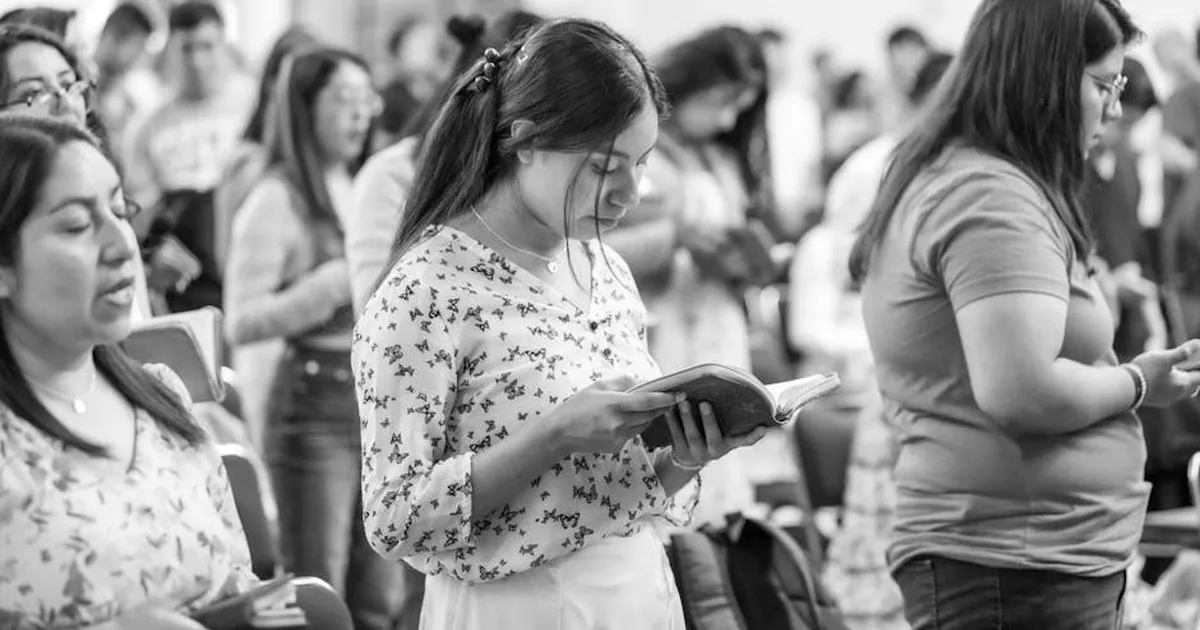
Amidst the social and ecclesial challenges marking Brazil's current reality, Christian leaders gather regularly for deep exercises of listening and discernment. These meetings are not merely administrative gatherings but true spaces of prayer and reflection, where they seek to perceive the signs of the times in light of the Gospel. As Proverbs reminds us: "Where there is no revelation, people cast off restraint; but blessed is the one who heeds wisdom's instruction" (Proverbs 29:18, NIV). This search for divine guidance is fundamental for leading the community of faith in its mission to the world.

Brazil's landscape presents complexities demanding wise and compassionate pastoral responses. Social inequalities, political tensions, and cultural transformations pose important questions before the Church. How to be salt of the earth and light of the world in such a diverse context? How to proclaim the hope of God's Kingdom amid realities often marked by discouragement? These questions echo in the hearts of those called to lead God's people.
In these dialogue spaces, the goal isn't merely problem analysis but primarily discerning paths of action inspired by the Holy Spirit. Constant prayer and Scripture study ground these reflections, creating an environment where human wisdom opens to divine wisdom. As the apostle Paul wrote: "Do not conform to the pattern of this world, but be transformed by the renewing of your mind. Then you will be able to test and approve what God's will is—his good, pleasing and perfect will" (Romans 12:2, NIV).
Social Challenges and Gospel Responses
The social challenges we face as a nation are multiple and interconnected. Poverty still affecting millions of Brazilians, violence plaguing many communities, environmental issues demanding our attention, and divisions fragmenting our social fabric—all cry out for an authentic, transformative Christian response. The Parable of the Good Samaritan (Luke 10:25-37) remains an essential guide for our action: seeing our neighbor's suffering, drawing near with compassion, and acting concretely to alleviate their pain.
The Church's Social Doctrine offers valuable principles for this reflection. Human dignity, the common good, solidarity, and the preferential option for the poor are beacons illuminating our path. These principles aren't abstract theories but concrete calls to action. As the prophet Micah exhorts: "He has shown you, O mortal, what is good. And what does the Lord require of you? To act justly and to love mercy and to walk humbly with your God" (Micah 6:8, NIV).
In this context, the Church is called to be a community of active hope. Denouncing injustices isn't enough; we must build concrete alternatives of fraternity and justice. The many social initiatives maintained by Christian communities throughout Brazil—from community kitchens to income-generation projects, schools, and welcome centers—witness to this faith made love in action. Each solidarity gesture, however small it may seem, is a seed of God's Kingdom planted in Brazilian soil.
The Spiritual Dimension of Social Commitment
It's important to emphasize that Christian social commitment has deeply spiritual roots. This isn't empty activism or mere assistance programs but a concrete expression of God's love for his children. When we serve those most in need, we encounter Christ himself, as he taught us: "For I was hungry and you gave me something to eat, I was thirsty and you gave me something to drink, I was a stranger and you invited me in" (Matthew 25:35, NIV).
This spiritual dimension sustains and gives meaning to our engagement with the world. Prayer doesn't distance us from reality but empowers us to face it with courage and hope. Contemplating God in daily life helps us discover his presence in the faces of those who suffer and in struggles for justice. As Pope Leo XIV recently reminded us: "Faith that doesn't translate into concrete love for our brothers and sisters is sterile faith." This conviction animates Christian leaders to constantly seek more effective ways to serve God's people, especially the most vulnerable.
In this season of ecclesial transition, following the passing of Pope Francis and the election of Pope Leo XIV, Christian leaders in Brazil find in communal discernment a source of unity and direction. The continuity in the Church's social teaching, from Vatican II to the present, offers a solid framework for responding to current challenges. Synodality—walking together as God's people—becomes a privileged method for discerning the Spirit's will in our times.
Ultimately, this discernment process isn't just for leaders but involves the entire Christian community. Every baptized person is called to read the signs of the times in light of the Gospel and contribute their gifts to building the Kingdom. In this common task, we find strength to face challenges with hope, knowing the Lord walks with his people and guides them toward a future of justice and peace.



Comments