
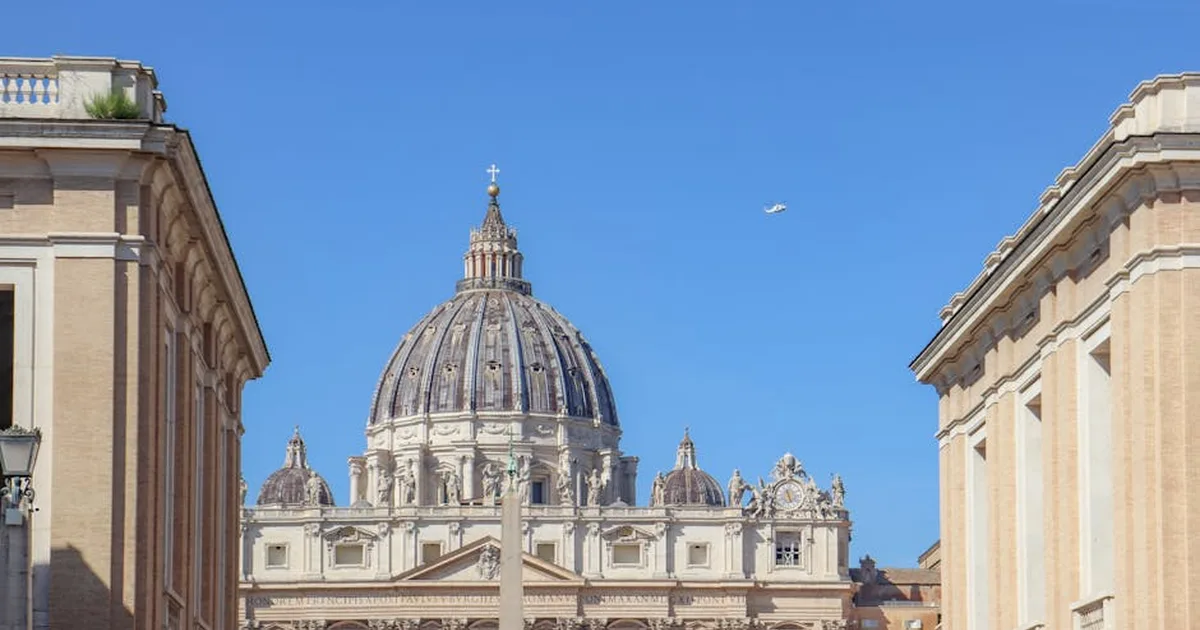
In these times when news travels faster than reflection, Pope León XIV reminds us of something fundamental: the Gospel message transcends temporary controversies. During his recent apostolic journey through Africa, the Holy Father spoke words that resonated in many hearts, but were also interpreted from political perspectives. How often in our daily lives do we see our purest intentions misunderstood? The Pope, with the serenity that characterizes his ministry, has clarified that his call for peace was not a situational response to political statements, but part of a constant teaching he has carried in his heart long before any controversy.
As Christians, we know that the peace Christ offers us is not like the world gives (John 14:27). It is a peace built on truth, justice, and love, not on confrontation or self-interest. The apostle Paul exhorts us: "If it is possible, as far as it depends on you, live at peace with everyone" (Romans 12:18, NIV). This biblical wisdom illuminates the path the Pope points us toward: seeking authentic peace, the kind born from reconciliation with God and with our brothers and sisters.
The Danger of Reducing Spiritual Matters to Politics
In our digital age, where every statement can be taken out of context in seconds, Pope León XIV alerts us to a concerning phenomenon: reducing the Christian message to mere political commentary. During the flight between Cameroon and Angola, he explained to journalists how "a certain narrative, not entirely accurate" had developed from interpretations that prioritized conflict over the spiritual content of his words. Doesn't something similar happen in our communities when we reduce faith to partisan positions?
God's Word warns us: "Do not conform to the pattern of this world, but be transformed by the renewing of your mind" (Romans 12:2, NIV). This transformation involves learning to discern between what is truly spiritual and what is merely human in our interpretations. When Jesus taught, his words were often misunderstood by those looking for reasons to accuse him (Mark 3:2). Today, the message of Peter's successor faces similar challenges.
Peace as Constant Teaching, Not Reaction
A crucial aspect the Pope highlighted is that his speeches about peace were prepared weeks before any political controversy. This speaks to a deep conviction, not an opportunistic reaction. In our spiritual lives, how often do we act from conviction and how often from reaction? The book of James reminds us: "But the wisdom that comes from heaven is first of all pure; then peace-loving, considerate, submissive, full of mercy and good fruit, impartial and sincere" (James 3:17, NIV).
The peace Pope León XIV promotes is precisely this wisdom "from above": pure in its origin, peaceful in its essence, and constant in its manifestation. It does not depend on changing political circumstances, but springs from the very source of the Gospel. As Psalm 85:10 teaches us: "Love and faithfulness meet together; righteousness and peace kiss each other" (NIV). This poetic image shows us how the values of the Kingdom complement and need each other.
Our Response as a Christian Community
Faced with situations where the Gospel message can be distorted, what should our attitude be as Christ's disciples? First, cultivate a spirit of discernment that allows us to separate wheat from chaff. Second, remember that our citizenship is in heaven (Philippians 3:20), which gives us an eternal perspective on temporary conflicts. Third, practice charity in our words and actions, knowing that love "covers a multitude of sins" (1 Peter 4:8). The peace the Pope invites us to is not a passive absence of conflict, but an active construction of relationships based on God's truth and mercy.
In a world hungry for quick solutions and polarized debates, the Christian community is called to be a sign of contradiction: a place where peace is cultivated with patience, where differences are resolved through dialogue, and where the ultimate reference point is not human opinion but divine revelation. As we navigate these challenging times, may we hold fast to the peace that surpasses all understanding (Philippians 4:7), the peace that only Christ can give to those who trust in him completely.



Comments