
It's hard to believe that a full year has passed since the election of Pope Leo XIV. For many Christians around the world, the transition from Pope Francis to a new pontiff brought a mix of emotions—curiosity, hope, and perhaps a bit of uncertainty. As we mark this first anniversary, it's a good time to pause and consider what we've seen so far, and what it might mean for the Church as a whole.
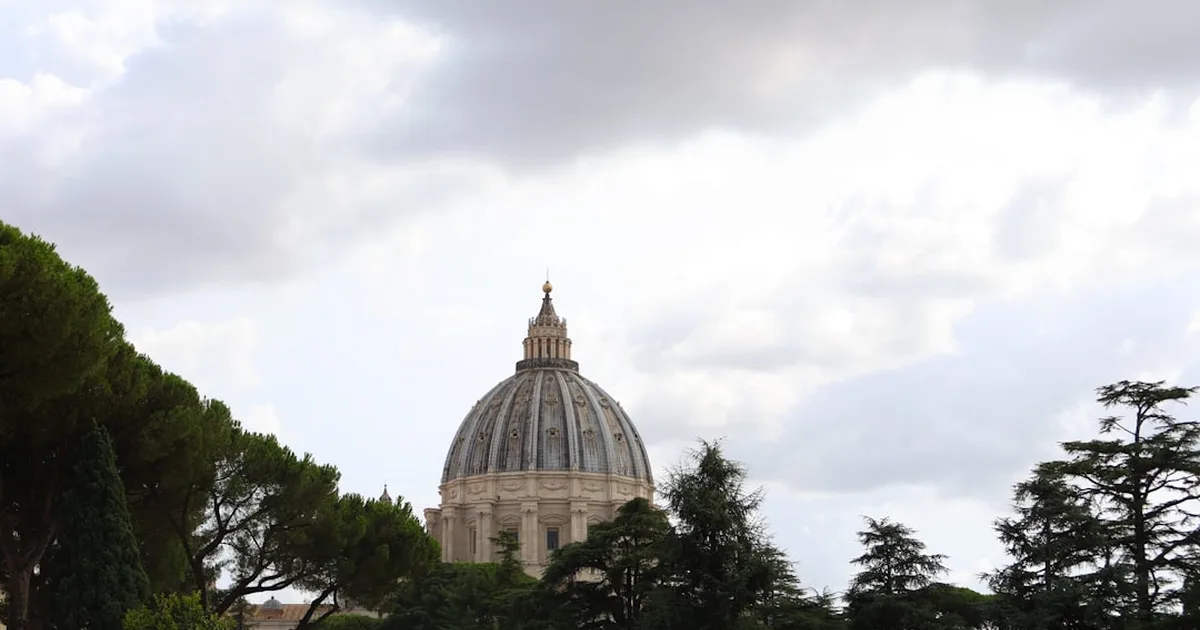
Pope Leo XIV, formerly Cardinal Robert Francis Prevost, was elected in May 2025 following the death of Pope Francis in April of that same year. His choice of the name Leo—a name rich with history, evoking popes known for doctrinal clarity and pastoral strength—was itself a statement. Yet few predicted it. Many expected a name like Paul or even John, but Leo signaled a return to theological depth and a focus on the Church's mission in a complex world.
From the very beginning, Pope Leo has surprised observers. He is not a flashy figure. He doesn't seek the spotlight. But in his quiet, deliberate way, he has begun to address some of the most pressing issues facing the Church: internal division, the need for evangelization in a secular age, and the call for authentic Christian witness.
The Early Days: An Organic Choice
Much has been written about the conclave that elected Pope Leo. Some pundits have framed it as a political compromise between conservative and progressive factions. But those who were present tell a different story. The election of Pope Leo was not the result of backroom deals or horse-trading. It was, by many accounts, a genuinely organic process.
Cardinals from diverse backgrounds and theological perspectives found themselves drawn to Prevost's spiritual depth, his intellectual humility, and his ability to listen. He wasn't the candidate of any particular bloc. Instead, he emerged as a figure who could unite the College of Cardinals around a shared vision of the Church as a family, not a battlefield.
This is not to say that there aren't still tensions. The Church has always been a big tent, and that means different voices. But under Pope Leo, there seems to be a renewed commitment to charity in disagreement, and a focus on what unites us rather than what divides us.
Key Themes of Leo's First Year
Unity in Doctrine and Discipline
One of the most noticeable aspects of Pope Leo's pontificate has been his emphasis on unity—not a superficial unity that papers over differences, but a deep communion rooted in shared faith and sacramental life. He has spoken clearly on matters of doctrine, but always with a pastoral tone. For example, in his first major encyclical, Lumen Unitatis (Light of Unity), he called on the Church to rediscover the joy of the Gospel while holding fast to the truths that have been passed down through the ages.
“I appeal to you, brothers, by the name of our Lord Jesus Christ, that all of you agree, and that there be no divisions among you, but that you be united in the same mind and the same judgment.” (1 Corinthians 1:10, ESV)
This verse, often quoted by the Pope, encapsulates his vision. He has taken concrete steps to foster unity, from reaching out to traditionalist groups who felt marginalized to engaging with progressive voices in constructive dialogue. It's a delicate balance, but one that he seems to navigate with grace.
Clarity on Moral Issues
Pope Leo has not shied away from addressing controversial topics. In several addresses, he has reaffirmed the Church's teaching on human life, marriage, and the dignity of the human person. But he has done so in a way that invites conversation rather than confrontation. He often emphasizes the positive vision of the Gospel—a vision of human flourishing that is both beautiful and demanding.
For instance, in a meeting with young people in Rome, he said: “The Church is not a museum of relics; it is a garden of life. And every life is precious, from the womb to the tomb. Let us build a culture that protects the vulnerable and celebrates the gift of life.”
Evangelization in a Secular Age
Another hallmark of Pope Leo's first year has been his focus on evangelization. He has repeatedly called on Catholics to be witnesses to Christ in their daily lives, not through grand gestures but through simple acts of love and service. He has also encouraged the use of modern media to spread the Gospel, while warning against the dangers of a digital culture that can isolate rather than connect.
In a world that often seems indifferent to faith, Pope Leo's message is one of hope. He reminds us that the Holy Spirit is still at work, and that the Church has something unique to offer: the person of Jesus Christ, who is the same yesterday, today, and forever.
Challenges Ahead
Of course, no pontificate is without its challenges. Pope Leo faces a Church that is still healing from the wounds of the abuse crisis, a world marked by war and division, and a secular culture that often views religion with suspicion. There are also internal tensions, particularly around issues of governance and the role of women in the Church.
On the latter point, Pope Leo has taken some initial steps, such as appointing more women to leadership positions in the Roman Curia and establishing a commission to study the question of women deacons. But these are early days, and many are waiting to see if more substantial changes will follow.
Another challenge is the ongoing situation in Germany, where the synodal path has caused significant friction with Rome. Pope Leo has handled this with a firm but patient hand, insisting on the need for unity while allowing for dialogue. It remains to be seen how this will play out, but the Pope's approach has been praised by many for its combination of clarity and charity.
Practical Reflections for the Faithful
As we look back on Pope Leo's first year, it's worth asking ourselves: What can we learn from his example? How can we apply his emphasis on unity, clarity, and evangelization to our own lives?
Perhaps the most important lesson is that the Church is not a political institution, but a spiritual family. We are called to love one another, even when we disagree. We are called to be witnesses to Christ, not through force of argument but through the beauty of our lives.
Take a moment to pray for Pope Leo, that God may grant him wisdom and strength. And consider how you might contribute to the unity of the Church in your own corner of the world. Whether it's by reaching out to someone you've disagreed with, or by sharing your faith with a friend, every act of love builds up the Body of Christ.
“Let us consider how to stir up one another to love and good works.” (Hebrews 10:24, ESV)
As we enter this second year of Pope Leo's pontificate, let us do so with hope. The Church is alive. The Spirit is moving. And we are all part of something greater than ourselves.



Comments