
In May 2025, the Catholic Church experienced a historic moment with the election of Pope Leo XIV, born Robert Francis Prevost, successor to Pope Francis who passed away in April of the same year. The new Pontiff quickly demonstrated his pastoral style by choosing Africa as the destination for his first apostolic journey. Among the stops on this pilgrimage, Cameroon held a special place, becoming the stage for a universal message of welcome, fraternity, and tangible hope.
Pope Leo XIV's journey was not merely an institutional visit, but a genuine pastoral embrace directed toward all Christian communities and Cameroonian society as a whole. From his arrival, the Holy Father emphasized that he came "as a shepherd and servant of dialogue," placing at the center of his message the building of the common good through cooperation and respect for the dignity of every person.
This approach deeply reflects the teaching of Jesus, who invites us to recognize his presence precisely in the smallest and most needy. As the Gospel of Matthew reminds us:
"Truly I tell you, whatever you did for one of the least of these brothers and sisters of mine, you did for me" (Matthew 25:40, NIV).
Ngul Zambia Orphanage: Where Tenderness Becomes Action
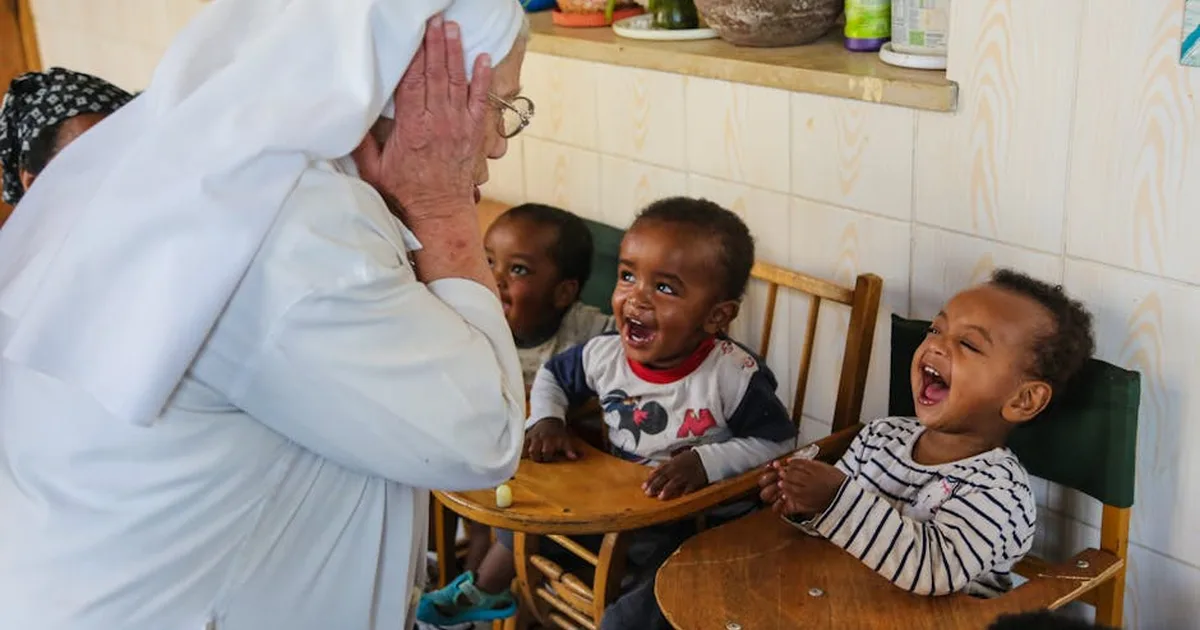
One of the most significant moments of the visit was certainly the encounter at Ngul Zambia Orphanage, an institution that welcomes children and youth from eighteen months to twenty years old. This place represents much more than a simple facility: it has become a true home, an extended family where young people with often painful stories find not only shelter, but above all love and hope.
Pope Leo XIV, upon entering this welcoming space, immediately highlighted how God himself welcomes these young people with paternal love. "Your Heavenly Father welcomes you as children," affirmed the Pontiff, recalling that in this special place divine tenderness is concretely manifested. The children and youth of the orphanage, in fact, carry within themselves experiences of abandonment, loss, disability, or social difficulties, but precisely in these fragilities shines the promise of a different future.
Addressing the young residents directly, the Holy Father acknowledged their trials: "I know that many of you have gone through difficult times. Some have known the pain of absence through the loss of parents or loved ones. Others have experienced fear, rejection, abandonment." However, he immediately added: "You are called to a future greater than your wounds. You are bearers of a promise."
Jesus and Children: A Special Bond
The Pope drew attention to the special relationship Jesus had with children, explicitly citing the Gospel. This privileged bond is not simply historical fact, but a living reality that continues to manifest today through care and attention toward the smallest.
"Let the little children come to me, and do not hinder them, for the kingdom of God belongs to such as these" (Luke 18:16, NIV).
In these Gospel words we find a fundamental teaching: children are not only society's future, but they already represent God's kingdom among us today. Their simplicity, their capacity to trust, their vulnerability become paradigms of the relationship God desires to have with each of us. Pope Leo XIV emphasized how Jesus looks at each child in the orphanage "with the same affection" with which he looked at the little ones who approached him two thousand years ago.
Staff and Volunteers: Hands of Divine Mercy
A particularly touching aspect of the papal address was the recognition of the tireless work of staff and volunteers serving at the orphanage. The Pope described these men and women as "visible hands of divine mercy," people who through their daily dedication make God's love tangible. "Every gesture of care, every word of encouragement, every moment of patience reflects the tenderness of our Heavenly Father," affirmed the Holy Father.
This vision transforms service into something sacred: it's not simply about performing tasks, but about participating in God's redemptive work. Volunteers and workers, with their quiet but consistent commitment, become instruments through which hope becomes flesh in the lives of these young people. The Pope encouraged all present to see in their service not only human labor, but a true spiritual vocation.
The Pope's final message resonated as a universal call: "Each of us is called to be hands of mercy in our own surroundings." This invitation transcends the orphanage walls and extends to all Christian communities, reminding us that service to the most vulnerable is at the heart of the Gospel message.



Comments