
With a heart full of gratitude, Pope Leo XIV concluded his apostolic visit to Cameroon. During the final Eucharistic celebration at the military airport in Yaoundé-Ville, before continuing his journey to Angola, the Holy Father offered words of encouragement and hope to the gathered faithful. His message, imbued with pastoral warmth, touched the deepest chords of human and Christian experience, reminding everyone that no one is abandoned on their journey of faith.
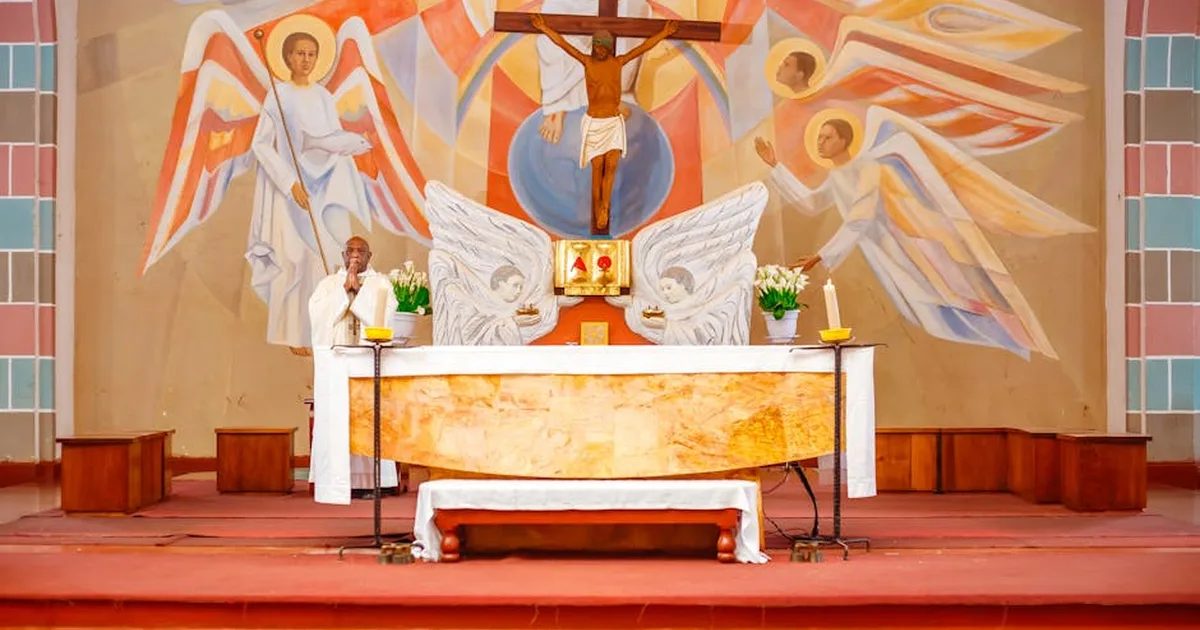
"May the peace of Christ be with you, dear brothers and sisters," the Pontiff began, evoking that peace which is not merely the absence of conflict, but the active presence of the Savior in daily life. This peace, he emphasized, is capable of illuminating our most uncertain steps and calming the inner storms that sometimes threaten to overwhelm our serenity.
The farewell moment was characterized by deep gratitude for the hospitality received and for the moments of spiritual communion experienced together. On such occasions, the Pope observed, we concretely experience that fraternity which transcends every cultural and geographical barrier, uniting us in the one faith in the Risen Christ.
The Gospel of Storms: When Fear Seems to Prevail
Pope Leo XIV's reflection focused on the Gospel account of the calming of the storm, an episode narrated with different nuances in three Synoptic Gospels. This passage, the Pontiff explained, speaks directly to the experience of every believer who, in the course of life, faces moments of difficulty and disorientation.
In the Gospel according to Mark, as the Holy Father recalled, the disciples struggle to row because of the contrary wind. Their fatigue and worry become a metaphor for our daily struggles, when life's circumstances seem to oppose our path. Yet, precisely in that moment of difficulty, Jesus draws near, calms the waters, and gets into the boat with them.
Saint Matthew adds a significant detail: Peter, filled with enthusiasm, asks to be able to reach the Master by walking on the water. Initially he succeeds in the feat, but when he fixes his gaze on the strength of the wind, he is overcome by fear and begins to sink.
"Immediately Jesus reached out his hand and caught him. 'You of little faith,' he said, 'why did you doubt?'" (Matthew 14:31 NIV)
The Johannine Version: Darkness and Light
The Gospel of John, proclaimed during the celebration, offers an additional perspective. The evangelist emphasizes that "it was already dark" when Jesus approached the disciples. Darkness, in the biblical tradition, symbolizes not only the physical absence of light, but also the forces of evil, chaos, and death.
The agitated waters of the lake, in this context, evoke the realm of the underworld and everything that threatens human life. Yet, precisely in this scenario of danger, the reassuring voice of Christ resounds:
"It is I; don't be afraid." (John 6:20 NIV)
Pope Leo XIV recalled how, in the memory of the Exodus, the waters were also a place of passage and liberation. The Red Sea, which seemed an insurmountable barrier, became the passage through which God led his people to freedom. Similarly, the difficulties we encounter can transform into opportunities for growth and deeper encounter with the Lord.
The Church in the Storm: A History of Faith and Courage
The Pontiff extended the reflection from personal experience to the communal one, recalling how the Church, in sailing through the centuries, has encountered numerous storms and "contrary winds." From ancient persecutions to contemporary challenges, the community of believers has experienced moments when the boat seems about to capsize. But in every generation, Christ has been present, calming the waters and strengthening the faith of his people.
Today, as then, we are called to trust in the One who masters even the most violent forces of nature and history. The Church in Cameroon, with its vitality and witness, is a living example of this trust put into practice. Amid social and economic difficulties, Christian communities continue to be beacons of hope and solidarity.
The Pope concluded by inviting everyone to be "neighbors" to those who suffer, especially in these times of uncertainty. The faith that overcomes fear, he said, manifests itself in concrete gestures of love and service. By reaching out to the brother or sister struggling in their own storm, we become instruments of Christ's peace in the world.


Comments