
In a meeting marked by depth and hope, Pope Leo XIV received a group of supporters of the Vatican Observatory Foundation (VOF) in the Consistory Hall of the Apostolic Palace. The Pontiff, who has shown great appreciation for the dialogue between faith and reason, took the occasion to reaffirm a principle dear to Christian tradition: faith and science are not opposed, but walk together in the search for truth.
The Pope recalled the words of his predecessor, Leo XIII, who 135 years ago already argued that the Church does not oppose "true and solid science, whether human or divine." On the contrary, the Church embraces, encourages, and promotes it with dedication. This teaching, so relevant in the past, remains current and necessary in our day, when many still see a conflict where there should be cooperation.
The audience, which included about 30 participants, was a moment of gratitude and encouragement. The Holy Father thanked the faithful and generous support that the VOF has received, allowing the Vatican Observatory to continue its important mission of scientific research and education. For the Pope, the work of the Observatory is a living testimony that the Church values knowledge and investigation as gifts from God.
The Danger of Modern Relativism
In his address, Pope Leo XIV warned of a different and perhaps more insidious threat than the old conflict between faith and science: the denial of the existence of objective truth. Many today refuse to recognize that both science and the Church have the responsibility to care for truth and to serve humanity.
Relativism, which claims that each person has their own truth, ends up weakening both faith and science. Science, without the search for objective truth, loses its meaning and becomes mere technique. Faith, without commitment to truth, is reduced to a subjective feeling. The Pontiff reminded that Jesus Christ presented himself as "the way, the truth, and the life" (John 14:6, NIV), and that truth is not a human construction but a divine gift given to us to know.
The Pope also highlighted that the Church, throughout the centuries, has always supported scientific development, from medieval monasteries that preserved knowledge to modern research institutes. Science, when properly oriented, can help humanity better understand creation and live more justly and fraternally.
The Vatican Observatory: A Beacon of Knowledge
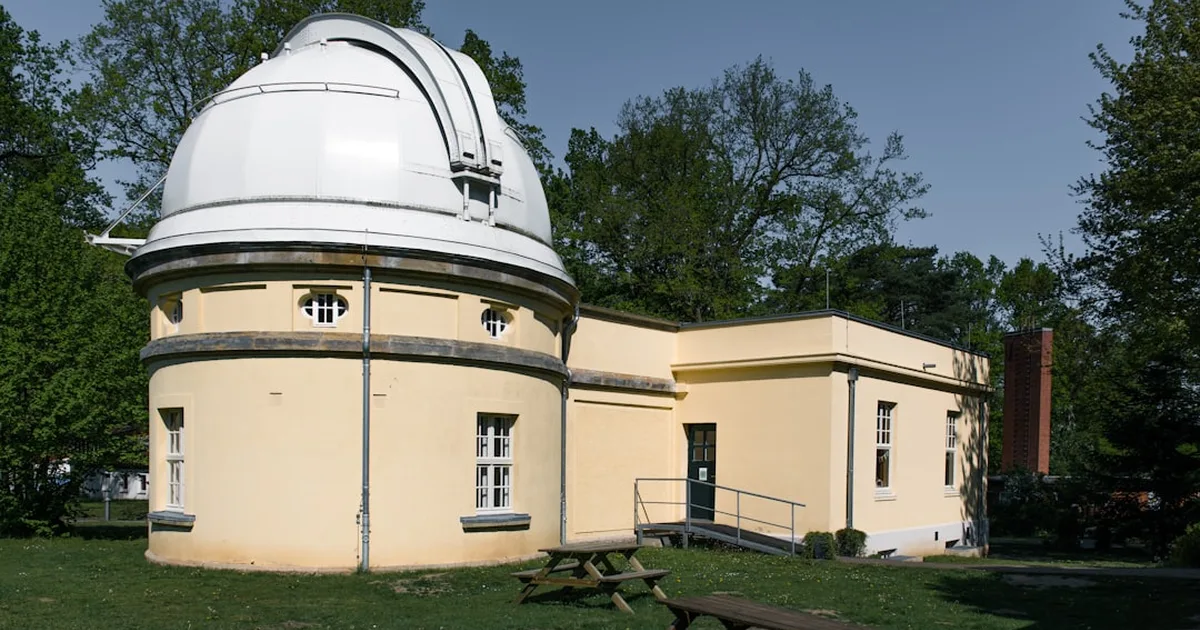
The Vatican Observatory, known as the Specola Vaticana, is one of the oldest scientific institutions in the world. Founded in the 16th century, its headquarters are in Castel Gandolfo, on the outskirts of Rome, and it maintains a research center in Tucson, Arizona, in the United States. Its astronomers study the universe and publish in high-impact scientific journals, showing that the Church is at the forefront of research.
The Vatican Observatory Foundation (VOF) was created to support this work, raising funds and promoting scientific education. During the audience, the Pope encouraged the Council members to continue this mission, recalling that knowledge of the cosmos can lead people to praise the Creator, as Psalm 19:1 says: "The heavens declare the glory of God; the skies proclaim the work of his hands" (NIV).
For the Pontiff, scientific research is a form of contemplation, a way to admire the beauty and order of the universe, which reflect the wisdom of the Creator. He also cited the book of Wisdom 11:20: "But you have arranged all things by measure and number and weight," indicating that mathematics and physics are languages that help us decipher creation.
Faith and Science at the Service of the Human Person
Pope Leo XIV emphasized that both faith and science must be at the service of the human person, especially the poorest and most vulnerable. Science cannot be used to oppress or create inequalities, but to promote the common good. In a world marked by rapid technological advances, the Pontiff called scientists and believers to work together to build a more just and fraternal society, where knowledge and faith complement each other.





Comments