
In the rich history of cinema in our continent, there are scenes that transcend entertainment to become testimonies of faith. One of these is when the iconic Pedro Infante, in the 1949 film "El Seminarista," performs with deep reverence a hymn dedicated to Jesus in the Eucharist. This is not merely a cinematic curiosity, but a bridge connecting us to a central devotion for millions of Christians: the adoration of Christ present in the Holy Communion.
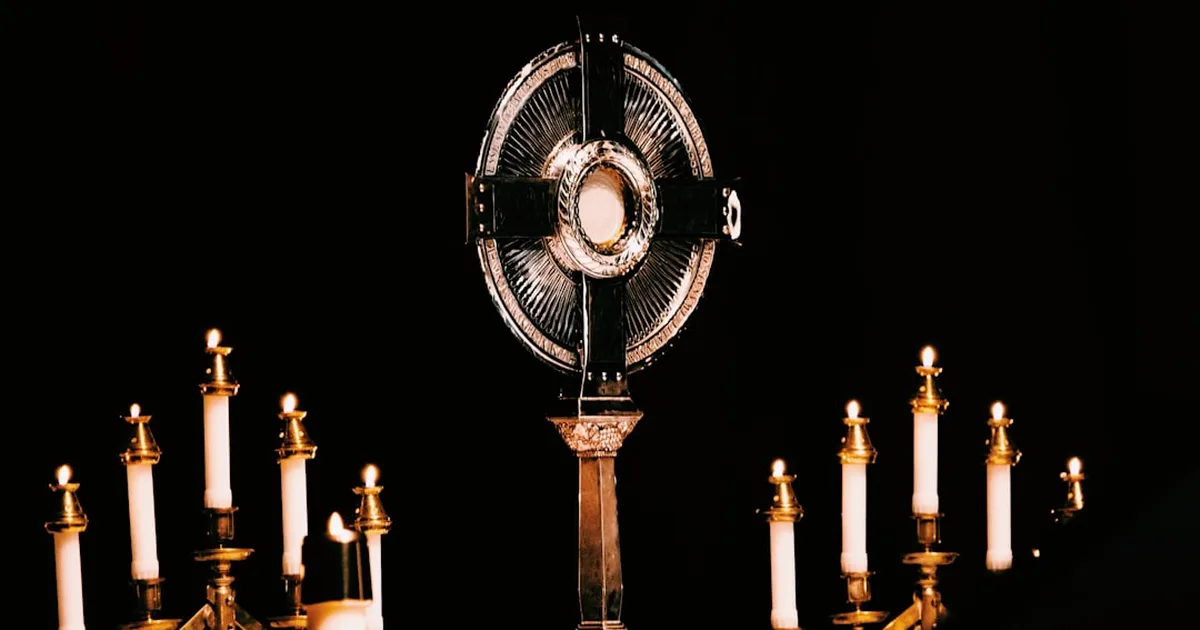
Remembering this scene today invites us to reflect on how art and popular culture can be vehicles for authentic expressions of faith. In a world where the sacred and secular often seem separate, we discover that devotion can flourish in the most unexpected places, touching hearts in unique ways.
The film, which tells the story of a young seminarian, gifts us this moment where music rises as prayer. Infante's devout gaze before the Blessed Sacrament has been etched not only on celluloid but in the collective memory of many believers who see in it a reflection of their own longing for worship.
The Hymn That United a Nation in Worship
The piece Pedro Infante performs is the "Hymn of the First National Eucharistic Congress," composed by masters Latista and Cuéllar for a historic event celebrated in Mexico City in 1924. This congress represented a moment of great fervor and unity for the country's Catholic community, gathering thousands of faithful around the Eucharist.
Beyond its musical value, the hymn is a profession of faith. Its lyrics are an explicit invitation to recognize, adore, and love Jesus present in the consecrated bread. Listening to it transports us to that crowd gathered a century ago, uniting us in their same praise across time. As the psalmist reminds us:
"I will extol the Lord at all times; his praise will always be on my lips." (Psalm 34:1, NIV)
Infante's interpretation, decades later, revitalized this song and brought it to ears that may never have paid attention to its spiritual meaning. Thus, art fulfilled an evangelizing mission, sowing seeds of faith in the fertile ground of popular culture.
The Eucharist: Heart of Christian Life
To understand the depth of this moment, it's essential to remember what the Eucharist means for Christians. It is not a simple symbol or memory, but the real and living presence of Jesus Christ among us. At the Last Supper, Jesus himself instituted this sacrament, saying:
"This is my body given for you; do this in remembrance of me." (Luke 22:19, NIV)
Eucharistic adoration, therefore, is the act of bowing before the One who gave himself for love. It is a personal encounter with the Savior, a time of silence, gratitude, and listening. In an increasingly fast-paced life, stopping before the Blessed Sacrament is an antidote to distraction, an oasis where we can say, like the apostle Thomas: "My Lord and my God!" (John 20:28, NIV).
This devotion has been encouraged by pastors throughout history. In our time, Pope León XIV, following the path of his predecessor, the beloved Pope Francis, continues to invite us to rediscover the treasure of the Eucharist as a source of unity and strength for the Church's mission.
Why Adore Jesus in the Eucharist?
Eucharistic adoration allows us to:
- Deepen our relationship with Christ: It is a time of intimacy where we can present to Him our joys, concerns, and longings.
- Renew our faith: Before the mystery of the bread transformed into His body, our faith is strengthened and purified.
- Receive strength for service:





Comments