
St. Mary of the Assumption Cathedral in Jakarta recently celebrated 125 years of history. On April 21, the local archdiocese marked this milestone with a solemn Mass and various activities that recalled the spiritual and cultural significance of this neo-Gothic temple. Since its consecration in 1901, the cathedral has been a beacon of faith for Indonesian Catholics and a symbol of the religious diversity that characterizes the country.
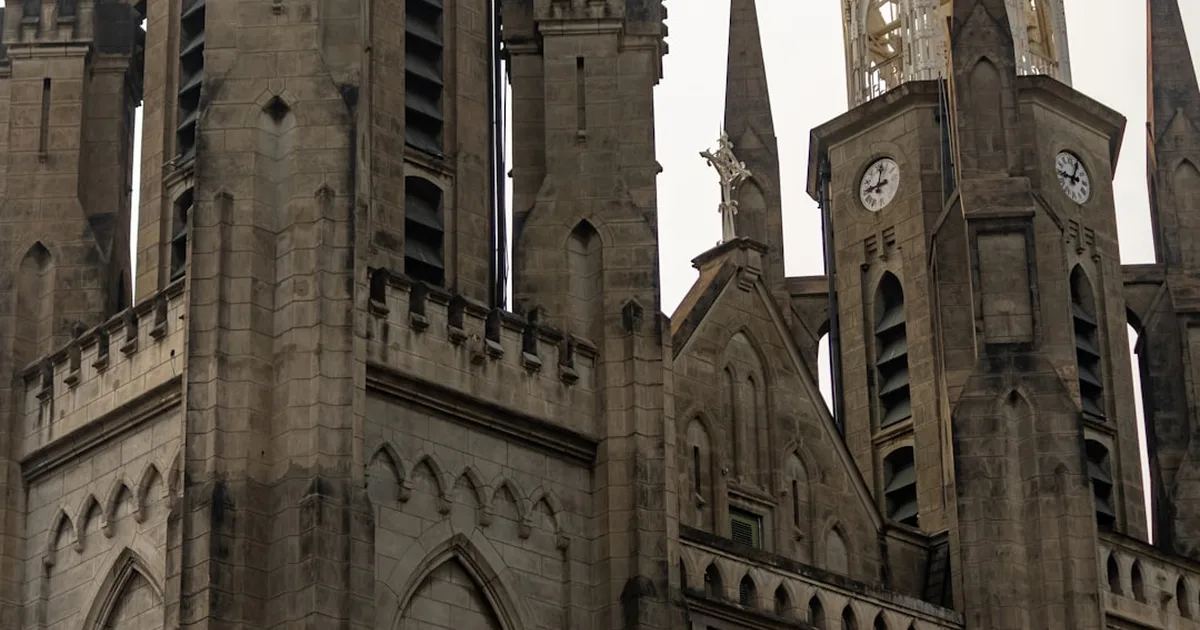
Designed by Dutch Jesuit priest Antonius Dijkmans, the cathedral stands opposite the Istiqlal Grand Mosque, the largest in Southeast Asia. This proximity is no accident: both places of worship represent the peaceful coexistence of Christianity and Islam in Indonesia. The cathedral was declared a historical heritage site by the Ministry of Education and Culture in 2018, underscoring its value not only religious but also architectural and cultural.
The anniversary Mass was presided over by Cardinal Ignatius Suharyo Hardjoatmodjo, Archbishop of Jakarta. After the celebration, a tumpeng—a traditional cone-shaped rice dish symbolizing gratitude and blessing—was ceremonially cut. Additionally, an exhibition was inaugurated showing the current state of the cathedral and the conservation efforts to preserve this architectural treasure.
The Tunnel of Friendship: A Bridge Between Two Worlds
One of the most fascinating aspects of this story is the so-called "Tunnel of Friendship," an underground passage connecting the cathedral with the Istiqlal Mosque. Approved in 2020, this tunnel symbolizes interfaith dialogue and harmony between communities. Both places of worship, separated only by a busy avenue in central Jakarta, are now physically united, reminding everyone that faith can build bridges, not walls.
The Istiqlal Mosque, built between 1961 and 1978, was designed by Christian architect Frederich Silaban—a detail that further highlights the spirit of collaboration between religions. For Indonesians, this tunnel is not just infrastructure; it is a reminder that diversity can be a source of strength and mutual enrichment.
As Christians, we can reflect on how our own communities can be agents of peace and understanding. The apostle Paul encourages us in Romans 12:18 (NIV): "If it is possible, as far as it depends on you, live at peace with everyone." Jakarta Cathedral and Istiqlal Mosque show us that peace is not just an ideal but a possible reality when there is goodwill and respect.
A Legacy of Faith and Culture
The cathedral is not only a place of worship but also a center for cultural and educational activities. On May 1, an architecture seminar titled "Heritage Walk and Talk: Jakarta Cathedral" will be held, organized in collaboration with the Indonesian Institute of Architects. Experts such as architect Gregorius Yori Antar and academic Johannes Wibowo will share their knowledge about the history and design of this iconic building.
Such initiatives show how the church can be a meeting place for the community, beyond liturgical celebrations. The cathedral invites everyone, believers and non-believers alike, to appreciate the beauty of architecture and the richness of history. As Psalm 84:1 (NIV) says: "How lovely is your dwelling place, Lord Almighty!" The cathedral is a dwelling that welcomes all with open arms.
For visitors, the exhibition inaugurated during the anniversary offers a unique view of the cathedral's current state and conservation initiatives. It is an opportunity to learn about the challenges of maintaining a historic building and the community's commitment to preserving it for future generations.


Comments