
On the banks of the Korle Lagoon in Ghana stretches an area that has become globally known for its processing of electronic waste. This region, sometimes popularly compared to biblical cities, represents an enormous ecological challenge. At the same time, it is home to many people who work and live there under difficult conditions. As a Christian community, we are called to look at such places with eyes of hope and engagement, rather than simply condemning them.
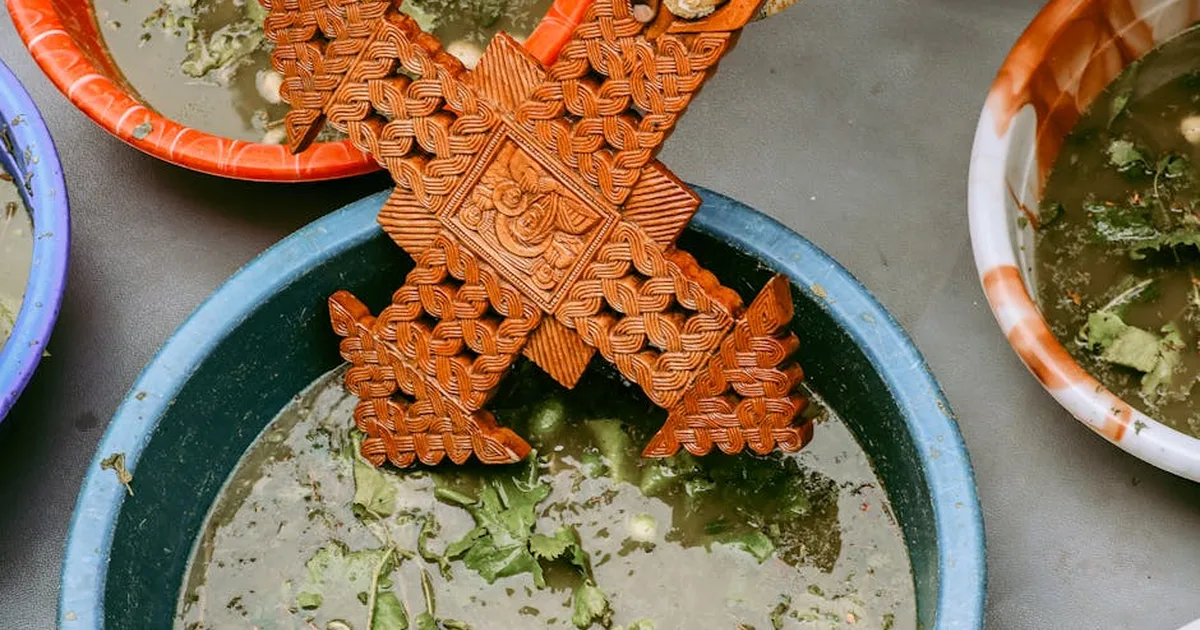
The situation in Agbogbloshie clearly shows the global connections of our consumption behavior. Electronic devices discarded in Europe and other parts of the world often find their way to Ghana, where they are recycled under precarious conditions. This process not only carries environmental risks but also raises questions of justice and human dignity. As Christians, this reminds us of our responsibility for creation and our fellow human beings.
The Recycled Cross: A Symbol of Transformation
From this challenging environment emerged a special symbol: the mission recycled cross. This cross, crafted from materials collected in Agbogbloshie, represents the transformation of waste into something valuable. It reminds us of the biblical truth that God can create new things from the insignificant and discarded. The cross thus becomes a sign of hope amid difficult circumstances.
"See, I am doing a new thing! Now it springs up; do you not perceive it? I am making a way in the wilderness and streams in the wasteland." (Isaiah 43:19 NIV)
The recycled cross from Ghana has already inspired many faith communities worldwide. It shows how faith and practical action can work together. By transforming materials that would otherwise burden the environment into a Christian symbol, a powerful message of renewal is created. This project connects ecological responsibility with spiritual meaning.
The Theological Dimension of Transformation
The idea of transformation is deeply rooted in the Christian faith. The Bible repeatedly speaks of how God can change people and situations. The recycled cross from Agbogbloshie makes this theological truth tangible in a vivid way. It reminds us that no situation is hopeless and that God works even in the most difficult circumstances.
In many communities, the recycled cross has led to discussions about sustainability and global responsibility. It offers a concrete starting point for reflecting on our use of resources and our relationship with people in other parts of the world. Such symbols can build bridges between different realities and lead to a deeper understanding of our shared responsibility.
Community Life and Global Responsibility
The story of the recycled cross from Ghana invites Christian communities to reflect on their role in global connections. How can we, as local communities, take responsibility for problems that seem distant? The answer often begins with awareness-raising and small, concrete steps. Sharing such stories in worship services or community groups can be a first step.
Many communities have begun developing their own projects for caring for creation. This ranges from recycling initiatives to fair purchasing and educational work. Such activities are not only practically meaningful but also an expression of holistic faith that connects spiritual and material dimensions. They show that Christian faith is not limited to the private sphere but has social implications.


Comments