
Exactly one year ago, on April 21, 2025, the Catholic Church and the wider Christian world said farewell to Pope Francis, who passed to the Father's house at the age of 88. On this first anniversary of what Pope Leo XIV calls "his birth into heaven," the Christian community unites in memory and gratitude. The current pontiff, elected in May 2025, has shared special words to remember his predecessor, highlighting how his witness continues to shape our ecclesial journey.
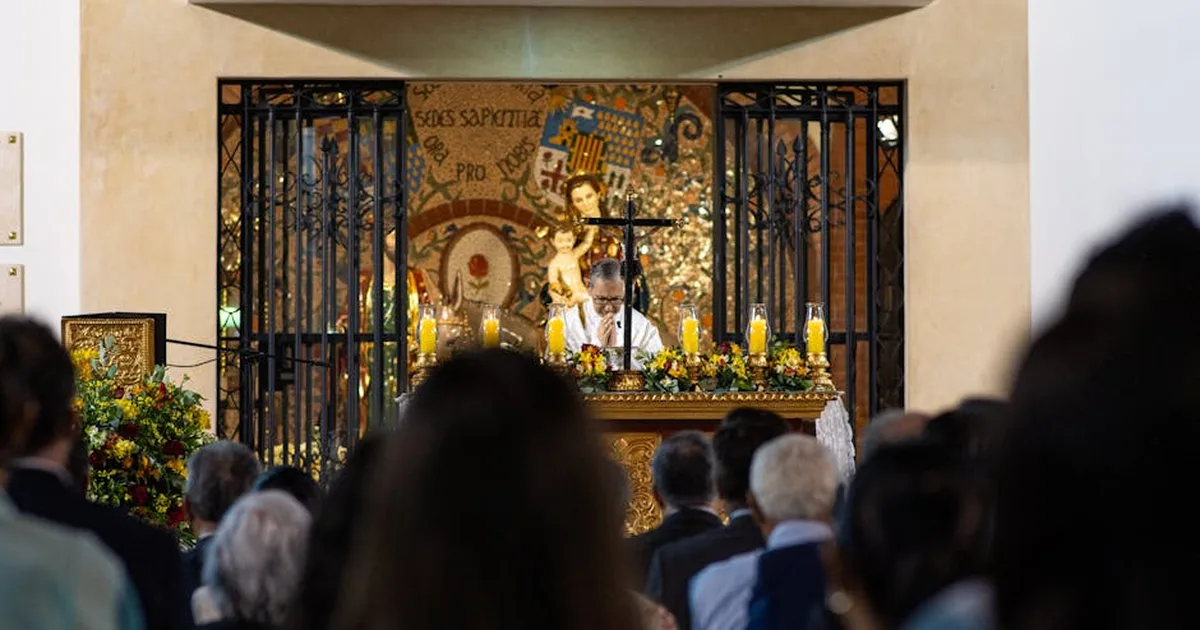
From his residence in the Vatican to the most remote communities, the figure of Francis remains alive in the hearts of those who valued his pastoral closeness. As the first Latin American pope in history, his pontificate represented a breath of fresh air for the universal Church, especially for our communities in Latin America who felt particularly represented.
In these days of remembrance, Pope Leo XIV has shared profound reflections on Francis's legacy, inviting us to take up his testimony and continue living the Gospel with the same passion he demonstrated during his Petrine ministry.
The Pastoral Heart of Francis: Closeness and Mercy
One of the most distinctive features of Francis's pontificate was his ability to draw near to those most in need of comfort and hope. Pope Leo XIV has especially highlighted how Francis always expressed "a special closeness to the poorest, the little ones, the sick, children, and the elderly." This attitude was not just a personal style but a concrete way of living out the Gospel mandate.
Let us remember the words of Jesus in Matthew 25:40 (NIV): "Truly I tell you, whatever you did for one of the least of these brothers and sisters of mine, you did for me." Francis embodied this principle in a tangible way, visiting prisons, embracing people with disabilities, and showing special affection for those whom society often marginalizes.
His first Angelus as pontiff already set this pastoral direction when he spoke about God's mercy. On that occasion, citing the parable of the woman caught in adultery (John 8:1-11), Francis reminded us that "God never tires of forgiving; it is we who tire of asking for his mercy." This message resonated deeply in a Church called to be a field hospital rather than an impregnable fortress.
"Come to me, all you who are weary and burdened, and I will give you rest" (Matthew 11:28, NIV).
Universal Fraternity: A Call to Encounter
Another fundamental axis of Francis's teaching was his insistence on universal fraternity. Beyond borders, denominations, or cultural differences, the Argentine pope constantly invited us to recognize each other as brothers and sisters, children of the same Father. This vision echoes in the letter to the Galatians: "There is neither Jew nor Gentile, neither slave nor free, nor is there male and female, for you are all one in Christ Jesus" (Galatians 3:28, NIV).
The "culture of encounter" that Francis promoted was not a mere slogan but a concrete pastoral methodology. It meant going out to meet the other, listening attentively, dialoguing with respect, and building bridges where others saw walls. In an increasingly polarized world, this message remains profoundly necessary.
During his tour of Africa, Pope Leo XIV revisited this theme, highlighting how Francis taught us that the Gospel is best lived when we authentically encounter others, especially those who think or live differently from us. This fraternity does not dilute our convictions but purifies them in the crucible of Christian love.
The Joy of the Gospel: An Enduring Legacy
In his apostolic exhortation "Evangelii Gaudium," Francis reminded us that the joy of the Gospel fills the heart and life of all who encounter Jesus. This joy, far from being superficial optimism, is rooted in the certainty of God's love and the hope of salvation. It is a joy that withstands trials and radiates in daily life.
Pope Leo XIV has encouraged us to keep this flame alive, especially in times of difficulty or discouragement. The legacy of Francis is not a closed chapter but an open invitation to live our faith with renewed enthusiasm and contagious hope. As we remember him a year after his departure, we are called not only to nostalgia but to active discipleship, carrying forward the torch of the Gospel that he held so high.



Comments