
There is something deeply human about wanting to understand everything. When we approach a sacred moment—like a child’s First Communion—we often feel the need to grasp every theological detail, to explain the mystery in precise terms. But sometimes our desire to comprehend can become a barrier to simply receiving what God offers.
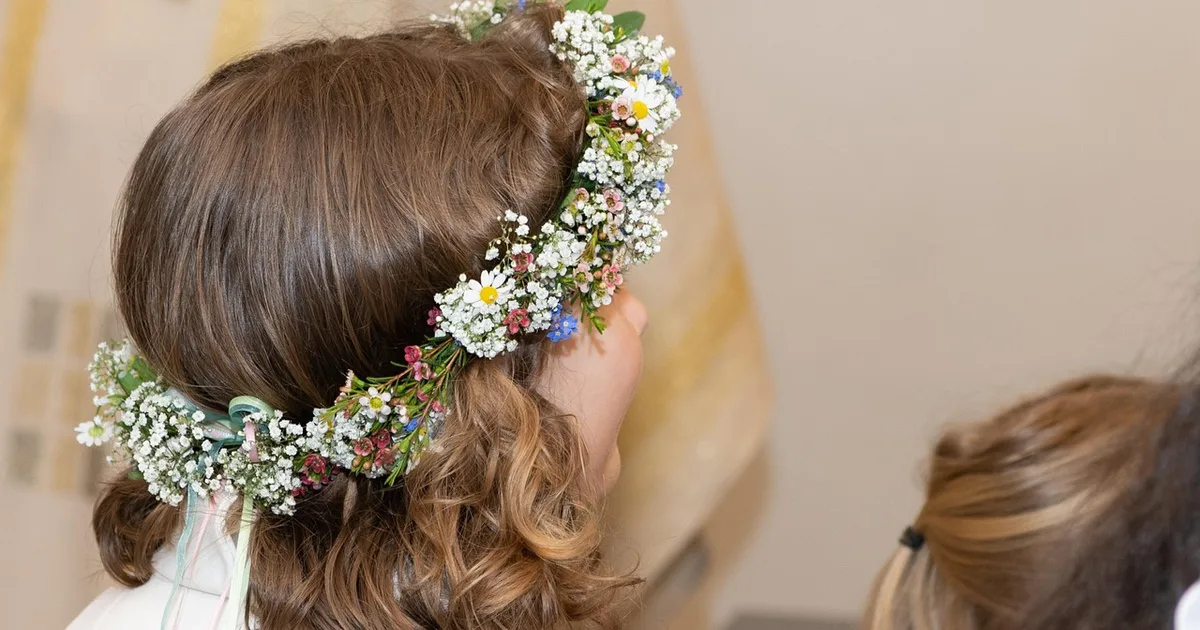
I remember standing in church, watching a little girl walk up to the altar. Her hands were folded tightly, her eyes wide with a mixture of awe and simple joy. She didn’t need to know the history of Eucharistic theology or the nuances of transubstantiation. She knew she was meeting Jesus, and that was enough.
Jesus himself invites us to this kind of faith. In Matthew 18:3, he says, “Truly, I tell you, unless you change and become like little children, you will never enter the kingdom of heaven.” This is not a call to ignorance but to trust. Children don’t overthink; they receive. They don’t analyze; they embrace.
Yet as adults, we often complicate the simplest truths. We worry about our worthiness, our understanding, our posture. We forget that the Eucharist is not a reward for the perfect but a gift for the needy. As 1 Corinthians 11:23-26 reminds us, the Lord’s Supper is a proclamation of his death until he comes—not a test of our intellectual grasp.
The Heart of First Communion
First Communion is a milestone, but its power lies not in the event itself but in the ongoing relationship it signifies. The Catechism of the Catholic Church (1324) calls the Eucharist “the source and summit of the Christian life.” For a child, this truth is lived more than explained. They taste and see that the Lord is good (Psalm 34:8).
When we prepare children for this sacrament, we often focus on memorizing prayers and understanding the basics. Those are good, but the real preparation is in the heart. Do they know they are loved? Do they understand that Jesus wants to be with them? These are the questions that matter.
The apostle Paul writes in Ephesians 3:17-19 about being “rooted and established in love” and knowing the love of Christ that surpasses knowledge. This is the goal: not to know about God, but to know God. First Communion is an invitation into that deeper knowing.
Letting Go of Perfectionism
Many parents and godparents feel pressure to make the day perfect—the dress, the party, the photos. But the true beauty of First Communion is not in the external trappings. It is in the quiet moment when a child opens their hands to receive the body of Christ. That is holy ground.
If you are preparing a child for this sacrament, take a deep breath. You don’t need to have all the answers. You just need to point them to Jesus. Share your own faith simply. Let them see your love for the Lord. As Deuteronomy 6:6-7 says, “These commandments that I give you today are to be on your hearts. Impress them on your children.”
Faith That Receives
The Eucharist is not a puzzle to be solved; it is a person to be received. Jesus comes to us in humility—under the appearance of bread and wine—so that we might approach him without fear. He does not ask us to understand everything; he asks us to trust.
In John 6:35, Jesus declares, “I am the bread of life; whoever comes to me shall not hunger, and whoever believes in me shall never thirst.” This promise is for every communicant, young or old. The same Jesus who fed the multitudes feeds us today.
When we receive Communion, we are united with Christ and with his body, the Church. It is a foretaste of the heavenly banquet, a moment of intimacy with our Creator. Let us not allow our overthinking to rob us of that gift.
Practical Steps for Families
Here are a few simple ways to make First Communion a meaningful spiritual milestone, not just a ceremony:
- Pray together in the days leading up to the event. Let the child lead a simple prayer of thanks.
- Read the Bible story of the Last Supper (Matthew 26:26-30) and talk about what it means.
- Visit the church beforehand to help the child feel comfortable with the space.
- Focus on the spiritual rather than the material. A small gift like a children’s Bible or a cross necklace can be more meaningful than a big party.
- Continue the conversation after the day. Ask the child what they remember and what they felt.
First Communion is not a graduation; it is a beginning. It opens the door to a lifetime of encounters with Jesus in the Eucharist. Let us walk through that door with the faith of a child.
“Let the little children come to me and do not hinder them, for to such belongs the kingdom of heaven.” — Matthew 19:14 (ESV)
Reflection
Take a moment to consider your own approach to the Eucharist. Do you come with a checklist of things to understand, or with open hands ready to receive? Perhaps this week, you can ask God to give you a childlike trust. Let go of the need to have everything figured out and simply rest in his presence. The grace you need is already there, waiting for you at the table.




Comments