
In a gesture that transcends the boundaries between faith and reason, the International Astronomical Union has named four asteroids after key figures in the history of the Vatican Observatory. Discovered through the joint work of Lithuanian astronomer Kazimieras Černis and Jesuit Father Richard Boyle, these celestial bodies now bear the names of Gioacchino Pecci (Pope Leo XIII), Giuseppe Lais, Pietro Maffi, and Bertiau. This recognition not only honors these individuals but also underscores a message the Church has promoted for centuries: science and faith are not enemies, but companions in the search for truth.
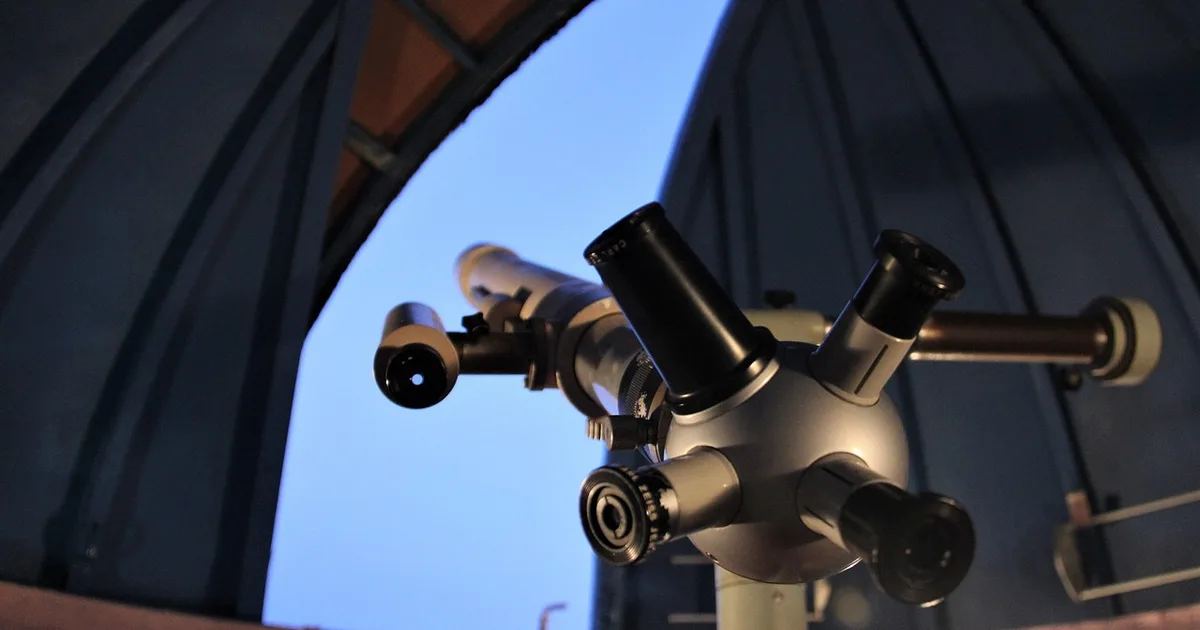
The Vatican Observatory, officially known as the Specola Vaticana, has been a beacon of astronomical research since its re-establishment in 1891 by Pope Leo XIII. Over the years, it has shown that studying the universe can be an act of praise to the Creator. As Psalm 19:1 says: "The heavens declare the glory of God; the skies proclaim the work of his hands" (NIV).
Leo XIII: The Pope Who Embraced Science
Asteroid Gioacchinopecci is named after Pope Leo XIII, born Vincenzo Gioacchino Raffaele Luigi Pecci. His legacy is deeply tied to the revival of the Vatican Observatory after the loss of the Papal States. In his motu proprio Ut Mysticam, Leo XIII made clear that the Church did not oppose scientific progress but welcomed it as a means to lift the mind toward God. Astronomy, in particular, held a special place in his vision, as it allows us to contemplate the immensity of the cosmos and recognize the greatness of the Creator.
This pope understood that true science does not contradict faith but complements it. As it is written in Proverbs 25:2: "It is the glory of God to conceal a matter; to search out a matter is the glory of kings" (NIV). Scientific inquiry, then, becomes a way to honor God by uncovering the secrets of his creation.
The Vatican Observatory: A History of Adaptation and Excellence
From its early days, the Vatican Observatory has evolved to stay at the forefront of astronomical research. Initially located within the Vatican walls and the Tower of the Winds, it moved in the 1930s to Castel Gandolfo due to Rome's light pollution. Later, in the 1990s, the Vatican Advanced Technology Telescope (VATT) was built on Mount Graham in Arizona, where dark skies allow for high-quality observations.
This ability to adapt reflects a commitment to scientific excellence that has not diminished over time. The newly named asteroids are just the latest chapter in a long history of contributions to astronomy.
Giuseppe Lais, Pietro Maffi, and Bertiau: Scientists in Service of the Church
The other three asteroids honor figures who played crucial roles in the Observatory's mission. Giuseppe Lais was a 19th-century priest and astronomer who served as deputy director of the Observatory for three decades. He participated in the ambitious international project "Carte du Ciel," one of the first efforts to map stars using photography. His work laid the foundations for modern astrometry.
Pietro Maffi, a cardinal and archbishop of Pisa, presided over the Observatory from 1904 to 1931. During his leadership, the institution consolidated its reputation as a center of serious research. Bertiau, a Jesuit astronomer, contributed significantly to the study of variable stars and stellar dynamics.
These men exemplify how a scientific vocation can be integrated with a life of faith. As Colossians 3:23 says: "Whatever you do, work at it with all your heart, as working for the Lord" (NIV). Their dedication reminds us that the pursuit of knowledge can be an act of worship.





Comments