
In the joyful rhythm of the Easter season, one Sunday shines with its own unique light. The second Sunday after the Resurrection, which we celebrate as Divine Mercy Sunday, invites us to deepen a fundamental aspect of our encounter with Christ: His love that forgives, welcomes, and transforms. This day is not simply another commemoration on the liturgical calendar, but a privileged opportunity to personally experience the tenderness of God.
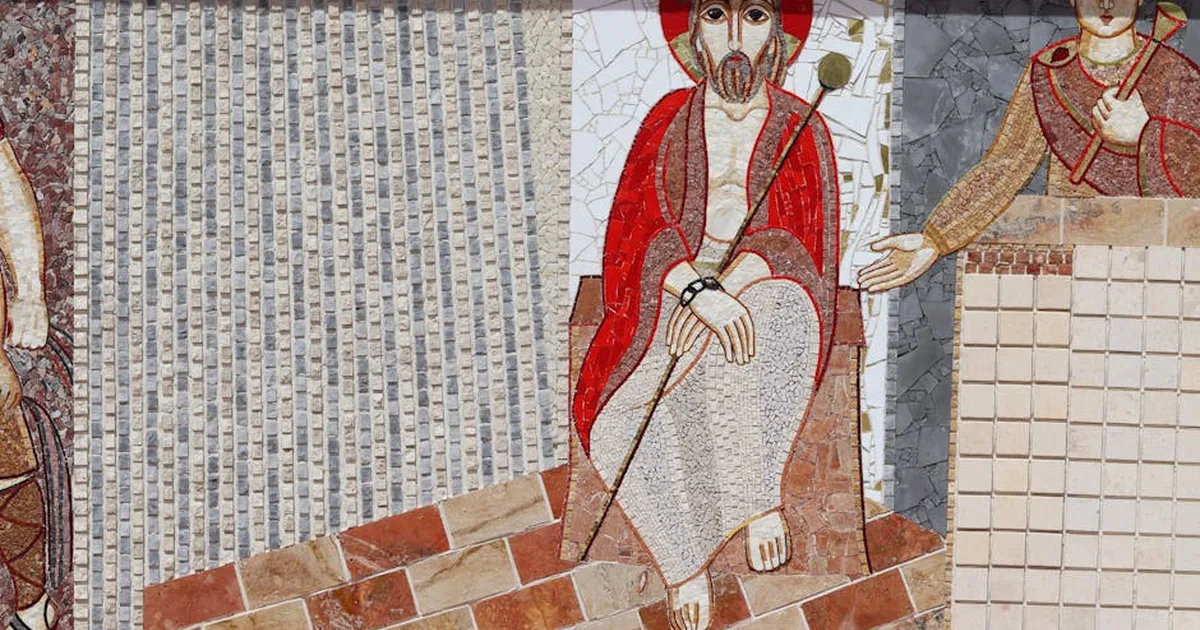
The Church, guided by the Holy Spirit, has recognized in this day a particular spiritual richness. As we continue celebrating Jesus' victory over death, this Sunday reminds us that the Resurrection is not just a historical event, but a living reality that continues to touch our lives today. It's as if the light of Easter is refracted through the prism of mercy, illuminating deep aspects of our relationship with the Lord.
In this context, we remember with gratitude the ministry of Pope Francis, who passed to the Father's house in April 2025, and whose pontificate was marked by a constant call to live and proclaim divine mercy. Today, under the pastoral leadership of Pope Leo XIV, we continue to deepen this mystery that unites us as a Christian family.
The Encounter in the Upper Room: Peace and Forgiveness
The biblical foundation of this celebration is found in the Gospel account according to John, chapter 20, verses 19 to 31. The scene is profoundly moving: the disciples, filled with fear and confusion after the crucifixion, are gathered behind locked doors. Suddenly, the risen Jesus appears in their midst.
"On the evening of that first day of the week, when the disciples were together, with the doors locked for fear of the Jewish leaders, Jesus came and stood among them and said, 'Peace be with you!'" (John 20:19, NIV)
The first thing Jesus offers is not reproaches for having abandoned Him, nor immediate demands, but a greeting of peace. This peace is not simply the absence of conflict, but the fullness of reconciliation that springs from His merciful love. The wounds in His hands and side, far from being signs of defeat, become living testimony of a love that has conquered even death.
Imagine for a moment that encounter. The disciples probably expected some kind of rebuke, some expression of disappointment. Instead, they find their Master showing them the marks of His loving sacrifice. It's as if Jesus were telling them: "Look, these wounds are proof that my love for you is stronger than anything you did or failed to do."
The Wounds That Speak of Love
The wounds of the risen Christ have their own language. They are not scars to hide, but glorious signs that reveal the depth of divine mercy. Each mark tells a story of unconditional love, of total surrender, of forgiveness that precedes repentance. In a world where our wounds often shame us or define us negatively, Jesus' wounds show us a different path: our vulnerabilities, when offered to God, can become places of encounter with His grace.
This aspect is particularly relevant in our communal life. As Church, we are called to be a space where wounds can be shown without fear, where God's mercy becomes tangible through mutual forgiveness and fraternal welcome. Divine Mercy Sunday reminds us that our faith is not based on impossible perfection, but on trust in a God who loves us precisely in our fragility.
Thomas and Our Own Doubts
The story continues with a character who feels particularly close to us: Thomas. When the other disciples share the news of having seen the Lord, Thomas responds with words that echo in many hearts throughout history: "Unless I see the nail marks in his hands and put my finger where the nails were, and put my hand into his side, I will not believe." (John 20:25, NIV).
Thomas' doubt is not condemned by Jesus, but rather becomes the occasion for a deeper revelation. A week later, Jesus appears again and invites Thomas to touch His wounds. This encounter transforms doubt into one of the most beautiful confessions of faith in the Gospels: "My Lord and my God!" (John 20:28, NIV).
In our own spiritual journey, we may experience moments of uncertainty, questions that seem to have no answer, or feelings of distance from God. The story of Thomas teaches us that Jesus does not reject our honest doubts, but meets us precisely in those places of questioning. Divine Mercy Sunday invites us to bring our uncertainties to the Lord, trusting that He will reveal Himself to us in ways we can recognize and believe.
This celebration, rooted in the revelations to Saint Faustina Kowalska in the 20th century, has become a precious gift for the entire Church. It reminds us that God's mercy is not a theological concept, but a living reality that we can experience personally and communally. As we celebrate this special Sunday, may we open our hearts to receive the boundless love that flows from the wounded side of Christ, transforming our lives and enabling us to become channels of that same mercy to others.



Comments