
For the past twenty-five years, Christian congregations have faced a tough reality: fewer people in the pews, declining trust in religious institutions, and a steady rise in those who claim no affiliation. Yet a recent study from the Hartford Institute for Religion Research, published in April 2026, offers what many call "cautious optimism." For the first time in a quarter century, average attendance at religious services has shown a significant increase.
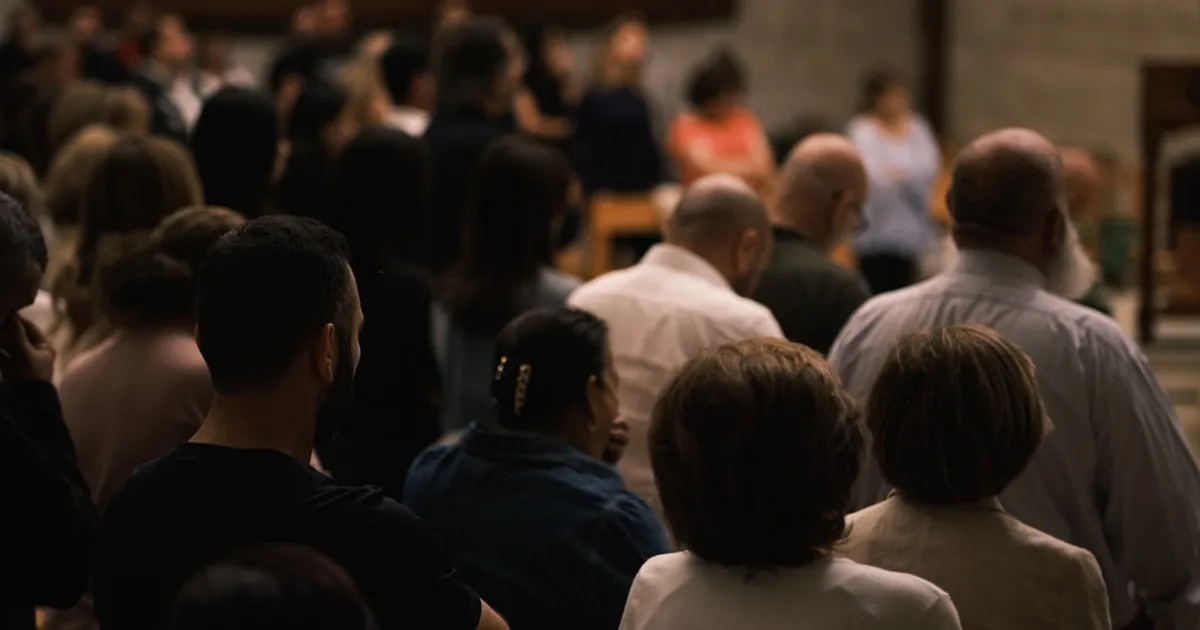
According to the survey, which polled over seven thousand congregational leaders between September and December 2025, average in-person attendance rose from 65 adults in 2020 to 70 in 2025. While still far from the 137 attendees recorded at the turn of the millennium, this shift marks a halt in the freefall many communities experienced, especially during the COVID-19 pandemic.
The study notes that 43% of congregations report growth of at least 5%, while 46% continue to decline. The rest are stable. For the first time in decades, the group that is growing or stabilizing slightly outnumbers the one in decline. This is not a massive revival, but it is a sign that church life is adapting and, in many cases, recovering ground.
What's Behind This Recovery?
Researchers identify several factors behind this uptick. One of the most important is the adoption of digital tools during the pandemic. Many churches that previously relied solely on in-person gatherings learned to livestream, create online communities, and stay connected with members through social media and apps. What began as an emergency response has become a lasting pastoral strategy.
Moreover, growing congregations tend to be those that offer a blend of in-person and virtual experiences and have invested in discipleship programs, community service, and small groups. The quality of connection seems to matter more than the quantity of programs.
Another factor is the post-pandemic spiritual search. Many who drifted away during lockdowns are returning, and others—having experienced loss or uncertainty—are seeking a faith community that offers hope and purpose. As Scripture says:
"Let us not give up meeting together, as some are in the habit of doing, but let us encourage one another" (Hebrews 10:25, NIV).
Differences Among Christian Traditions
The study also reveals notable differences among traditions. Catholic and Orthodox communities report the highest average attendance, with about 200 participants per congregation. This is partly because they have fewer parishes, but larger ones. Evangelical churches average 75 attendees, while mainline Protestants average around 50.
Larger congregations tend to grow, while smaller ones remain vulnerable. However, the report highlights that many small churches have found creative ways to serve their communities, allowing them to stay stable or even grow slightly.
Implications for Church Life Today
This study invites us to reflect on what it means to be the church in the 21st century. It's not just about numbers, but about faithfulness and adaptation. The church is not a building or a program; it is the people of God gathered in the name of Jesus. And though challenges persist, there are reasons for hope.
For pastoral leaders, these findings are a call to evaluate how they are reaching their community. Are they using digital resources effectively? Are they fostering deep connections? The data suggests that churches willing to adapt and focus on authentic community are finding new life.
As we look ahead, let us remember that the Spirit is still at work, breathing fresh life into dry bones. The increase in attendance may be modest, but it is a sign that people are still searching for meaning, belonging, and hope—and the church has a vital role to offer.




Comments