
Pope Leo XIV has completed his first year at the helm of the Catholic Church, and he marked it in a deeply meaningful way: by visiting Pompeii and Naples, two places intimately tied to Marian devotion. May 8, 2025, the date of his election, coincided with the day of the Supplication to Our Lady of the Rosary of Pompeii, so he decided to return to that shrine to celebrate the anniversary together. For many, this gesture reflects the importance the pontiff places on prayer and closeness to the faithful.
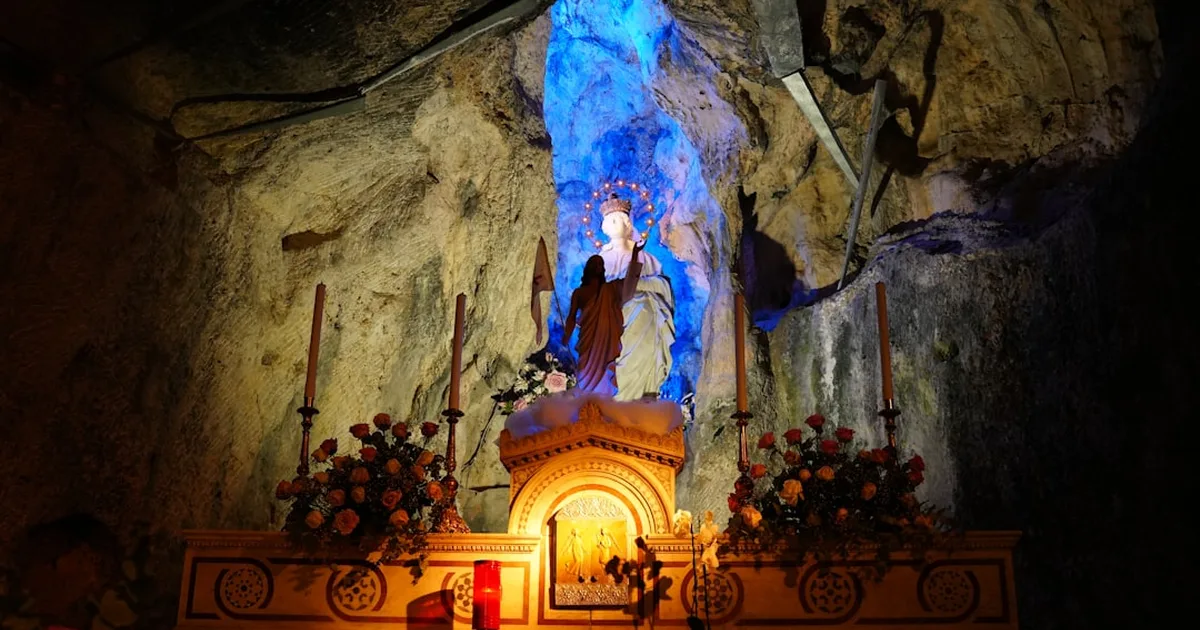
During his visit, the Pope not only presided over a Mass in the Shrine Square but also met with volunteers, the sick, and people with disabilities. His message was clear: prayer is not an escape from reality but a driving force for service. In a world that often rushes aimlessly, Leo XIV invited everyone to be "men and women of prayer" who, like Saint Bartolo Longo, know how to put their faith at the service of those most in need.
Leo XIV: A Pope with American Roots and a Missionary Heart
Robert Francis Prevost, born in Chicago, is the second American pontiff in history and the first Augustinian to reach the papacy in modern times. But his story is not just that of an American; much of his formation and ministry took place in Peru, where he was bishop of Chiclayo and obtained Peruvian nationality. This missionary experience deeply shaped his vision of the Church: a Church that does not shut itself in but goes out to meet others.
In choosing the name Leo XIV, he wanted to honor Leo XIII, the pope of the Rosary and of social doctrine. In his homily in Pompeii, he recalled how Leo XIII promoted the praying of the Rosary through extensive teaching. For the current pontiff, the Rosary is not a mechanical repetition but a way to contemplate Jesus with Mary's eyes. "The Hail Mary," he said, "is an invitation to joy," because it reminds us that God is with us.
A Year of Challenges and Hopes
In these twelve months, the Church has faced several challenges, from the need for greater unity among Christian denominations to the abuse crisis that continues to shake the institution. Leo XIV has sought to be a close shepherd, one who listens and is not afraid to ask for forgiveness. His simple style and emphasis on prayer have resonated with many faithful who long for a more authentic Church.
But there have also been moments of hope. The visit to Pompeii and Naples was not just a symbolic act; it was an opportunity to be with the people, to bless the sick, and to thank those who work in charitable works. The Pope highlighted the legacy of Saint Bartolo Longo, who founded the shrine and dedicated his life to the poor. "You are the face of the Church that serves," he told the volunteers.
Prayer as the Foundation of Everything
One of the central themes of this first year has been the importance of prayer. On several occasions, the Pope has repeated that without a life of prayer, pastoral action loses its soul. In Pompeii, he expressed it clearly: "Prayer transforms us, makes us capable of loving as God loves." It is not about praying for the sake of praying, but about letting God speak to us and send us.
The Bible is full of examples of people who prayed and saw their lives change. Jesus himself spent long hours in prayer, especially before making important decisions (Luke 6:12). If the Son of God needed to pray, how much more do we? Pope Leo XIV reminds us that prayer is not a luxury but a necessity.
"Pray without ceasing" (1 Thessalonians 5:17, NIV).
This verse, though brief, contains a profound call: to maintain an attitude of constant dialogue with God, not only in difficult times but in every moment of the day. Prayer connects us to the source of life and gives us the strength to serve others with love.



Comments