
On a Sunday afternoon that will remain etched in the memory of Angolan believers, Pope Leo XIV experienced a profound moment of spirituality in Muxima. The Pontiff, elected in May 2025 following the passing of Pope Francis in April of the same year, gathered with the local community for a rosary prayer, demonstrating from the beginning of his pontificate a commitment to unity and popular piety. The visit took place in front of the site where a sanctuary dedicated to Mama Muxima is being built, an expression meaning "Mother of the Heart" in a local dialect, symbolizing divine tenderness and welcome.
The arrival of the Holy Father was surrounded by joy and emotion. As he toured the area in the popemobile, one could see on people's faces a mixture of reverence and jubilation. This gathering was not merely a protocol event, but a true pastoral embrace, where the successor of Peter drew near to his brothers and sisters in Christ. The scene recalled the apostle Paul's exhortation:
"Rejoice with those who rejoice; mourn with those who mourn." (Romans 12:15, NIV)There, in that moment, joy was shared collectively.
The Rosary Prayer: A Contemplative Path
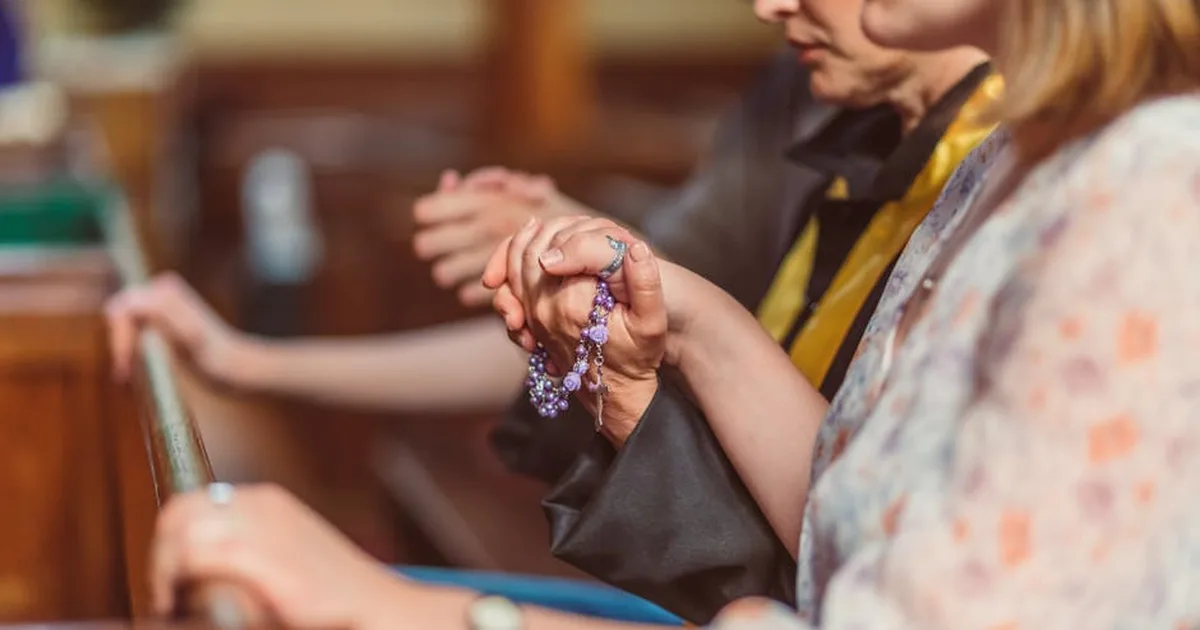
Following the warm welcome, the recitation of the rosary began. This devotional practice, so beloved by millions of Christians around the world, served as a guiding thread for a communal experience of meditating on the mysteries of Christ's life. In silence and with fervor, the faithful united their voices, guided by the Pope, in a prayer that transcends words and touches the heart. The rosary, more than a repetition of Hail Marys, is a school of contemplation that invites us to fix our gaze on Jesus through the eyes of Mary.
In this act of piety, we can find an echo of the psalmist's words:
"I have hidden your word in my heart that I might not sin against you." (Psalm 119:11, NIV)Each bead of the rosary is an opportunity to treasure in our hearts the decisive moments of our salvation, from the Annunciation to the Glorification of Jesus and Mary. It is an exercise of spiritual memory that strengthens faith and nourishes hope, especially in times of challenge and transition for the Church.
The Legacy of Saint John Paul II
In his address, Pope Leo XIV referenced Saint John Paul II, who defined the rosary as the prayer of the heart. This heritage is precious, for it reminds us that true prayer springs from interiority and personal encounter with God. It is not mere formality, but a loving dialogue that transforms the one who prays. In a world often noisy and distracting, the rosary offers a space of quiet and listening, where we can tune our lives to the rhythm of the Gospel.
The Call to Love: The Pope's Exhortation
At the conclusion of the rosary, the Holy Father addressed those present with a message centered on the commandment of love. Drawing inspiration from the example of the Virgin Mary, he exhorted everyone to love one another with genuine and selfless love. This is not new, but the very heart of the Christian message, as Jesus reminds us:
"A new command I give you: Love one another. As I have loved you, so you must love one another." (John 13:34, NIV)Pope Leo XIV, with a pastoral and welcoming tone, reaffirmed that brotherly love is the most eloquent testimony of our faith.
In a global context marked by divisions and conflicts, this call to love resonates with prophetic urgency. The Pontiff emphasized that Mary, as Mother of the Heart, shows us the way: an open, compassionate heart ready to serve. She, who treasured all these things in her heart (Luke 2:51), teaches us to make love the lens through which we see the world and relate to others. This love is not a vague feeling, but a concrete decision to seek the good of our neighbor, even when it requires sacrifice.



Comments