
In a world that often feels divided, gestures of connection and dialogue carry special meaning. Recently, at the Vatican, a meeting took place that has drawn the attention of the global Christian community. Pope Leo XIV welcomed the President of the National Assembly of Vietnam, Trần Thanh Mẫn, in a gathering that went beyond formalities to become a symbol of bridges being built.
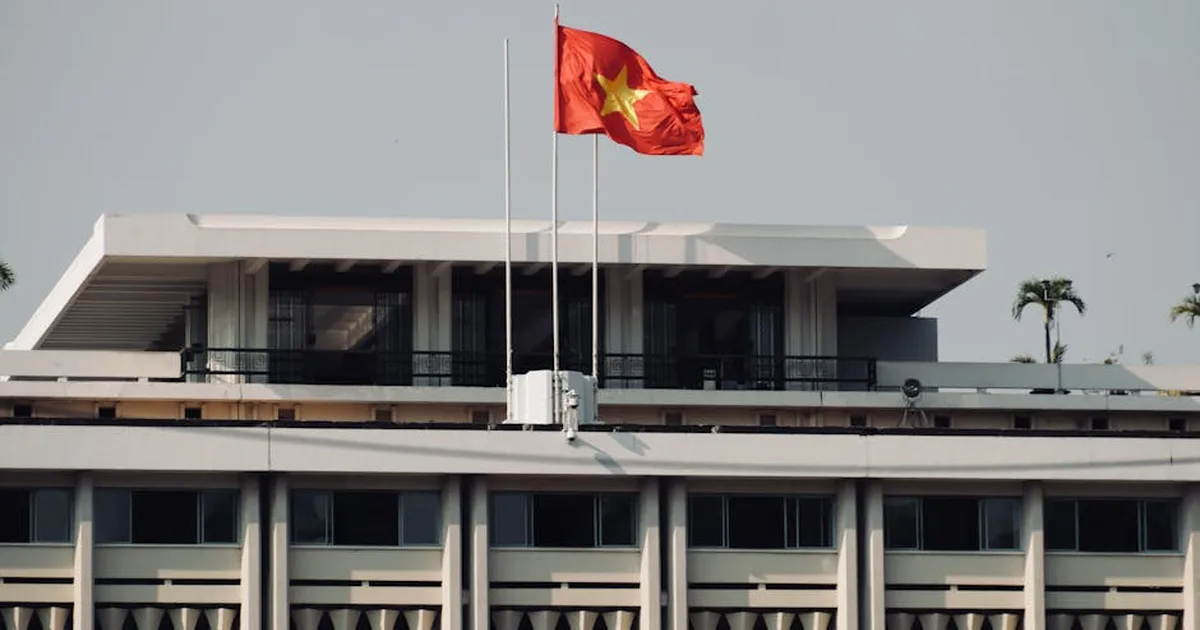
This dialogue comes at a significant time for the Church, as the Holy Father prepares to carry a message of faith and unity to other nations. The conversation with the Vietnamese representative opens a door that many believers in that country have longed to see opened for years: the possibility of a pastoral visit from the successor of Peter to Vietnam.
The delivery of a personal message from Vietnamese leader To Lam to the Pontiff represents more than diplomatic formality. It is an extended hand, a recognition of the Church's role as an agent of peace and encounter. As Scripture reminds us:
"How beautiful on the mountains are the feet of those who bring good news, who proclaim peace, who bring good tidings, who proclaim salvation, who say to Zion, 'Your God reigns!'" (Isaiah 52:7, NIV).
A Path of Dialogue with History and Challenges
Relations between the Holy See and Vietnam have not been an easy journey. Over the years, important steps have been taken, but there have also been moments of pause and reflection. The signing of an Agreement in July 2023, which allowed for a permanent Vatican representative in Hanoi, was a milestone celebrated by the local and global Catholic community.
Previously, in December 2023, Vietnamese authorities had already extended an invitation to then-Pope Francis. However, changes in the country's political leadership and an intense anti-corruption campaign altered the landscape, postponing expected progress toward full diplomatic relations.
The historic visit of the Secretary for Relations with States, Archbishop Paul Gallagher, to Vietnam in January 2024, kept the flame of dialogue alive. Although a subsequent trip by Cardinal Pietro Parolin, which would have strengthened ties, did not materialize due to internal circumstances, the participation of a Vietnamese delegation at Pope Francis's funeral and at the beginning of Leo XIV's pontificate demonstrated a willingness to continue contact.
This process speaks to the patience and perseverance that building peace often requires. It is not a sprint, but a marathon that demands constant faith.
"But the fruit of the Spirit is love, joy, peace, forbearance, kindness, goodness, faithfulness, gentleness and self-control. Against such things there is no law" (Galatians 5:22-23, NIV).Every gesture, every meeting, is a seed planted for a future that God knows.
The Church in Vietnam: A Living and Resilient Faith
To understand the importance of this rapprochement, it is vital to look at the Vietnamese Catholic community. It is a Church with deep roots, which has grown and witnessed its faith in complex contexts. Believers in Vietnam, like many brothers and sisters in various parts of the world, long for the pastoral closeness of the Pope, not as a political figure, but as the universal shepherd who confirms them in faith.
Their desire reflects a deep spiritual longing: to feel fully integrated into the communion of the worldwide Church, to receive encouragement for their daily lives, and to be strengthened in their mission to be salt and light in their society. They are a vital part of the Body of Christ.
The Meaning of a Possible Pastoral Visit
What would a visit by Pope Leo XIV to Vietnam represent? Beyond the diplomatic aspects, which are important, its significance would be profoundly pastoral. It would be a tangible sign of the Church's universal care, a moment of spiritual strengthening for Vietnamese Catholics, and an opportunity to witness to the Gospel of peace in a specific cultural context. Such a visit could further heal historical divisions and inspire all Christians to be bridge-builders in their own communities, embodying the hope that comes from our shared faith in Christ, who reconciles all things to himself.



Comments