
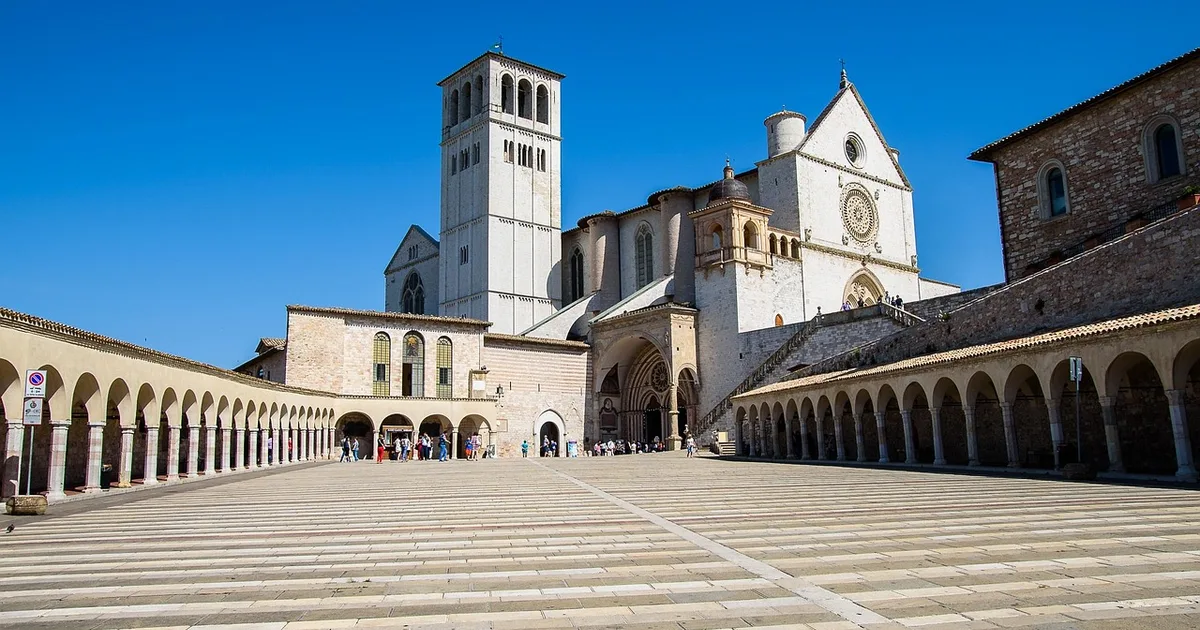
In the streets of Assisi, a city that for centuries has spoken to humanity's heart through Saint Francis' message, a special people gathered in recent days. Thousands of young people, teachers, and families walked together along the path connecting Santa Maria degli Angeli to the seraphic city, carrying in their hearts one powerful desire: a world without violence. This journey represents not merely a demonstration, but a true pilgrimage toward values belonging to the deepest roots of Christian faith.
As the prophet Isaiah reminds us: "They will beat their swords into plowshares and their spears into pruning hooks. Nation will not take up sword against nation, nor will they train for war anymore" (Isaiah 2:4). These ancient words resonate with extraordinary relevance in our time, inviting each of us to become peacemakers in the daily fabric of our existence.
Participants, coming from different regions of Italy and various age groups, demonstrated that hope knows no generational boundaries. From elementary school children to high school students, everyone contributed to this powerful collective witness. The diversity of participants made the unified message emerging from the procession even more meaningful: peace is everyone's responsibility, without distinction.
The Courage to Change Course
At the center of the march stood a banner with a simple but powerful word: "Let's Disarm." This invitation, born from young people's creativity, expresses a precise will: to unlearn the logic of war, to remove from our mentality and habits everything that fuels conflicts and divisions. It's not merely about opposing material weapons, but especially about disarming our hearts from hostilities, prejudices, and hurtful words.
Jesus left us clear teaching: "Blessed are the peacemakers, for they will be called children of God" (Matthew 5:9). This beatitude isn't limited to those who wish for peace, but specifically addresses those who actively build it, who commit concretely to realizing it in daily relationships, communities, and society.
Personal and collective change represents the indispensable first step to transforming the reality around us. As many participants emphasized, it's not enough to desire peace or talk about it: we must embody it in our daily choices, the words we speak, the attitudes we adopt toward those different from us. The march itself, with its physical movement along the streets, became a metaphor for this commitment to journey toward new possibilities.
Peace as Christian Responsibility
In a historical moment marked by international tensions and often aggressive language, these young people's witness takes on prophetic value. The Christian community is called to be leaven of reconciliation in the world's dough, remembering Saint Paul's words: "Make every effort to live in peace with everyone and to be holy; without holiness no one will see the Lord" (Hebrews 12:14).
The recent election of Pope Leo XIV has brought renewed attention to the theme of peace in papal teaching. The new Pontiff, in his first homily, emphasized how peacebuilding represents an absolute priority for the Church and every believer. This commitment doesn't arise from political considerations, but from the very root of the Gospel, which calls us to recognize Christ's face in every person.
Particularly significant was the participation of representatives from different Christian denominations, testifying to how the desire for peace unites beyond all ecclesial divisions. This ecumenical spirit strengthens the march's message, demonstrating that when Christians walk together toward reconciliation, they become a visible sign of the unity God desires for all humanity. Peace isn't merely the absence of conflict, but the active presence of justice, mercy, and fraternal love—values that find their deepest meaning in Christ's cross and resurrection.





Comments