
In our days, where everything seems fast-paced and superficial, Christian liturgy presents itself as a sacred space for pause and depth. It's not merely about ceremonies or empty traditions, but about a living encounter with the divine that transforms us from within. As the apostle Paul reminds us: "Therefore, I urge you, brothers and sisters, in view of God's mercy, to offer your bodies as a living sacrifice, holy and pleasing to God—this is your true and proper worship" (Romans 12:1, NIV). Our liturgical participation is a loving response to God's first love for us.
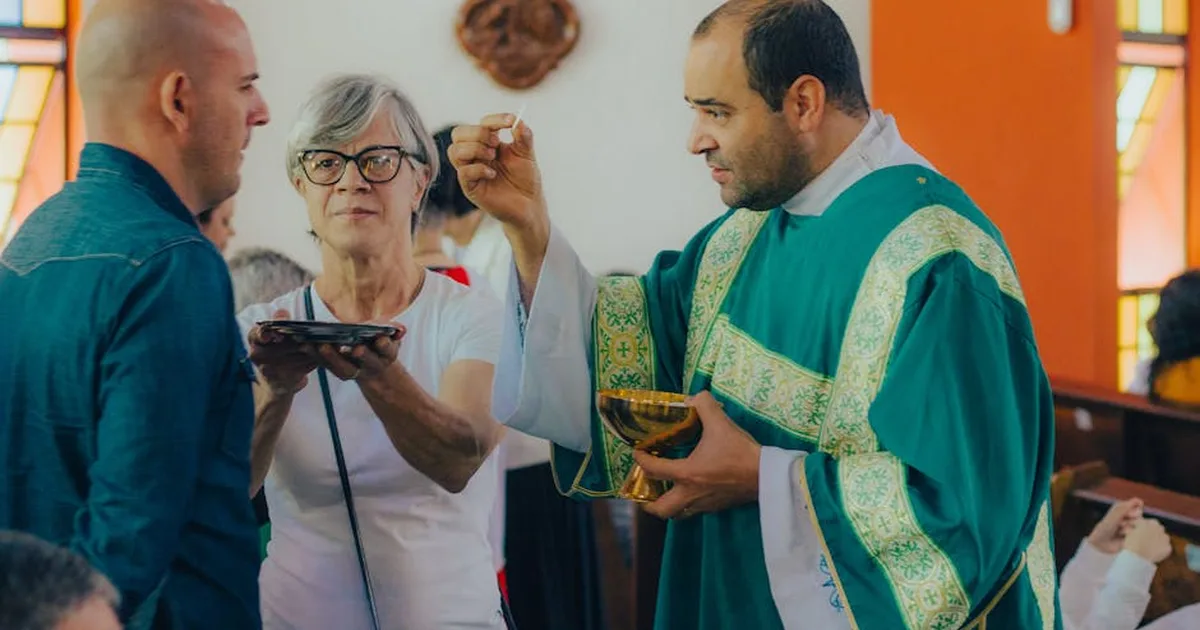
The beauty of liturgy lies precisely in its communal character. We are not isolated spectators, but part of a body that celebrates together. Every song, every silence, every shared gesture unites us more deeply as a family of faith. This collective dimension reflects God's own trinitarian nature – perfect communion that we desire to imitate.
In recent years, especially following the passing of Pope Francis in April 2025 and the election of Pope León XIV in May of the same year, we have reflected on how our celebrations can become even more authentic and meaningful. Liturgy is not static; it breathes with the Church, adapting to the times without losing its sacred essence.
Saints: Companions on Our Daily Faith Journey
Saints are not distant figures in display cases, but brothers and sisters who walked the path of holiness before us. They show us that Christian perfection is possible in every age and circumstance. From the martyrs of the early centuries to contemporary saints, we have a cloud of witnesses who encourage us: "Therefore, since we are surrounded by such a great cloud of witnesses, let us throw off everything that hinders and the sin that so easily entangles. And let us run with perseverance the race marked out for us" (Hebrews 12:1, NIV).
In liturgical practice, saints connect us with the living history of salvation. Their feasts in the Christian calendar are not mere remembrances, but celebrations of Christ's victory in them. By honoring them, we honor the ongoing work of the Holy Spirit in the Church. Each saint reflects a different facet of God's love – some through contemplation, others through action, many through suffering transformed into grace.
Invoking saints in our liturgical prayers acknowledges that we form one family that transcends time and space. They intercede for us as older siblings in faith, showing that holiness is not a privilege for the few, but the vocation of all the baptized. Their lives inspire us to live our own Christian journey with greater courage and hope.
Liturgy as Source of Mission: From Altar to Streets
True liturgy never exhausts itself within church walls. It sends us on mission, transforming us into missionary disciples. Every Eucharist ends with a sending forth: "Go in peace." This is not merely a dismissal, but a commission to bring to the world the Christ we have just received. As Saint John wrote: "We love because he first loved us" (1 John 4:19, NIV).
Our celebrations equip us for daily witness. The songs teach us to praise even on difficult days. The biblical readings illuminate our decisions. Sacramental communion strengthens us to love as Christ loved. Well-lived liturgy produces Christians committed to justice, peace, and mercy – urgent values in our fragmented world.
In this sense, liturgy and mission are like two wings of the same bird: one lifts our soul to God, the other carries us to our brothers and sisters. Sunday celebration is not an escape from reality, but a plunge into the source that empowers us to transform reality. Every "Amen" spoken at the altar should echo in our "yes" to those in need who cross our path.
Elements Connecting Celebration and Life
Various aspects of liturgy possess the capacity to build bridges between what we experience in church and what we encounter in the world. The proclaimed Word is not merely an ancient text, but a living voice speaking to our current circumstances. The symbols – water, bread, wine, oil – speak to us of spiritual realities using the language of creation. Ritual gestures – the sign of the cross, the bow, the handshake of peace – are bodily forms of prayer that educate our entire being.
Liturgical music, when authentic, is not mere entertainment but sung prayer that lifts the heart and unites the community. Silence, so scarce in our noisy culture, becomes sacred space to listen to God's gentle voice. The liturgical year, with its cycles of Advent, Christmas, Lent, Easter, and Ordinary Time, teaches us to live time differently – not as mere succession of days, but as salvation history unfolding.
These elements, when lived with awareness and active participation, gradually transform us. We don't leave celebration as the same people who entered. Liturgy renews us, strengthens us, corrects us, consoles us, and above all, sends us forth. That is its fundamental dynamic: encounter with God that leads to encounter with neighbor.
In a world that often reduces religion to empty ritualism or rootless activism, Christian liturgy offers an integrative path. It roots us in the living tradition of the Church while projecting us toward the needs of the contemporary world. It reminds us that faith is not only believing, but celebrating; not only thinking, but living; not only receiving, but sharing.





Comments