
In a world dominated by screens and constant notifications, Pope Leo XIV has reminded us of the importance of paper books. During a meeting with employees of the Vatican Publishing House, the Holy Father emphasized that printed reading remains a powerful tool for personal and spiritual growth. "Reading nourishes the mind," he said, and stressed that books invite us to deep reflection, something often lost in digital immediacy. In an era where information flows at high speed, stopping to read a book can be a revolutionary act that helps us think clearly and form solid judgment.
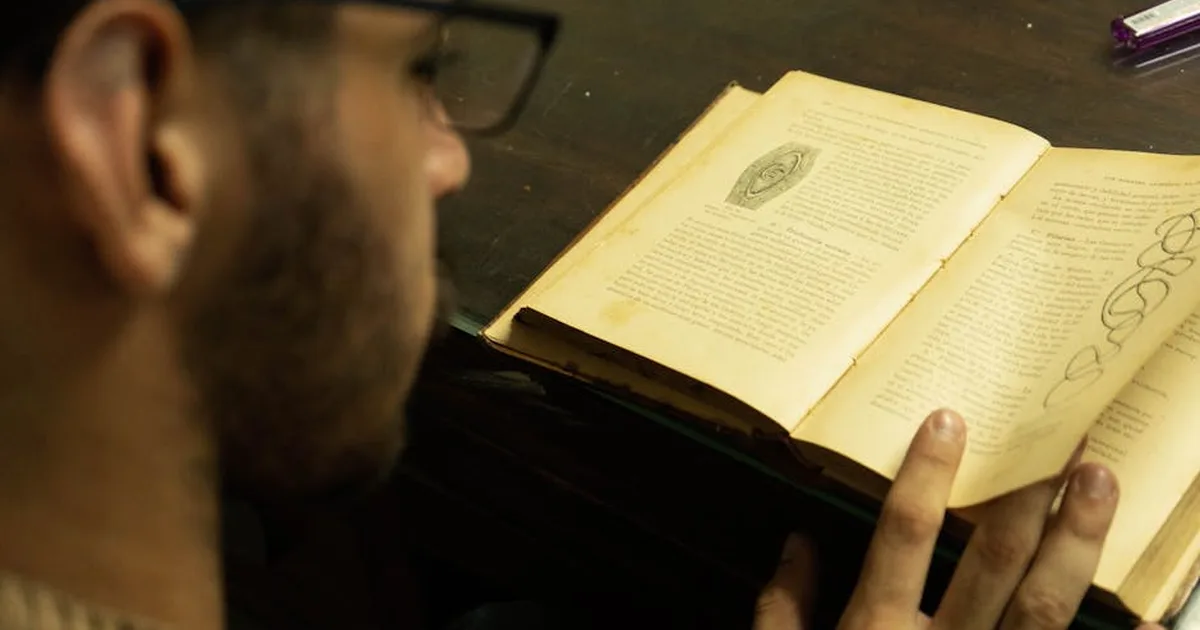
The Pope not only defended the book as a physical object but also as a means to find meaning amidst the noise. "When we hold a book in our hands, we encounter its author, those who have read it before, and those who will read it after," he explained. This connection between readers across time and space is something technology cannot fully replicate.
Reading as an Antidote to Fundamentalism
Leo XIV warned that a lack of reading can lead to rigid positions and simplistic views of reality. "Books are an antidote to closed-mindedness," he said, noting that a mind well-nourished with good reading is less prone to fall into fundamentalism or extreme ideologies. In a global context where fake news and polarized opinions abound, critical reading becomes an urgent necessity.
The Pontiff also reminded that spiritual reading has a special power: it can touch the heart and open it to faith. "We know well how reading the biography of a saint or a well-crafted spiritual reflection can move the heart," he affirmed. For Christians, books are not only a source of knowledge but also a meeting place with God.
Examples of Saintly Readers
To illustrate his message, the Pope mentioned several biblical figures and saints often depicted with books. The Virgin Mary, at the Annunciation, is frequently painted absorbed in reading the Scriptures. Saint Anthony of Padua holds the open Gospel, with the Child Jesus upon it. Saint Augustine is shown seated at a desk with a large book, and sometimes with a heart in his hand, a symbol of the union between truth and charity. These examples show how reading has always been part of spiritual life.
An Invitation to Read the Bible
The Holy Father made a special call to the faithful to nourish themselves with the Word of God. "Let it shape our mindset and our actions," he urged. The Bible is not just an ancient book but a living guide that can transform our way of seeing the world. By reading it attentively, we can discover God's love and learn to live according to his teachings.
Leo XIV also recalled the words of Saint Paul VI, who in 1976 encouraged employees of the Vatican Publishing House to "look forward, to define ideas and programs for the future." This spirit of renewal and hope remains relevant today.
Reading That Unites and Transforms
In his message, the Pope highlighted that books are an opportunity to encounter others. "When we read, we become part of a community of readers who share ideas and experiences," he said. This community transcends borders and eras, reminding us that we are not alone in our search for truth and beauty.
For Christians, reading can also be an act of evangelization. By reading a book about faith, we can find the right words to share the love of Christ with those around us. As the Pope said, "reading the biography of a saint can move the heart" and open doors to spiritual dialogue.





Comments