
Have you ever felt embarrassed when someone discovers a mistake you made? Maybe you tripped in public, said something out of place, or had a fault pointed out that you'd rather keep hidden. That feeling of exposure can be uncomfortable, but God's Word invites us to see it from a different angle.
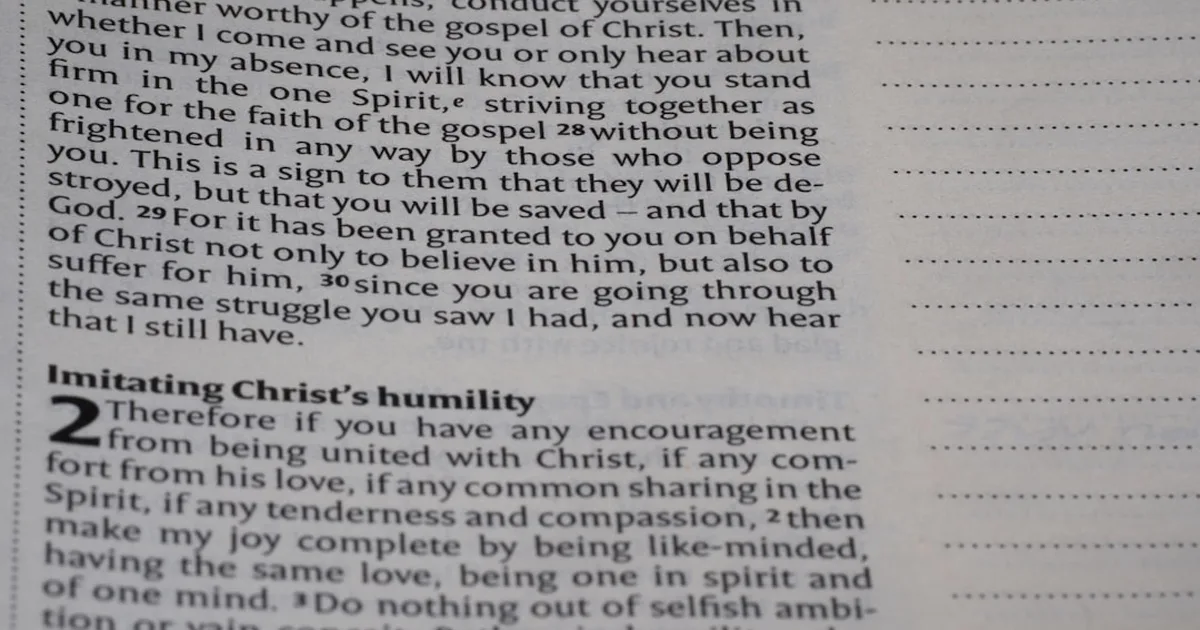
On the journey of faith, our weaknesses aren't a hindrance but an opportunity for God to show His power. As 2 Corinthians 12:9 (NIV) says: “My grace is sufficient for you, for my power is made perfect in weakness.” When others see our faults, we can choose defensiveness or humility. And humility opens the door to God's transforming grace.
What True Humility Looks Like
Humility isn't putting yourself down or pretending you're worthless. It's recognizing who you are before God: a beloved person, but also in need of His mercy. It's knowing that every good thing in you comes from Him, and that without Him, you can do nothing (John 15:5).
The Bible teaches that God opposes the proud but gives grace to the humble (James 4:6). Humility isn't thinking less of yourself; it's thinking of yourself less often. It's having a heart willing to learn, to be corrected, and to depend on God.
A humble person doesn't need to defend their image at all costs, because they know their identity is secure in Christ. So when someone points out a mistake, they don't react with anger or excuses, but with openness to grow.
When You Are Humbled: A Test of Character
It's easy to be humble when everything is going well. But the real test comes when others humiliate you, when they criticize you unfairly, or when they expose your faults in front of others. In those moments, our pride rebels and we want to justify ourselves.
Yet Jesus showed us the way: “Learn from me, for I am gentle and humble in heart” (Matthew 11:29, NIV). He endured the humiliation of the cross without responding with threats, trusting in the Father. When we are humiliated for Christ's sake, we have the opportunity to become more like Him.
It's not about seeking suffering, but accepting that God can use even uncomfortable situations to form in us a character like Christ's. As Romans 5:3-4 (NIV) says: “suffering produces perseverance; perseverance, character; and character, hope.”
The Danger of Hiding Our Faults
We live in a culture that pressures us to show only our best. Social media, work, even church sometimes make us believe we must be perfect. But that facade is exhausting and distances us from authenticity.
Hiding our faults robs us of the opportunity to receive help and prayer from other believers. James 5:16 (NIV) encourages us: “Confess your sins to each other and pray for each other so that you may be healed.” Transparency builds community and allows the body of Christ to function in love.
Moreover, when we pretend to be perfect, we give a false picture of the Christian life. Those watching us might think that following Jesus is only for those who have arrived, not for those on the journey. But the church is a hospital for sinners, not a museum of saints.
God Uses Our Weaknesses for His Glory
One of the most liberating truths of the Gospel is that God doesn't call us to be perfect, but to be dependent on Him. He chooses the weak things of the world to shame the strong (1 Corinthians 1:27). Our limitations are the perfect stage for His power to be displayed.
Think of Peter: he denied Jesus three times, but was later restored and used powerfully. Think of Paul: he had a thorn in his flesh, but learned to boast in his weaknesses because Christ's power was perfected in them (2 Corinthians 12:9-10).
When others see your faults, n





Comments