
In these times when news passes quickly and voices get lost in digital noise, there are messages that deserve our thoughtful attention and open hearts. Recently, an Italian bishop shared a deep concern that touches not only his local community but all who value the spaces where we encounter God. His letter, written with evangelical serenity, invites us to reflect on something that hurts at the deepest level of the believing soul: the desecration of sacred places.
Archbishop-Bishop Santo Marcianò of the dioceses of Frosinone-Veroli-Ferentino and Anagni-Alatri addressed words to his brother priests and all the faithful that resonate beyond Italian borders. This is not an alarmist cry, but a conscious invitation to look with eyes of faith at situations that challenge us as a Christian community.
What happens when spaces we consider holy are violated? How do we respond when images that have accompanied the devotion of generations are damaged? These questions aren't just for those living in those dioceses, but for each of us who seek to build communities where the sacred is respected and cared for.
Stories That Hurt the Heart of Community
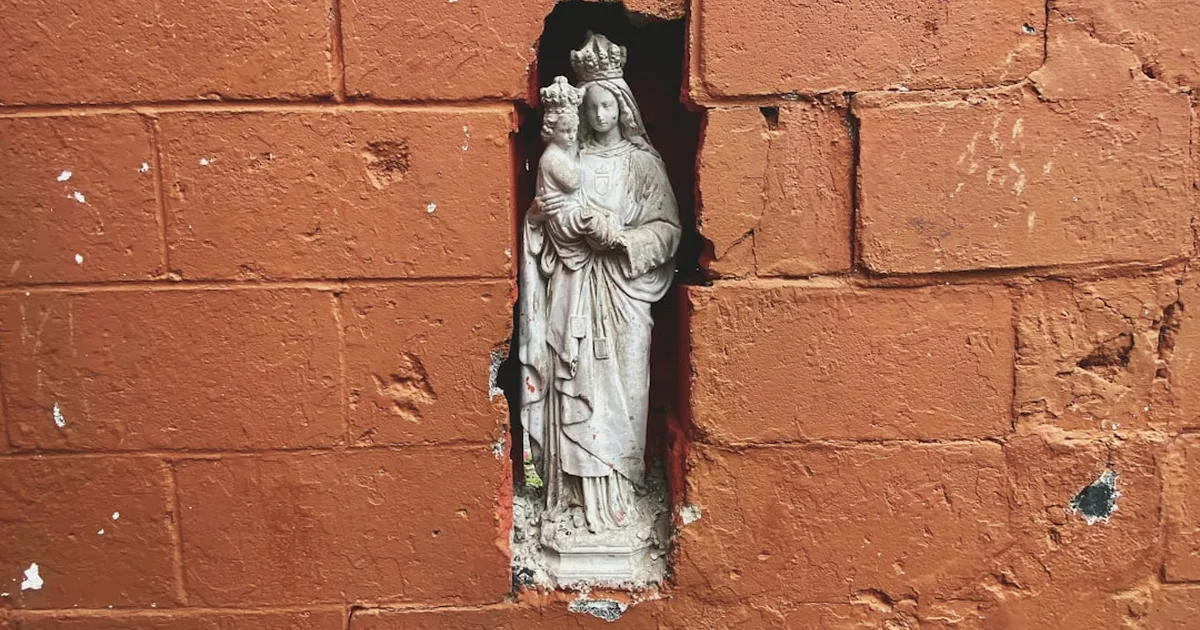
In the town of Frosinone, a statue of Our Lady of Lourdes that had been a reference point for prayer for many faithful for years was decapitated. The votive niche on Via Madonna delle Rose, which had welcomed the petitions and thanksgivings of so many people, was marked by this act of vandalism. Days earlier, an image of Padre Pio had suffered a similar fate.
These aren't simply property damages. For those who have found comfort before those images, for those who have lifted their prayers in those places, these actions represent a wound in the collective memory of faith. As the apostle Paul reminds us:
"Don't you know that you yourselves are God's temple and that God's Spirit dwells in your midst? If anyone destroys God's temple, God will destroy that person; for God's temple is sacred, and you together are that temple" (1 Corinthians 3:16-17, NIV).
Civil authorities, like Mayor Riccardo Mastrangeli, have expressed their concern and police are investigating these incidents. But Bishop Marcianò's response goes beyond the legal or political: it leads us to spiritual ground, where caring for the sacred becomes an expression of our love for God and neighbor.
A Pastoral Response That Lights the Way
The most notable aspect of Bishop Marcianò's letter is its serene and evangelical tone. Instead of falling into easy condemnation or alarmism, it offers practical guidance infused with pastoral wisdom. His message reminds us that, as Christians, we are called to respond to evil with good, to destruction with construction, to hatred with love.
The prelate directs three concrete requests to his priests, which can inspire us all:
- Increase attention in the daily care of sacred buildings
- Care for tabernacles and furnishings with love and diligence
- Actively collaborate by reporting any unusual situations to competent authorities
These instructions don't come from fear, but from loving responsibility. As Jesus teaches us:
"For where your treasure is, there your heart will be also" (Matthew 6:21, NIV).What we care for diligently reveals what we value deep in our hearts.
Beyond Stone Walls
The bishop's letter contains a profound truth: "The destruction of a statue or disorder in a church, however painful, reminds us that our mission goes beyond stone walls." This perspective frees us from reducing faith to physical spaces while inviting us to value them as





Comments