
It began as an ordinary evening for Michael, a middle school teacher settling in for a family movie night. The phone call that shattered the calm came from his friend Tim, a retired engineer from their church community. Their shared concern centered on a young man named Aboradea, a refugee their church had been supporting, who had not returned home from his night shift. His family, with limited English and navigating a new country, was gripped by a silent, frantic fear. Without hesitation, Michael and Tim left their homes, driven by a simple, profound conviction: this was their family too.
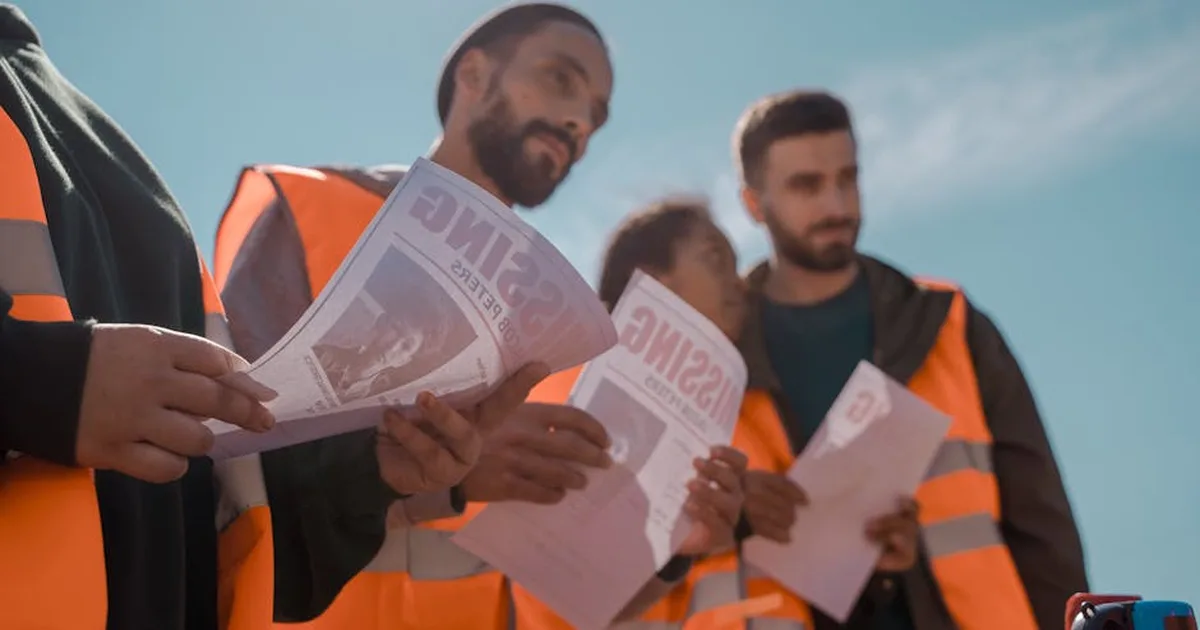
This immediate response reflects a heart tuned to the biblical call to love our neighbors. As the book of James reminds us, faith without action is incomplete.
Suppose a brother or a sister is without clothes and daily food. If one of you says to them, “Go in peace; keep warm and well fed,” but does nothing about their physical needs, what good is it? In the same way, faith by itself, if it is not accompanied by action, is dead. James 2:15-17 (NIV)For Michael and Tim, their faith was alive in that moment, compelling them to move from concern to concrete help.
The Search: A Tapestry of Community and Privilege
The living room of Aboradea's family became a command center. With the help of the family's children translating, the two men began a methodical search. They called local hospitals, police stations, and even car impound lots. In the quiet moments between calls, Michael was struck by a sobering realization. His ability to navigate these systems, to confidently ask for a manager and be heard, was a form of privilege his refugee friends did not possess. This disparity highlighted the very reason their presence was needed—not as saviors, but as advocates and brothers.
Their search was fueled by a partnership forged through a local resettlement initiative, often called a "Good Neighbor" program. For decades, Christian communities across the nation have quietly lived out the call to welcome the stranger. This legacy stretches back to churches assisting refugees from Southeast Asia in the 1970s, a practice of hospitality now woven into the fabric of many congregations. These programs formalize the simple, powerful act of walking alongside new arrivals, helping them find their footing in a unfamiliar land.
The Agony of the Unknown
As the night wore on past 11 PM, hope began to fray. Government tracking systems showed no record of detention. Every lead turned cold. The emotional weight in the room was palpable, culminating in a father's silent tears. The image of a grieving parent transcends all language and culture, a universal portrait of love and fear. Michael and Tim promised to return at first light, but sleep was elusive for everyone involved. Their minds replayed scenarios, and their prayers became persistent whispers for protection and guidance.
Dawn Brings a Journey of Hope
The next morning, fueled by determination more than rest, Michael and Tim gathered with members of Aboradea's family. Together, they embarked on a tangible mission: retracing his likely route from work. They drove the streets he would have traveled, looking for any sign of his car, any clue in the mundane landscape of his daily commute. This 18-hour saga—from the initial phone call to the prolonged search—was more than a rescue mission; it was an immersion into another family's deepest fears and a testament to committed friendship.
This story is a modern parable of the Good Samaritan. The religious leaders in Jesus' story passed by the wounded man, but the Samaritan, an outsider himself, saw a neighbor in need and acted with costly compassion.
But a Samaritan, as he journeyed, came to where he was, and when he saw him, he had compassion. He went to him and bound up his wounds, pouring on oil and wine. Then he set him on his own animal and brought him to an inn and took care of him. Luke 10:33-34 (ESV)Michael and Tim, in their own context, chose to "come to where he was," entering into the distress of a family others might overlook.
Reflection: What Does Welcome Look Like Today?
The eventual resolution of Aboradea's story (he was found safe) is a blessing, but the greater story is the transformation that occurred in the hearts of those who searched. "This whole experience changed my life," Michael reflected. "This family is family." Boundaries of culture, language, and origin dissolved in the furnace of shared concern. This is the heart of Christian hospitality—not a program, but a posture that redefines "neighbor" and embraces the biblical mandate to love.
In our current era, under the pastoral guidance of Pope León XIV, who has emphasized global fraternity and care for the marginalized, such stories take on a renewed resonance. They are quiet, local responses to a universal call. The mission of the church, in all its diverse expressions, has always included making room for the weary, the displaced, and the afraid. It is a continuation of God's own character as a refuge.
For the LORD your God... loves the foreigners residing among you, giving them food and clothing. And you are to love those who are foreigners, for you yourselves were foreigners in Egypt. Deuteronomy 10:18-19 (NIV)
A Question for Your Heart
As you reflect on this story, consider your own community. Who is the "stranger" in your midst? It may not be an international refugee; it could be a new neighbor, a lonely coworker, or someone from a different background in your own congregation. The practical application here is not necessarily to join a formal program (though that is a wonderful option), but to cultivate a heart that notices and a will that acts. What is one step you can take this week to move beyond polite greeting to genuine, compassionate engagement? How can you use your own "privilege" or resources to advocate for, befriend, and truly see someone who might otherwise be overlooked? In answering that call, we live out the very faith that binds us together.





Comments